
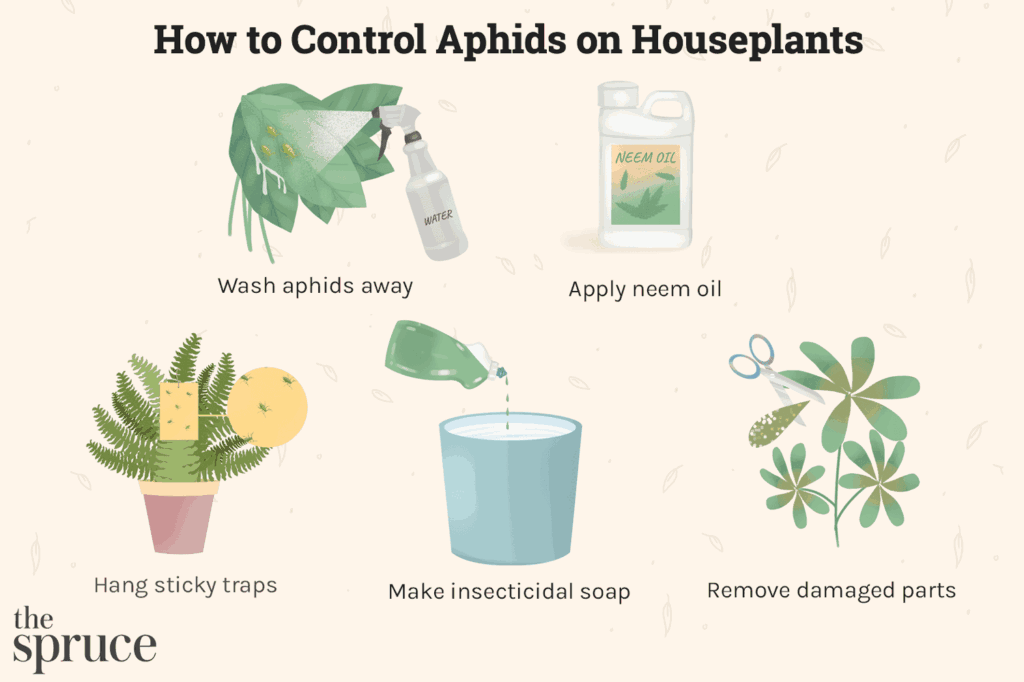
Aphids are tiny insects that infest almost every ornamental plant, whether indoors or outdoors, as well as agricultural crops. These pesky parasites can cause significant damage to plants by sucking sap, transmitting diseases, and promoting the growth of sooty mold on leaves. When they attack your plants, you can intervene with homemade antiparasitic remedies; these are easy to prepare, cost-effective, and environmentally friendly.
In this article, we’ll provide some suggestions on how to create your own antiparasitic remedies against aphids at home. The ingredients required for these homemade remedies are simple and easily available at home: for example, Marseille soap or alcohol. In our previous article “Marseille Soap: A Thousand Uses in the Home,” we highlighted its effectiveness as a remedy for various domestic issues.
The positive aspect of both soap-based and alcohol-based remedies is that they target aphids without disrupting the natural balance of your garden, unlike broad-spectrum insecticides like pyrethroids. They also leave beneficial insects untouched.
Homemade Remedies Against Aphids
Alcohol-Based Remedy
Mix 25 ml (approximately 1 ounce) of alcohol with 1 liter (4 cups) of water. To apply, simply spray the solution directly on the aphids in full sun. Repeat this process three times every two to three days.
Important notes: Before applying the remedy to the entire plant, apply it only to a few leaves to avoid scorching or burning. This can be done by spraying at night.
Marseille Soap-Based Remedy
Mix 30 cc (approximately 1/4 cup) of liquid Marseille soap with every liter of water. If you find the soap in solid form, mix 10-20 grams with one liter of water. This remedy is particularly effective against whiteflies.
To apply, spray the solution directly on the aphids at night. Repeat this process two to three times every three to five days.
For an even more potent effect against whiteflies, you can mix these two remedies together!
Important Note: Before using this treatment, ensure that you manually remove infested plant parts.
DIY Traps for Aphids
Homemade traps are also effective and harmless to the garden and environment. Aphids, like other insects (mosquitoes, sciarids), are strongly attracted to bright colors. A good homemade trap is a strip of colored paper coated with biodegradable glue. This way, the traps capture aphids without harming the plant’s life cycle or using insecticides.
These non-toxic traps can be prepared at home or purchased online at a low cost. For example, on Amazon, you can find a pack of 5 large XL traps (26 x 10 cm) for 12 euros with free shipping.
The BSI Traps are made in Germany and are easy to use in greenhouses, gardens, and fruit trees. In organic farming, these traps are widely used as a natural remedy against aphids.
Remedies Against Whiteflies
Whiteflies are another pesky parasite that can threaten the health of our plants: for more advice on how to eliminate them, we recommend reading our dedicated article: “How to Get Rid of Whiteflies”
Tips and Precautions
When using homemade remedies against aphids and whiteflies, it’s essential to follow some tips and precautions:
- Always read the labels and instructions before applying any remedy.
- Wear protective clothing, including gloves, when handling plants or cleaning equipment.
- Avoid spraying water on plants during peak sun hours to prevent burning.
- Test a small area of the plant before applying any remedy to ensure there are no adverse reactions or damage to the plant’s leaves or roots.
- Keep pets and children away from treated areas.
How to Prevent Aphid Infestations
While homemade remedies can be effective against aphids, preventing infestations is always the best course of action. Here are some tips for preventing aphid infestations:
- Regularly inspect your plants, looking for signs of aphid infestation.
- Remove weeds that can harbor aphids and other pests.
- Use integrated pest management techniques, such as introducing beneficial insects or using physical barriers to prevent infestation.
- Keep your garden clean and free of debris.
- Avoid over-fertilizing, which can encourage aphid growth.
Benefits of Natural Remedies
Using natural remedies against aphids and whiteflies has several benefits:
- Environmentally friendly: These remedies are non-toxic and biodegradable, making them a safer choice for the environment.
- Cost-effective: Homemade remedies are often less expensive than commercial products or broad-spectrum insecticides.
- Healthier plants: Natural remedies promote healthier plant growth and prevent damage to beneficial insects.
Conclusion
By using these homemade remedies and traps, you can naturally combat aphids and whiteflies without harming your garden or the environment. Remember to always follow safety precautions when working with chemicals or other substances.
Frequently Asked Questions (FAQs)
-
What is the best way to prevent aphid infestations?
Regularly inspecting your plants, removing weeds that can harbor aphids, and using integrated pest management techniques are effective ways to prevent aphid infestations. -
How long does it take for homemade remedies to be effective against aphids?
The effectiveness of these remedies can vary depending on the severity of the infestation, but most see noticeable results within 3-5 days after application. -
Can I use these remedies on all plants?
It is recommended that you test a small area of the plant before applying any homemade remedy to ensure there are no adverse reactions or damage to the plant’s leaves or roots. -
Are these remedies safe for beneficial insects like bees and butterflies?
Because these remedies do not contain broad-spectrum insecticides, they are generally considered safe for most beneficial insects. -
Can I mix different homemade remedies together?
Yes, you can mix different homemade remedies together to create a more potent treatment against specific pests or infestations. -
How often should I reapply these remedies?
The frequency of application depends on the type and severity of the infestation. In general, it’s recommended to apply these remedies every 2-3 days for severe infestations and as needed for lighter infestations. -
What other natural methods can I use to control aphids?
Besides homemade remedies and traps, you can also consider introducing beneficial insects like ladybugs or lacewings that prey on aphids, practicing good garden hygiene, and using physical barriers to prevent infestation. -
Are there any commercial products that are equivalent in effectiveness to these homemade remedies?
Yes, there are several commercial products available on the market that are considered more effective than homemade remedies but still environmentally friendly or natural.


