
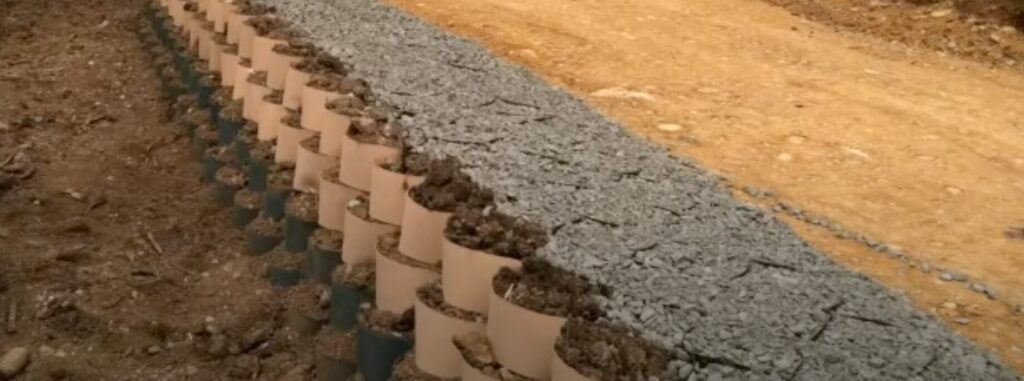
Reinforced soil, also known as reinforced ground or geotextile-reinforced soil, is a type of soil that has been fortified with additional materials such as fabric, mesh, or aggregates to enhance its stability and strength. This innovative approach to construction has gained popularity in recent years due to its environmental benefits and lower impact on the surrounding landscape.
What is Reinforced Soil?
Reinforced soil is created by incorporating geotextiles, also known as geogriglia, into the soil mixture. Geotextiles are permeable fabrics that allow water to penetrate while keeping the soil particles from washing away. The reinforcement materials can be made of a variety of materials, including polypropylene, polyethylene, or polyester fibers, and come in different weights and strengths.
When is Reinforced Soil Used?
Reinforced soil is typically used in situations where traditional barriers such as concrete walls are not feasible or desirable. Examples of such scenarios include:
- Building foundations for structures that require stability on soft ground
- Creating retaining walls that blend seamlessly into the natural terrain
- Stabilizing slopes and embankments to prevent erosion and landslides
- Designing drainage systems that incorporate reinforced soil
Benefits of Reinforced Soil
Reinforced soil offers several advantages over traditional barriers, including:
- Environmental benefits: Reduced impact on the surrounding ecosystem and minimized disturbance to wildlife habitats
- Cost-effectiveness: Lower construction costs compared to traditional barriers
- Flexibility: Can be designed to accommodate various terrain conditions and loads
Creating a Reinforced Soil Structure: A Step-by-Step Guide
- Site preparation: Conduct a thorough site assessment to determine the soil’s properties and any potential hazards.
- Design and planning: Develop a detailed design plan, including the type and quantity of reinforcement materials needed.
- Material selection: Choose appropriate materials for the geotextiles or other reinforcement components, considering factors such as durability, resistance to degradation, and compatibility with the surrounding soil.
The Importance of Geogriglia in Reinforced Soil
Geogriglia is a critical component of reinforced soil structures. Its primary function is to provide a stable base for the soil, preventing settlement and ensuring the structure’s integrity. The geotextile acts as a filter, allowing water to penetrate while keeping the soil particles from washing away.
Key Characteristics of Geogriglia
- Permeability: Allows water to penetrate while maintaining the structure’s stability
- Strength: Provides resistance to loads and deformation
- Durability: Resists degradation and maintains its performance over time
Verifying the Stability of Reinforced Soil Structures
To ensure the stability and durability of reinforced soil structures, regular inspections are necessary. This includes:
- Geotextile testing: Verifying the integrity of the geotextile and its interaction with the surrounding soil.
- Soil bearing capacity tests: Evaluating the soil’s ability to support loads and resist settlement.
Case Studies
- Retaining walls: Reinforced soil has been used to create retaining walls that blend seamlessly into the natural terrain, reducing visual impact while providing stability and strength.
- Drainage systems: Reinforced soil has been incorporated into drainage systems to improve water flow and reduce erosion.
- Slope stabilization: Reinforced soil has been used to stabilize slopes and embankments, preventing erosion and landslides.
Conclusion
Reinforced soil is a innovative and sustainable approach to construction that offers numerous benefits, including environmental sustainability, cost-effectiveness, and flexibility. By understanding the principles of reinforced soil and its various applications, engineers and contractors can design and build structures that minimize their impact on the environment while providing long-lasting stability and strength.
Frequently Asked Questions
- What are geogriglia?
Geogriglia refers to a type of fabric or mesh used in reinforced soil structures to provide a stable base for the soil. - How is reinforced soil used?
Reinforced soil is typically used in situations where traditional barriers such as concrete walls are not feasible or desirable, including building foundations, retaining walls, and slope stabilization. - What are the benefits of using geogriglia?
Geogriglia provides a stable base for the soil, preventing settlement and ensuring the structure’s integrity while also allowing water to penetrate and filtering out soil particles that could wash away. - How often should reinforced soil structures be inspected?
Regular inspections are necessary to verify the stability and durability of reinforced soil structures, including geotextile testing and soil bearing capacity tests.
Additional Resources
- Sabbie bituminose: A type of soil amendment used in reinforced soil structures.
- Terra da giardino: A type of soil specifically designed for gardening and landscaping.
- Giornata mondiale del Suolo: An international event celebrating the importance of soil conservation and sustainability.
- Portata di un fiume: The movement or flow of a river, which can be affected by soil erosion and sedimentation.


