
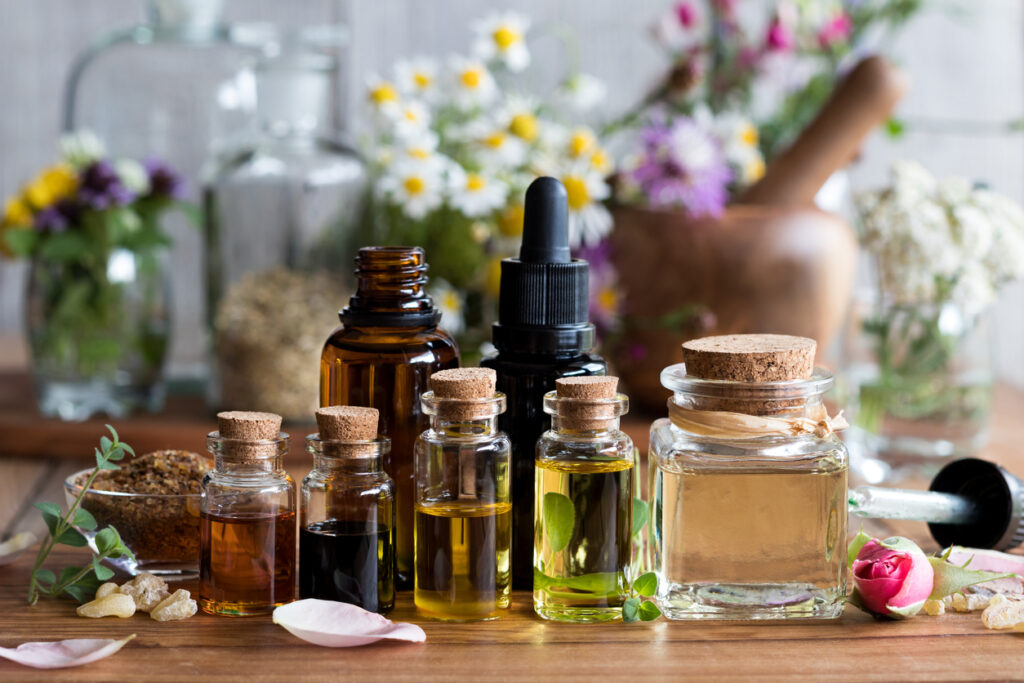
The world of perfumes, for the body or for the environment, can count on over 2,000 synthetic elements (called odorants in specialized language) while natural perfumery essences are only around 200.
To compose a perfume, you mix together between 30 and 80 fragrance molecules. By limiting your selection to around 200 natural essence options, you can produce a natural perfume.
The industry of natural perfumes has few major players, with Roger & Gallet being the only name that seems to be on top in the international scenario, offering “faite à Paris” perfumes.
DIY Natural Perfumes
A homemade fragrance can be a worthy substitute for traditional natural perfumes found in stores. This article will explain how to create your own natural perfume at home using the art of DIY. We will propose two variations: one with alcohol and one without.
Natural Perfume without Alcohol
Ingredients:
- 60 ml of sweet almond oil or coconut oil or jojoba oil
- 30 ml of distilled water
- 6 drops of fragrance essential oil (choose your favorite)
To prepare the perfume at home without alcohol, mix all the ingredients in a container (only the sweet almond oil and the fragrance essence drops). Mix well, then pour the mixture into a glass bottle. Before using, let it rest for one week in a dark place. Shake the bottle daily before use.
Natural Perfume with Alcohol
To create a natural perfume with alcohol, you can use vodka or pure ethanol. For this recipe, you will need:
- 50 ml of vodka
- 50 ml of distilled water
- 2-3 drops of fragrance essential oil (choose your favorite)
To prepare the perfume at home with alcohol, combine all ingredients in a container. Add fragrance essence only after mixing well. Close the bottle and shake it well. Let it rest for one week in a dark place. After the week, check the scent strength. If it’s not strong enough, add more water drops. On the other hand, if you prefer a stronger perfume, add a few drops of ethanol.
Environmental Natural Perfumes
To create your own natural environmental fragrances, there are many tools to help find the best combinations. One such tool is the “Wheel of Fragrances” or “Rotule des Parfums” as it’s called in French.
The Wheel of Fragrances was developed by Michael Edwards and has become a popular reference among perfumers and those who want to try their hand at making natural fragrances.
How to Use the Wheel of Fragrance
To use the wheel, you need to understand the different fragrance families. These families are categorized based on common scents that remind us of certain things. The Society French des Parfumeurs in 1984 revised and updated this classification, which was then further refined by Eugene Rimmel.
Here are the fragrance families mentioned in the article:
- Floral: Fragrances created from a single flower or bouquet of different flowers like roses, carnations, lavender, and lilacs.
- Oriental: Fragrances that evoke exotic and sensual scents with patchouli, vanilla, musk, amber, and spices.
- Fresh/Flower: Fragrances inspired by the freshness of natural environments like citrus fruits, herbal notes, or fresh flowers.
- Woody: Warm, intense scents reminiscent of trees such as cedarwood, sandalwood, and rosewood.
The Wheel of Fragrances
To create a new fragrance composition using the wheel, let’s look at some examples. If you want to create a floral scent with citrus notes, you can start by adding bergamot and lemon essences in addition to your preferred flowers (like lavender or carnation).
If you prefer a fresh fragrance, you could mix citrus notes like grapefruit or orange zest with a hint of eucalyptus or mint leaves.
The Wheel of Fragrances is a simple tool to help us discover new fragrances. We can experiment by combining different families and see what we come up with!
Fragrance Composition
We will explore some examples of fragrance combinations using the wheel:
- Floral + Citrus: To create a floral scent with citrus notes, mix bergamot and lemon essences in addition to your preferred flowers.
- Fresh/Citrus: Combine grapefruit or orange zest with eucalyptus or mint leaves.
Now it’s time to experiment!
Natural Perfumes
The natural perfume market has grown significantly over the years due to consumers’ increasing awareness of environmental and sustainability issues. Natural perfumes are valued for their benefits, from moisturizing skin to creating fragrances without chemicals.
One brand that specializes in natural perfume production is Roger & Gallet, offering a range of natural perfumes and fragrances like Thé Vert (Green Tea), which can be found on Amazon.
Thé Vert by Roger & Gallet
The Thé Vert fragrance is inspired by the Japanese garden, combining water and air with essence of green tea, citrus fruits, flowers, and precious woods.


