
Fruit tree diseases can be devastating, threatening entire harvests and ruining the health of a single tree in your garden. As a gardener, it’s essential to understand the various types of disease that can affect different plant species. In this article, we’ll explore the main causes of fruit tree diseases, their symptoms, and how to prevent them.
The Main Culprits: Climate and Cultivation Errors
Climate and treatment for cultivation play a significant role in the presence of fruit tree diseases. Excessive irrigation and fertilization can lead to nutrient deficiencies, making plants more susceptible to disease. Similarly, a negative climate can create an ideal environment for fungal growth. By understanding these factors, you can take steps to prevent disease from taking hold.
Climate plays a crucial role in the development of fruit tree diseases. Extreme temperatures, droughts, and excessive rainfall can all contribute to the spread of disease. For example, if your area experiences frequent frosts, this can damage the delicate tissues of young fruit trees, making them more susceptible to fungal infections. Similarly, prolonged periods of dry weather can cause stress in plants, leading to an increased risk of disease.
Cultivation practices also play a significant role in the development of fruit tree diseases. Over-fertilization and excessive irrigation can lead to nutrient deficiencies, which can weaken plants and make them more vulnerable to disease. Under-fertilization, on the other hand, can result in stunted growth and reduced yields.
Nutritional Deficiencies: A Common Cause
Some fruit tree diseases arise from nutritional deficiencies, where plants lack essential nutrients like nitrogen, phosphorus, potassium, calcium, iron, and magnesium. Symptoms of these deficiencies include leaf discoloration, dryness, and browning, as well as stunted growth or a lack of fruit.
Nitrogen deficiency is one of the most common causes of fruit tree diseases. Nitrogen is an essential nutrient that plays a critical role in plant growth and development. Without enough nitrogen, plants may develop yellowing leaves, stunted growth, and reduced yields. Iron deficiency, on the other hand, can cause pale or discolored leaves, as well as reduced fertility.
Phosphorus deficiency can lead to symptoms like poor fruit set, reduced flower production, and stunted growth. Potassium deficiency can cause leaf scorch, yellowing leaves, and reduced plant vigor. Calcium deficiency can result in stunted growth, weak stems, and poor fruit set. Magnesium deficiency can cause yellowing leaves, stunted growth, and reduced yields.
Aphids and Ladybugs: Parasitic Enemies
Two main parasites that target fruit trees are aphids and ladybugs. These pests can cause significant damage to leaves and fruit, particularly in spring when they’re most active. Aphids feed on sap, weakening the tree’s defenses, while ladybugs lay eggs in blossoms and fruits. Further compromising plant health.
Aphids can also transmit diseases like root rot and powdery mildew, further exacerbating the problem. Ladybugs, on the other hand, are natural predators of aphids, but they can also lay eggs in fruit, causing damage to the tree’s reproductive tissues.
Fungal Diseases: The Silent Killers
Fungal diseases are another category of fruit tree diseases that can cause significant damage to production. These diseases often have non-curable or slow-acting effects, allowing them to wreak havoc on trees before symptoms appear. Common fungal diseases affecting almonds and similar trees include powdery mildew, rust, root rot, gray mold, and canker.
Powdery mildew is a common fungal disease that affects many types of fruit trees, including apples, cherries, and peaches. This disease causes a white, powdery coating on leaves and stems, reducing photosynthesis and impairing tree growth. Rust diseases, on the other hand, are caused by fungi that infect plant tissues, causing damage to leaves, fruits, and flowers.
Root rot is another common fungal disease that can cause significant damage to fruit trees. This disease causes roots to become infected with fungi, leading to reduced water uptake, stunted growth, and ultimately, tree death. Gray mold is a non-curable fungal disease that affects many types of fruit trees, causing symptoms like yellowing leaves, stunted growth, and reduced yields.
Fruit Tree Diseases: Almond
Almond trees are particularly susceptible to fungal diseases due to their love of moisture. Excessive irrigation can create an ideal environment for fungi to grow, making it essential to calibrate irrigation systems carefully. Removing remaining vegetation from the soil can also help prevent fungal growth.
Powdery mildew is a common disease affecting almonds and similar trees. This disease causes a white, powdery coating on leaves and stems, reducing photosynthesis and impairing tree growth. Proper irrigation management and pruning can help control the spread of this disease.
Fruit Tree Diseases: Peach
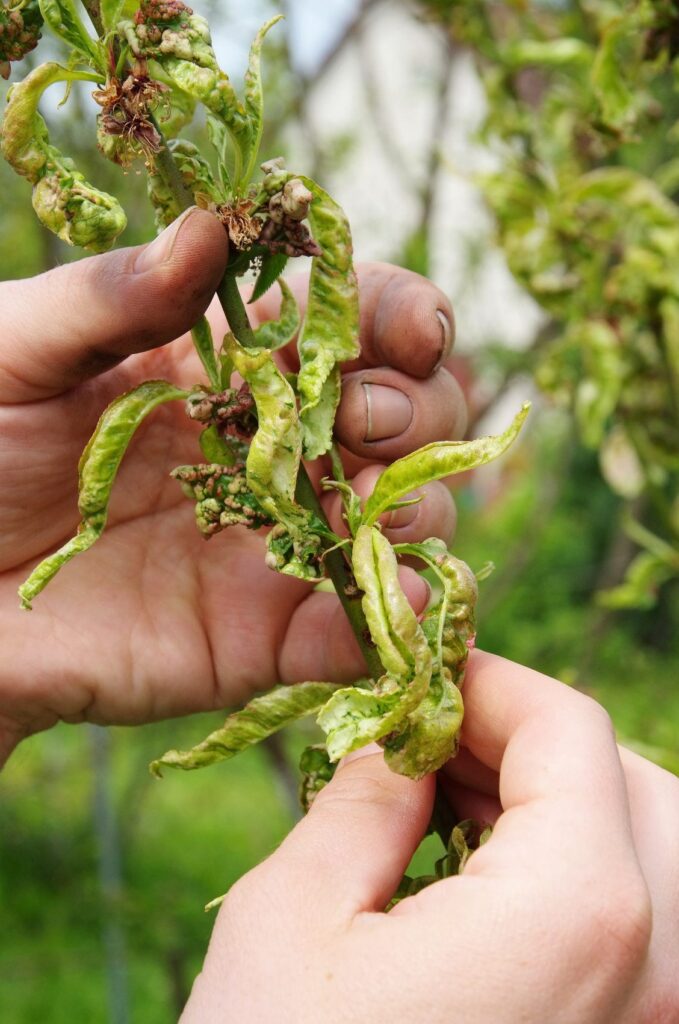
Peaches are prone to several diseases, including the Bolla, a fungus that attacks almost every peach variety except for some resistant cultivars like Amsden and Hollowed-out Peach. The Bolla causes leaves to become blister-like, often turning orange and red before dropping off. If left untreated, this disease can also damage fruit and flowers.
Bolla is caused by the fungal pathogen Monilinia fructicola. This fungus infects peach trees through wounds or natural openings in the skin, causing symptoms like yellowing leaves, stunted growth, and reduced yields. Removing infected tissues promptly can help prevent the spread of this disease.
Fruit Tree Diseases: Cherry
Cherry trees are susceptible to several diseases brought on by parasites, including aphids, ladybugs, tignola, and cinerella. Aphids feed on sap, weakening the tree’s defenses, while ladybugs lay eggs in blossoms and fruits. Cinerella produces spots on leaves and necrotizes tissue, leaving them pockmarked.
Tignola is a fungal disease that causes yellowing leaves and stunted growth in cherry trees. This disease is often associated with over-watering or poor soil drainage. Removing infected tissues promptly can help prevent the spread of this disease.
Fruit Tree Diseases: Plum
Plums are vulnerable to several diseases, including cinerella, fly of plum, and black aphid. The Fly of Plum lays eggs in fruit before it ripens, making it unpalatable. Proper pruning and pest management can help prevent the spread of these diseases.
Cinerella is a fungal disease that causes yellowing leaves and stunted growth in plum trees. This disease is often associated with over-watering or poor soil drainage. Removing infected tissues promptly can help prevent the spread of this disease.
Understanding Fruit Tree Diseases
If you’re struggling with fruit tree diseases, there’s hope for recovery. By understanding the causes of disease and taking preventative measures, you can protect your trees from harm. Here are some key takeaways:
- Climate and cultivation errors can contribute to fruit tree diseases
- Nutritional deficiencies can lead to symptoms like leaf discoloration and stunted growth
- Aphids and ladybugs can cause significant damage to leaves and fruit
- Fungal diseases can have non-curable or slow-acting effects, causing widespread damage
Conclusion
Fruit tree diseases can be devastating, but by understanding the causes and taking preventative measures, you can protect your trees from harm. By recognizing the signs of disease and addressing issues promptly, you can ensure a healthy and productive harvest.
FAQs
- Q: What is the most common cause of fruit tree diseases?
A: Climate and cultivation errors are often the primary causes of fruit tree diseases. - Q: How can I prevent fungal diseases from taking hold?
A: Proper irrigation management, pruning, and removing remaining vegetation from the soil can help prevent fungal growth. - Q: What is powdery mildew, and how can I control it?
A: Powdery mildew is a common fungal disease affecting almonds and similar trees. Proper irrigation management and pruning can help control its spread. - Q: How can I treat aphid infestations on fruit trees?
A: Inspect your trees regularly for signs of aphids, and use insecticidal soap or neem oil to control infestations. - Q: Can I grow a single type of fruit tree in the same garden as others?
A: It’s possible to grow multiple types of fruit trees together, but ensure that each variety is resistant to diseases specific to its own type of tree. - Q: How can I improve soil health and prevent nutritional deficiencies?
A: Test your soil regularly to determine nutrient levels, and apply fertilizers as needed to maintain optimal nutrient levels. - Q: What are some common signs of fungal diseases in fruit trees?
A: Yellowing leaves, stunted growth, reduced yields, and lesions on the bark or branches are all common signs of fungal diseases.
By understanding the causes of fruit tree diseases and taking preventative measures, you can protect your trees from harm and ensure a healthy and productive harvest.


