
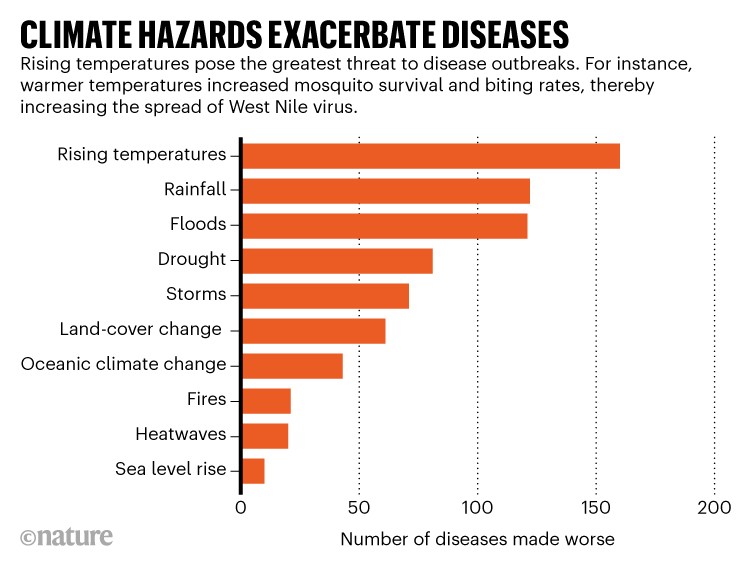
As the world grapples with the challenges of climate change, a growing body of evidence suggests that human diseases are becoming increasingly intertwined with environmental factors. This article explores the complex relationship between climate change, human health, and animal diseases, highlighting the need for a more integrated approach to addressing these interconnected issues.
The Link Between Climate Change and Human Diseases
Climate change is having a profound impact on human health, from heat stress and drought-related illnesses to the spread of disease vectors such as mosquitoes and ticks. As the climate warms, new habitats are created, allowing diseases to expand their range and infect new populations. This can lead to increased morbidity and mortality rates, particularly among vulnerable populations such as the elderly and young children.
For example, heatwaves have been linked to an increased risk of cardiovascular disease, stroke, and respiratory problems. Droughts have been associated with an increased risk of water-borne diseases, such as cholera and typhoid fever. Furthermore, changes in temperature and precipitation patterns can lead to the spread of disease vectors, such as mosquitoes that transmit malaria, dengue fever, and Zika virus.
The Role of Animal Diseases in Human Health
Animal diseases also play a significant role in human health, with many zoonotic pathogens (diseases that can be transmitted from animals to humans) having a direct impact on human health. For example, the SARS outbreak in 2003 was caused by a coronavirus found in bats, while the Ebola virus has been linked to fruit bats and other animals.
Zoonotic diseases are often associated with food safety and handling practices, as well as contact between humans and animals, such as through hunting or farming activities. For example, avian influenza viruses have been linked to outbreaks of bird flu in poultry farms, which can lead to human infections if the virus is transmitted through contact with infected birds.
The Concept of Spillover
Spillover refers to the transfer of disease from one species to another, often through an intermediate host or vector. As climate change alters ecosystems, the risk of spillover increases, with potentially devastating consequences for human health. For example, the Hendra virus is a highly infectious respiratory disease found in horses that can be transmitted to humans through contact with infected animals.
Spillover can occur through various routes, including direct contact with infected animals, contaminated food or water, and vector-borne transmission. For instance, the spread of West Nile virus has been linked to mosquito vectors that have expanded their range due to climate change.
The Importance of Prevention and Preparedness
Prevention and preparedness are key in addressing the risks associated with climate change and animal diseases. This includes implementing measures such as:
- Containing mass erosion of biodiversity
- Fostering a culture of prevention and early warning systems
- Providing education and training for healthcare professionals and the general public
- Developing effective treatments and vaccines
Preparedness measures can include establishing emergency response plans, conducting risk assessments, and implementing disease surveillance programs. For example, the World Health Organization (WHO) has developed guidelines for responding to zoonotic diseases, including those caused by climate change.
The Need for a Holistic Approach
Climate change and animal diseases are interconnected issues that require a holistic approach to address. This includes integrating scientific evidence from multiple fields, such as medicine, ecology, and policy-making.
A holistic approach can involve addressing the root causes of climate change, such as greenhouse gas emissions, deforestation, and habitat destruction. It also requires developing effective policies and strategies for preventing and preparedness measures, as well as investing in research and development of new treatments and vaccines.
Conclusion
Climate change is having a profound impact on human health, with many diseases becoming increasingly intertwined with environmental factors. The risk of spillover from animals to humans is increasing, highlighting the need for prevention and preparedness measures. By adopting a holistic approach that integrates scientific evidence and involves multiple stakeholders, we can better address these interconnected issues and mitigate their impacts.
FAQs
- What are the main causes of climate change?
- Climate change is primarily caused by human activities such as burning fossil fuels, deforestation, and greenhouse gas emissions.
- How does climate change affect human health?
- Climate change can lead to increased morbidity and mortality rates due to heat stress, drought-related illnesses, and the spread of disease vectors such as mosquitoes and ticks.
- What is the role of animal diseases in human health?
- Animal diseases play a significant role in human health, with many zoonotic pathogens having a direct impact on human health.
- How can prevention and preparedness measures be implemented to address climate change and animal diseases?
- Prevention and preparedness measures can include containing mass erosion of biodiversity, fostering a culture of prevention and early warning systems, providing education and training for healthcare professionals and the general public, and developing effective treatments and vaccines.
- What is the concept of spillover, and how does it relate to climate change and animal diseases?
- Spillover refers to the transfer of disease from one species to another, often through an intermediate host or vector. Climate change can increase the risk of spillover due to changes in ecosystems.
- How can a holistic approach be used to address the interconnected issues of climate change and animal diseases?
- A holistic approach involves addressing the root causes of climate change and integrating scientific evidence from multiple fields, such as medicine, ecology, and policy-making.
- What are some of the most effective treatments and vaccines available for diseases related to climate change and animal diseases?
- Effective treatments and vaccines include those developed by the WHO and other global health organizations, as well as innovative technologies such as gene editing and biotechnology.
- How can education and training be provided to healthcare professionals and the general public to prepare them for the impacts of climate change and animal diseases?
- Education and training programs can include workshops, webinars, and online courses that provide information on prevention, preparedness, and response measures for climate-related diseases.


