
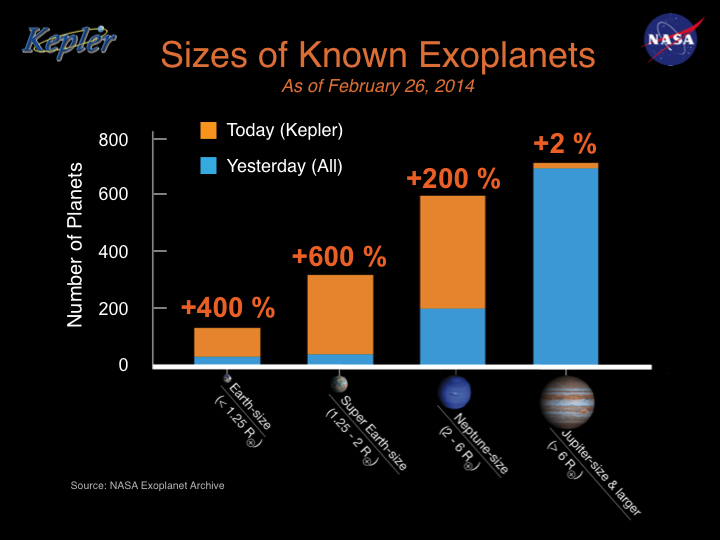
As we read about the discovery of exoplanets, it’s hard not to feel a sense of excitement and hope. The idea that we might not be alone in the universe is a tantalizing one, and every new discovery brings us closer to answering this profound question.
What are Exoplanets?
Exoplanets, also known as extrasolar planets, are planets that orbit stars other than our own Sun. They can be gas giants like Jupiter or rocky worlds similar to Earth. In fact, most of the exoplanets discovered so far are gas giants, while few are rocky worlds like Super-Earths.
How Many Exoplanets Have Been Discovered?
As of November 2018, there were 3,901 confirmed exoplanets identified in 2,907 separate planetary systems. However, this number is constantly growing, with an additional 2,443 exoplanets still awaiting confirmation and another 213 potentially valid ones waiting for further analysis.
Notable Exoplanet Discoveries
One of the most significant discoveries was made on October 22, 2013, when the SuperWASP project announced the detection of 11 hot Jupiter planets. Another notable discovery was Kepler-406 b, a super-Earth that orbits within its star’s habitable zone.
Tools for Exoplanet Discovery
Astronomers use various methods to detect exoplanets, including indirect observations and telescope-based surveys. While these methods have limitations, new technologies are being developed to overcome them. For example, the Automated Planet Finder and CHEOPS telescopes are designed specifically for exoplanet hunting.
History of Exoplanet Discovery
The search for exoplanets is not a recent phenomenon; interest in these worlds has grown steadily since 1992. Initially, discoveries were slow due to technological limitations and observational constraints. However, in the past decade, the pace of discovery has accelerated dramatically, with thousands of new exoplanets identified.
Why the Interest in Exoplanets?
The allure of exoplanets goes beyond mere curiosity about space and astronomy. The search for life beyond Earth is a profound one, driven by hope that we might find another world capable of supporting life. Kepler-22 b, a potentially habitable exoplanet orbiting a G-type star (similar to our Sun), is often cited as an example.
Recent Discoveries
In 2017, NASA announced the discovery of seven exoplanets, three of which are thought to be rocky worlds similar to Earth and located within their stars’ habitable zones. These planets could potentially harbor liquid water and life. The James Webb Telescope, set to launch in 2020, will provide further insights into these mysterious worlds.
Frequently Asked Questions
Q: How many exoplanets have been discovered so far?
A: As of November 2018, there were 3,901 confirmed exoplanets identified.
Q: What are the most promising exoplanet discoveries?
A: Kepler-22 b and Kepler-442 b are two notable examples of potentially habitable exoplanets.
Q: How do astronomers detect exoplanets?
A: Astronomers use indirect observations and telescope-based surveys to detect exoplanets. Indirect detection involves measuring the star’s wobble caused by an orbiting planet, while direct imaging requires observing the planet directly using powerful telescopes.
Q: What are the main challenges in exoplanet detection?
A: Technological limitations, observational constraints, and the vast distances between stars pose significant challenges for exoplanet hunting. These include the need for highly sensitive instruments to detect faint signals from distant planets.
Q: Can we find definitive evidence of life on another planet?
A: While we have not yet found definitive proof of extraterrestrial life, ongoing research and future missions aim to shed more light on this question. The search for biosignatures, such as oxygen or methane, in the atmospheres of exoplanets is an active area of investigation.
Q: How can I stay updated on exoplanet discoveries?
A: Follow reputable sources like NASA, the European Space Agency, or peer-reviewed scientific journals for the latest news and research on exoplanets. You can also tune into podcasts and online forums dedicated to space exploration and astronomy.
The Role of Technology in Exoplanet Discovery
Advances in technology have played a crucial role in the rapid growth of exoplanet discoveries. Some key technologies include:
- Transit Method: This method involves measuring the decrease in brightness of a star as a planet passes in front of it.
- Radial Velocity Method: Astronomers use spectrographs to measure the star’s wobble caused by an orbiting planet.
- Direct Imaging: Powerful telescopes and adaptive optics are used to observe exoplanets directly.
Future Directions in Exoplanet Research
As our understanding of exoplanets grows, so do the possibilities for future missions. Some upcoming projects include:
- James Webb Space Telescope: A powerful telescope that will allow us to study the atmospheres of exoplanets and search for biosignatures.
- European Space Agency’s PLATO Mission: A mission designed to detect exoplanets using the transit method.
- NASA’s Habitable Exoplanet Imaging Mission (HabEx): A concept for a future telescope that will directly image exoplanets.
The Search for Life Beyond Earth
While we have yet to find definitive proof of extraterrestrial life, ongoing research and future missions aim to shed more light on this question. The search for biosignatures, such as oxygen or methane, in the atmospheres of exoplanets is an active area of investigation.
Potential Habitability of Exoplanets
The concept of habitability is complex and multifaceted. While we have identified some potentially habitable exoplanets, there are many factors to consider when evaluating a planet’s habitability. These include:
- Distance from the star: A planet must be within its star’s habitable zone to support liquid water.
- Atmospheric composition: The presence of oxygen or other biosignatures can indicate life.
- Stellar radiation: Excessive stellar radiation can make a planet uninhabitable.
The Impact of Exoplanet Discovery on Our Understanding of the Universe
Exoplanet discovery has significant implications for our understanding of the universe. By studying exoplanets, we can gain insights into:
- Planetary formation: The process by which planets form and evolve.
- Stellar evolution: The life cycles of stars and their impact on planetary systems.
- The origins of life: The possibility that life may have emerged elsewhere in the universe.
Conclusion
Exoplanet discovery has opened a new era in space exploration, offering hope for finding life beyond Earth. While we have yet to find definitive proof of extraterrestrial life, ongoing research and future missions aim to shed more light on this question.


