
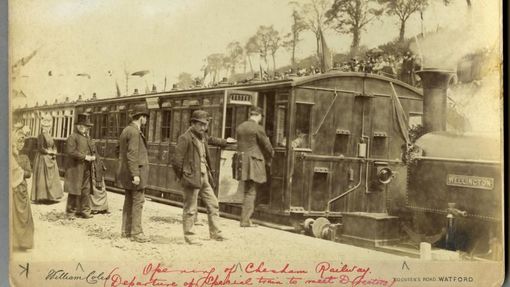
Italy is still a point of reference for the quality of projects and products in the field of rail, tram, and metropolitan transportation. Therefore, it is crucial to maintain the memory and testimony of the path traveled so far in order to learn and progress. This is supported by Riccardo Genova, president of the Collegio Ingegneri Ferroviari Italiani, one of the organizers of MobilityTech, which maps out Italy’s historical heritage in public transportation, a richness and pride that citizens are perhaps still not aware of.
1. What Are the Most Valuable Historical Assets in Public Transportation in Italy?
The State Railways (FS) hold the largest and most valuable asset: projects and documents on the technical evolution of the sector, as well as a collection of locomotives perfectly functional to carry out trains. There are steam locomotives (including two majestic units of Group 685 recently used in double traction on the Pistoia-Florence route), diesel locomotives, electric multiple units, and electrified locomotives in continuous current. Another example of historical asset is the tranviarian line number 7, entirely operated with historic trams not only from Turin but also from other Italian cities (Trieste, Bologna, Rome, and Naples) inaugurated in 2011 to celebrate the Unity of Italy.
The Ferrovia-Museo di Stazione Colonna represents an excellence in preserving cultural and historical memory of all territories that have always been linked to “their railway”. The widespread diffusion of “secondary railways” is rooted in Italian culture: at Colonna, near Rome, it’s possible to visit the museum where numerous locomotives are on display coming from the Lazio railways.
2. What Importance Does This Type of Asset Get in the National Heritage Preservation and Valorization Landscape?
Good space, but more needs to be done. The Italian industry is still a point of reference for quality projects and products in the field of rail, tram, and metropolitan transportation; therefore, it’s essential to maintain memory and testimony of what has been traveled so far to learn and progress. Today, many transportation companies are active that have particular attention for their historical asset and role: FS Italian Railways, Ferrovie Nord Milano (with, among others, the magnificent steam locomotive 200-05 from 1883 perfectly functional), TPL companies like GTT Torino, ATAC Rome, ATC-TPER Bologna, and ANM Naples that has recently restored the historic tram “Peter Witt” from 1935.
There are also associations, such as Graf di Roma, Clamfer of Naples, MetroGenova in Genoa, ACT in Milan, among others, that collect documents, preserve locomotives, and sensitize both institutions and public opinion.
3. What Awareness Do Citizens Have of This Topic? Why Should They Be Sensitized?
Public transportation refers to a multiplicity of installations and vehicles, including land transport in all its forms as well as maritime and aerial transportation. The first sector invests more closely with history, culture, and the same way of living that belongs to everyone: it is indeed present capillarly in our cities and has accompanied us systematically from our childhood to our days, marking the time of our studies, work, and pleasure trips. To know how to observe and learn is at the base of each person’s ability to contribute to a better improvement of living conditions: this also applies to means and systems of transportation that we use every day.
Together with Marco Bersa, historian of transport, we highlighted a lack every time the subject is addressed: not only do they forget the past but also the present, which does not help to improve awareness among citizens.
4. The Incredible Revival of “Trenino” San Marino: What Does it Consist Of? Is It an Experience Replicable in Other Places?
The Ferrovia Rimini-San Marino was opened for service in 1932, immediately with electric traction. Due to wartime events, in 1944, it was suspended, suffering damage as a result of bombings. Some locomotives were already stored in 1944 inside a tunnel and the AB03 has been recovered, restored to its original state both externally and internally, and made fully functional again. To celebrate this occasion, 800 meters of line have been reinstated within the territory of the Republic of San Marino for tourist services.
This experience is replicable not only to maintain the role of tourist ferries but also to rethink abandoned tracks like Calalzo – Cortina – Dobbiaco (“The Ferrovia delle Dolomiti”).
5. Does Italy Have a Historical Park of State Railways? How Many Know It? How Can It Be Promoted More?
State Railways have an important historical park and are also preserved various carriages, from “terrazzini” to “centoporte” (in green carriage in the 1920s-30s, isabella until the early 1960s, castano-gray from the late 1960s and 1970s), “Corbellini”, “type 1959” (some with blue train livery), to recent “UICX”. In Pietrarsa’s museum, for example, there are preserved unique vehicles such as Bayard steam locomotive, reproduction of that destined to the inauguration train of Ferrovia Naples-Portici in 1939 and some electric trams.
These vehicles are used on certain occasions (e.g. “Treno Naturale” in Siena or “Treno Blu” in the low Sebino valley) while others are kept in museums. A greater promotion would allow for a wider dissemination and participation of citizens.
6. Are Trains, Too, Historical Assets: Some Examples of Recovery and Valorization?
Torino is an example of excellence in preserving public transportation heritage in Italy. It’s worth noting the absolute value of the initiative that allowed the functional recovery of many vehicles: among them, the tram articulated 401 from 1939 coming from Rome, the first to be equipped with “Urbinati” system of joints (conceived by Ing. Urbinati for STEFER of Rome) allowing the construction of thousands of tram-articulated units in Europe and worldwide.
Napoli and Rome have also preserved trams that made history of urban public transportation: at Trieste, there’s a tramline with trains from 1935. The peculiarity of this line, with the section over which it operates as a rope, where the famous “spintori” (just renovated) make it a unique case that deserves a visit.
The Ferrovia a cremagliera Principe Granarolo in Genoa is currently operating with tram cars from 1929 built by Piaggio and aesthetically similar to those famous Genovese trams designed by Remigio Castegini.
7. Can the Recovery of Historical Vehicles Not Conflict with the Introduction of Technological and Sustainable Means?
No: maintaining a historically characteristic installation and electric supply often prevented reversioning the service into automotive lines, sometimes more economical for those who manage them but certainly not more efficient from an environmental point of view. When we refer to special journeys, it is considered that they are dedicated to few units serving specific occasions; once again, however, it’s easy to think that they subtract travelers from automotive modes with positive effects on pollution reduction and congestion.
But this is at the base of forming public transportation culture among citizens, starting from young people who will decide “tomorrow’s” choices.
FAQs
-
What can be done to improve awareness about Italy’s historical heritage in public transportation?
Increase promotion and participation of citizens through various means such as associations, social media, and educational initiatives. -
How do State Railways preserve their historical assets?
The State Railways maintain an important historical park, conserve unique vehicles, and keep some locomotives in storage for restoration. -
What is the significance of the Ferrovia-Museo di Stazione Colonna?
This museum represents excellence in preserving cultural and historical memory of all territories linked to “their railway”. -
Can public transportation be an attractive alternative to private cars?
Public transportation can be a more sustainable option, but its appeal depends on awareness and education among citizens. -
How many Italian cities have tranviarian lines similar to the one in Naples?
Several Italian cities, such as Torino, Roma, Trieste, Bologna, e Napoli, have preserved tram cars from their historical past. -
Can historical vehicles be used for special trains?
Yes, they can be reused on occasion for specific events or tours. -
How can one learn more about Italy’s public transportation heritage?
Visiting museums like Ferrovia-Museo di Stazione Colonna and learning through educational initiatives such as associations and social media are key ways to gain knowledge and appreciation of historical assets in the field.
8. The Italian Public Transportation Network: A Richness Worth Preserving
The Italian public transportation network is a treasure trove of history, culture, and innovation. From the early steam locomotives to the modern electric trams, each vehicle has its own unique story to tell. By preserving these historical assets, we can learn from the past and create a more sustainable future.
9. The Importance of Public Transportation in Italian Cities
Public transportation plays a vital role in Italian cities, connecting residents to work, school, and leisure activities. It also provides an opportunity for citizens to engage with their community and appreciate the rich cultural heritage of each city.
10. How Can Citizens Get Involved?
Citizens can get involved in preserving Italy’s public transportation heritage by supporting organizations that promote historical preservation, attending events and exhibitions, and sharing their knowledge with others. By working together, we can ensure that these valuable assets are protected for future generations.
In conclusion, the rich heritage of public transportation in Italy is a treasure worth preserving and celebrating. By understanding the history and significance of each vehicle and installation, we can appreciate the value of these historical assets and work towards creating a more sustainable future for all.


