
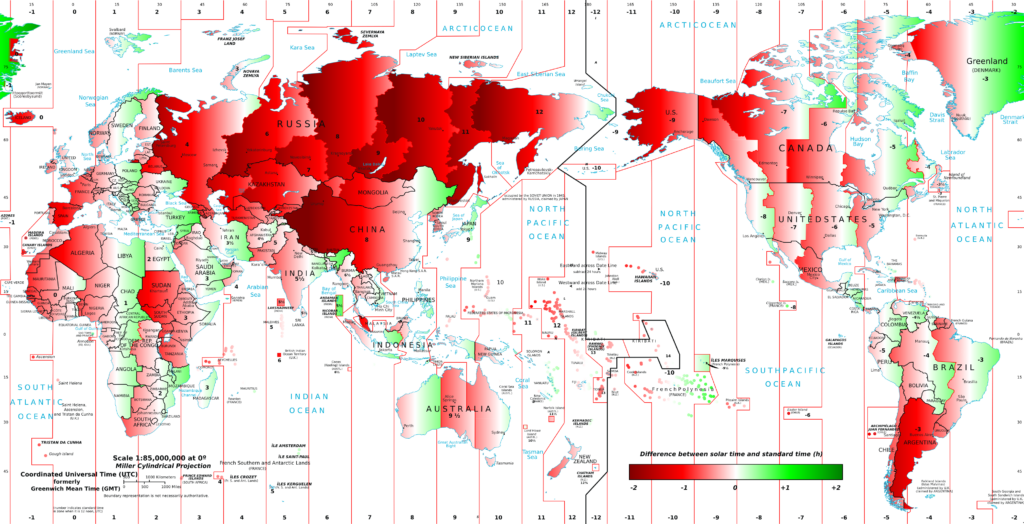
Understanding the Difference Between Standard Time and Daylight Saving Time
Are you curious about the difference between standard time and daylight saving time? Let’s dive into the world of timekeeping and explore what sets these two concepts apart.
What is Standard Time?
Standard time, also known as permanent time or civil time, refers to the time zone established by a country or region. It is based on the sun’s position in the sky at a specific meridian, which determines the local time of day. In other words, standard time is the time that we use every day, without any adjustments.
Standard time has been the cornerstone of modern society for over 130 years, and its establishment was a significant achievement in the field of timekeeping. The concept of standard time was first introduced at a conference in Washington, D.C. in 1884, where representatives from various countries came together to establish a universal system for timekeeping.
The resulting system divided the world into 24 time zones, each separated by one hour. This allowed for easier communication and trade between different regions, as well as facilitated global navigation and transportation.
What is Daylight Saving Time?
Daylight saving time (DST) is the practice of temporarily advancing clocks during the summer months by one hour so that people can make the most of the sunlight during their waking hours. This means that when it’s typically daylight outside in the morning, we move our clocks forward by one hour, effectively gaining an extra hour of daylight in the evening.
The idea of DST was first proposed by Benjamin Franklin in 1784, but it didn’t become widely adopted until World War I, when many countries implemented DST as a way to conserve energy. The practice has since been adopted by over 70 countries around the world, although the start and end dates may vary significantly.
The History of Standard Time
In addition to its role in modern society, standard time has also played an important role in shaping our understanding of time itself. Before the introduction of standard time, different regions had their own local time standards, which often conflicted with one another. This led to confusion and difficulties in communication and trade.
The establishment of standard time helped to resolve these issues by providing a universal system for timekeeping that could be used across different regions. Today, standard time is an essential component of modern society, enabling global communication, trade, and navigation.
Standard Time vs. Daylight Saving Time
So, what’s the difference between standard time and daylight saving time? In short, standard time is the base time zone that we use every day, while daylight saving time is the practice of adjusting our clocks to make better use of natural light during certain times of the year.
While standard time provides a consistent framework for timekeeping, DST allows us to take advantage of the extra daylight hours during the summer months. This can lead to increased productivity, improved physical and mental health, and reduced energy consumption.
When Does Standard Time Begin and End?
In Italy, for example, standard time begins on the last Sunday of March and ends on the last Sunday of October. This means that during these periods, we stick to our regular schedule, without any adjustments.
Other countries have different rules regarding standard time and DST. For instance, in the United States, DST typically starts on the second Sunday of March and ends on the first Sunday of November.
How Does Daylight Saving Time Work in Different Countries?
Different countries have different rules when it comes to DST. In some countries, like those in Europe and Switzerland, DST begins on the last Sunday of March and ends on the last Sunday of October. In other countries, like Japan, DST typically starts on the first Sunday of April and ends on the last Sunday of October.
In addition to these differences, some countries have different rules regarding the start and end dates of DST. For instance, in India, DST begins on the second Monday of March and ends on the second Monday of October.
The Benefits of Daylight Saving Time
One of the main benefits of DST is that it helps us make better use of natural light during the summer months. By moving our clocks forward by one hour, we can enjoy more daylight in the evening, which can lead to increased productivity, improved physical and mental health, and reduced energy consumption.
Studies have shown that DST can also lead to increased physical activity, improved mood, and reduced risk of chronic diseases like heart disease and diabetes. Additionally, DST has been linked to a reduction in crime rates, as well as an increase in outdoor activities and social events.
The Drawbacks of Daylight Saving Time
However, there are also some drawbacks to DST. For example, it can disrupt our sleep patterns, especially for people who work non-traditional hours or have family obligations during the day. Additionally, the time change can cause confusion and disorientation, particularly for older adults and those with pre-existing medical conditions.
In some countries, the disruption caused by DST is more pronounced than others. For instance, in Australia, where DST begins on the first Sunday of October and ends on the first Sunday of April, the time change can be quite dramatic, leading to increased fatigue and decreased productivity.
Conclusion
In conclusion, standard time and daylight saving time are two concepts that may seem similar at first glance, but they serve different purposes. While standard time is the base time zone that we use every day, DST allows us to take advantage of natural light during certain times of the year.
By understanding the benefits and drawbacks of each concept, we can appreciate the importance of timekeeping in modern society. Whether it’s standard time or DST, our ability to manage time effectively is essential for achieving success and happiness in our personal and professional lives.
FAQs
Q: What is the main purpose of daylight saving time?
A: The main purpose of daylight saving time is to make better use of natural light during the summer months.
Q: When does standard time begin and end in Italy?
A: Standard time begins on the last Sunday of March and ends on the last Sunday of October in Italy.
Q: How many countries observe daylight saving time?
A: About 70 countries around the world observe daylight saving time, although the start and end dates may vary.
Q: Can I adjust my clocks manually to compensate for the time change?
A: No, it’s generally recommended to follow the official guidelines set by your country or region regarding daylight saving time.
Q: Are there any health benefits associated with daylight saving time?
A: Yes, studies have shown that daylight saving time can lead to increased physical activity, improved mood, and reduced risk of chronic diseases like heart disease and diabetes.
Q: Can I adjust my clocks manually to compensate for the time change if I live in a rural area or travel frequently?
A: It’s generally not recommended to adjust your clocks manually, as this can cause confusion and disruptions to your daily routine. Instead, follow the official guidelines set by your country or region regarding daylight saving time.
Q: Can I use Daylight Saving Time as an excuse for being late or unproductive during the summer months?
A: No, it’s not a valid excuse! While DST may provide some benefits, it’s still important to maintain good time management and productivity habits.


