
As businesses look for ways to improve their work environments, one crucial aspect that cannot be overlooked is assessing the luminous pollution present in these spaces. This is particularly important as it allows companies to reap numerous benefits.
Why Monitor Luminous Pollution?
The first and foremost benefit of monitoring luminous pollution is ensuring your lighting system works optimally for all people using a space. By doing so, you can guarantee that your work environment is comfortable and meets the relevant safety regulations outlined in workplace safety laws. Moreover, by having this knowledge, companies can ensure they are adhering to industry standards and regulations.
The Importance of Luminosity
Luminosity plays a vital role in our daily lives, and its impact on our well-being cannot be overstated. Studies have shown that prolonged exposure to insufficient or excessive light levels (often referred to as luminous pollution) can pose serious health risks. Prolonged exposure to poor lighting conditions may lead to vision problems, stress, and even long-term damage.
Utilizing a Lux Meter
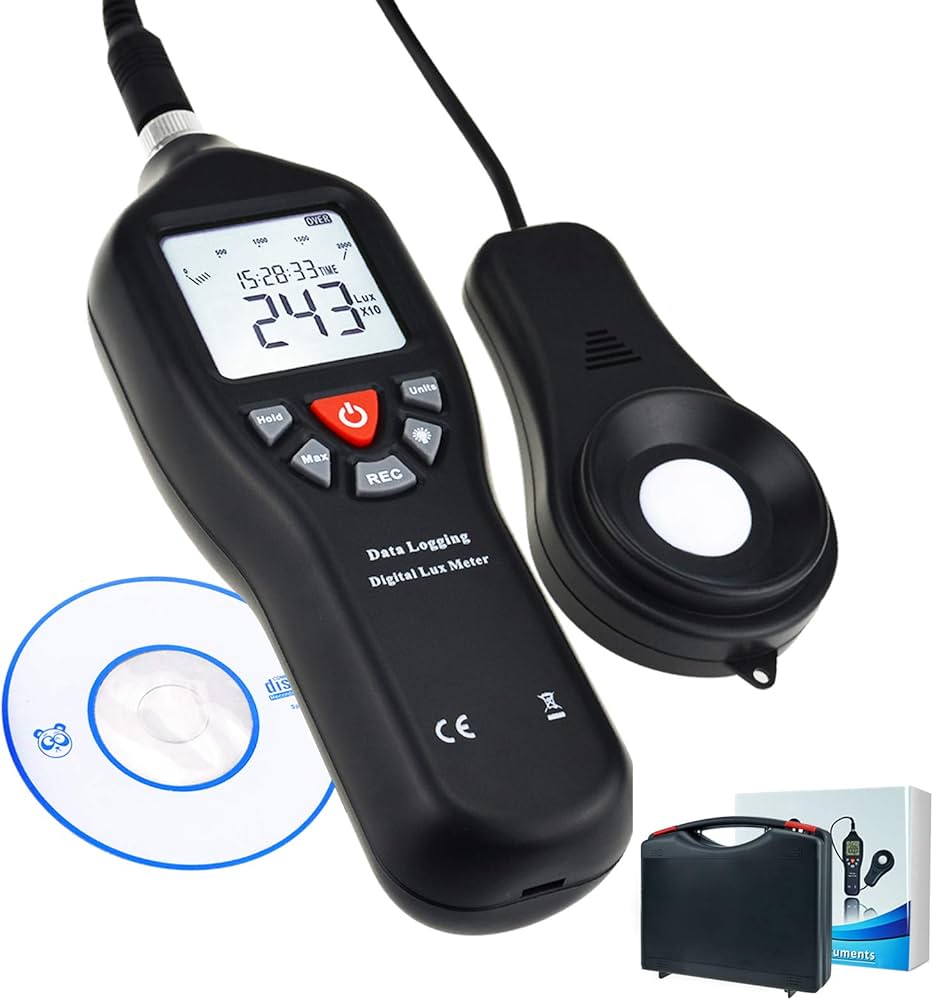
Given the importance of monitoring luminous pollution, utilizing a lux meter is essential for all businesses. This specialized tool allows you to measure light intensity levels easily and accurately. A lux meter can be denoted as an exposure meter and consists of a sensor that captures light signals or can be paired with an external probe to assess illumination levels.
Characteristics of Lux Meters
Lux meters come in two types: those integrated into the device itself, which capture light signals directly, and those paired with external probes that send data through a cable. Both models are effective for measuring luminosity, but the external probe model provides more flexibility. It’s also worth noting that the most common unit of measurement used is lux.
When to Use a Lux Meter
Lux meters are commonly used in offices, public areas like schools, hospitals, and any other environment where adequate lighting is vital. Their use helps employers ensure compliance with workplace safety regulations while making their workspaces more comfortable for employees. Furthermore, by using a lux meter, businesses can confidently say they adhere to industry standards.
Technical Characteristics of Lux Meters
The performance of a lux meter depends on several key factors:
- Rapid Response Time: The speed at which the device responds to changes in light levels.
- Memory Functionality: The ability to store data for later analysis.
- Data Transfer: How easily data can be transferred between devices or recorded.
- Average Light Levels: An indicator of the overall brightness in a given space.
- Self-Sustaining Operation: Whether the device operates without power.
- Portability: The ease with which the device can be transported.
Benefits of Using a Lux Meter
The benefits of using a lux meter are numerous. Firstly, it allows businesses to ensure their work environments meet safety standards. Secondly, it makes it easier for companies to maintain optimal lighting levels, leading to increased comfort and productivity among employees. Additionally, by choosing the right device, businesses can save money in the long run due to reduced energy consumption.
Natural Light vs. Artificial Light
While lux meters are essential for assessing artificial light levels, natural light should always be prioritized when possible. Natural sources of light provide a healthier alternative, promoting better well-being and reducing the risk of luminous pollution.
Common Types of Lighting Sources Used in Workspaces
Workplaces often employ a variety of lighting solutions to accommodate different tasks, such as reading, writing, or assembly line work. Common types of lighting sources used include:
- Incandescent Bulbs: An inexpensive option that provides warm light but has a short lifespan and relatively low efficiency.
- Halogen Lamps: Similar to incandescent bulbs but have a longer lifespan and higher efficiency.
- Fluorescent Lighting: Energy-efficient and durable, but can produce UV radiation and are often less effective in certain color temperatures.
- LED Light Bulbs: High-efficiency, long-lasting, and environmentally friendly. However, they may require additional consideration for dimming capabilities.
Tips for Optimizing Workspaces with Lux Meters
When using a lux meter to optimize workspaces, consider the following:
- Assess ambient light levels: Start by measuring overall illumination levels in your workspace.
- Determine task-specific lighting needs: Use data from your lux meter to inform decisions about individual task requirements (e.g., reading, writing).
- Adjust fixtures or add layers of lighting: Balance sufficient light intensity with energy efficiency and avoid over-lighting areas that are naturally shaded by walls or furniture.
Common Mistakes When Using Lux Meters
To ensure accurate results from your lux meter:
- Avoid using it near reflective surfaces (e.g., water, metal).
- Minimize direct sunlight exposure.
- Calibrate the device according to manufacturer instructions.
- Understand how to properly clean and maintain the sensor or probe for optimal performance.
By understanding the importance of monitoring luminous pollution and utilizing a lux meter effectively, businesses can create healthy, productive work environments that prioritize employee well-being.


