
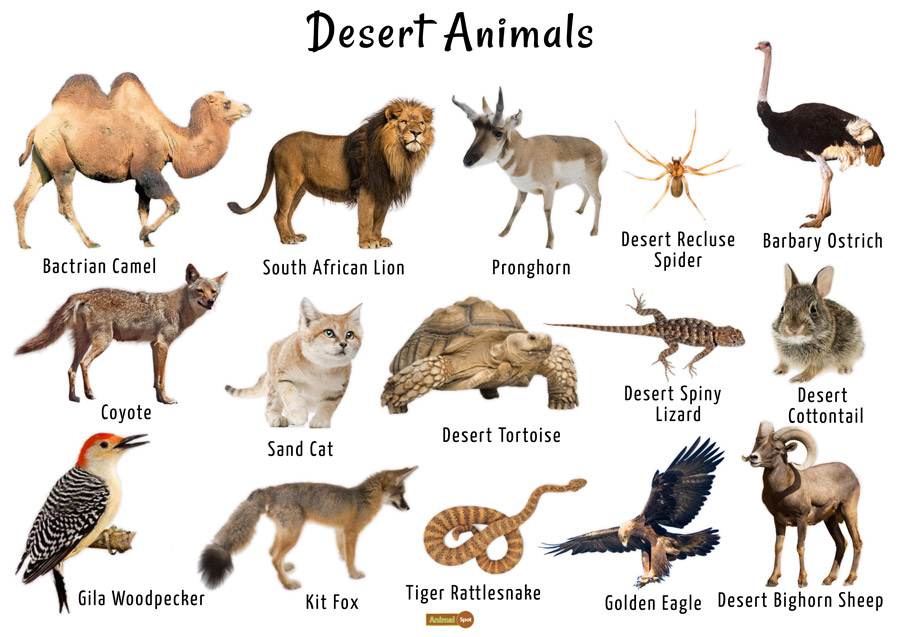
The desert is a special place, not everyone can adapt to it, but only the animals of the desert can thrive in this environment, often even exploiting its challenges. It’s quite common for species to develop methods of adaptation to survive in their habitat or, for some reason, find themselves living there. What’s particularly interesting is observing how desert animals have done so.
Deserts Around the World: A Look at the Most Challenging Ones
Let’s start with the most unlikely desert: Antarctica. This area is incredibly arid and hot, with scarce flora and fauna due to its difficult environmental conditions: low humidity, freezing temperatures, ice everywhere, strong winds that reach up to 320 kilometers per hour. Only a few microorganisms can survive on land, while in the water, there are animals of the desert that continue to reside here with bravery.
One of these is the penguin, which also lives on land thanks to a thick layer of fat that protects it from the cold. This bird eats fish, penguins, and other marine animals but is also hunted by humans for its skin and fat.
Antarctica is home to several other desert dwellers, including the Petrello Antartico, elephant seal, and Otaria Orsina. The first is a bird with dark brown and white feathers that while swimming chases fish and small squid.
The elephant seal is well-known; it’s a carnivorous mammal with a long proboscis similar to an ivory tusker. Males are almost twice the weight of females, as they fiercely compete for mating rights.
Like the penguin, the Otaria Orsina is also a marine mammal but more like a seafaring seal. It eats krill, fish, and crustaceans, and although it has faced threats to its existence in recent centuries, it still survives.
Deserts of the World: Animals Adapting to Survival
This is one of the most well-known deserts, and many of its inhabitants may surprise you. Let’s look at some lesser-known animals starting with the Addax, an antelope with vine-like horns that’s found in Nigeria and Chad but is now endangered due to threats in the desert.
The Sahara Desert is home to the famous dromedary camel, which has a valuable and useful hump on its back. The West African crocodile, smaller than those of the Nile River, is another animal often used as a pet.
We also have the Yellow Scorpion, entirely yellow except for its tail, which helps it blend in with the sand. Its venom may not be fatal but causes excruciating pain.
The Desert Fox, or Fennec, has an unusual coat color mix of blonde and reddish tones to help it blend into dunes of sand. Its oversized ears are specially designed to let it regulate its body temperature when the heat becomes unbearable.
Desert Animals in North America: The Most Fascinating Ones
In Mexico’s desert, four different areas exist across the country that host fascinating animals like the American Fox, also known as the “Fast Fox”. This carnivorous mammal is about the size of a cat and primarily lives at night.
Many people know it from cartoons but may not realize how fast it can run, reaching speeds of 90 kilometers per hour. The Pronghorn Antelope and Salamander Tiger are equally fascinating creatures in this desert environment.
The Coyote, or Roadrunner, is another animal found in the North American Desert. Although small and unable to fly, it’s extremely speedy: it reaches 30 kilometers per hour. Together with the Roadrunner, we also introduce the Coyote, a very adaptable animal that can be found in both North America and Mexico.
The Coyote has formed groups for hunting and survival; they defend themselves against predators like humans, pumas, and gray wolves. Its haunting cries are often heard by people who haven’t seen it before.
Unique Desert Adaptations
Some animals have developed unique adaptations to survive in the harsh desert environment. For example:
- The kangaroo rat has a special adaptation that allows it to store water in its bladder, which can hold up to 10 times its body weight.
- The horned lizard can puff up its body to make itself appear larger and more intimidating to predators.
- The spiny-tailed iguana has developed a specialized skin structure that helps it conserve water by minimizing moisture loss.
Conclusion
In conclusion, the desert animals have adapted to survive in one of the most challenging environments on Earth. From penguins living on land thanks to a thick layer of fat to the fast Coyote, these incredible creatures continue to thrive.
As we learn more about these fascinating animals and their ways of surviving, we gain a deeper appreciation for biodiversity and the intricate relationship between species and their habitats.
Frequently Asked Questions
- Q: What is the most challenging desert on Earth?
- The Antarctic Desert is one of the harshest environments due to its extreme cold temperatures, humidity, ice presence, and strong winds.
- Q: Why do animals adapt to survive in deserts?
- Animals adapt to survive by developing special traits that enable them to cope with desert conditions, such as thick layers of fat or oversized ears for temperature regulation.
- Q: Which animal is known for its speed in the North American Desert?
- The Coyote, also known as the Roadrunner, can reach speeds of 30 kilometers per hour and is extremely agile.
- Q: What are some unique adaptations that animals have developed to survive in deserts?
- Animals such as penguins with fat layers for warmth, fennec foxes with oversized ears for temperature regulation, and camels with valuable humps on their backs all demonstrate incredible adaptations.
- Q: Can desert animals be found outside of these specific environments?
- Some animals like the Coyote have adapted to live in multiple environments, including both North America and Mexico.
These questions delve deeper into the fascinating world of desert animals, providing answers that further illustrate their remarkable ability to survive and thrive in some of Earth’s most challenging ecosystems.


