
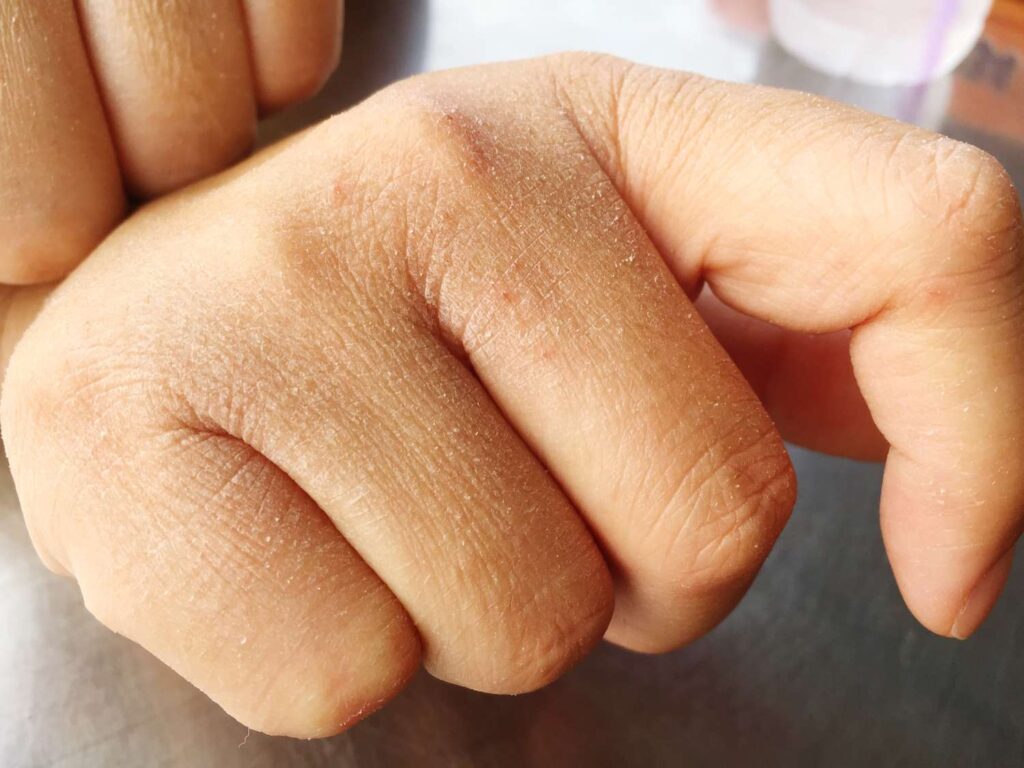
Dry skin, also known as xerosis cutanea, is a common problem that can occur at any age due to various reasons. While using a moisturizing cream can help treat dry skin, some individuals may need the assistance of a dermatologist for a more targeted treatment. Extremely dry skin can be a sign of an underlying skin condition, such as dermatitis.
Symptoms of Dry Skin
The symptoms of dry skin can be numerous, but the primary ones include:
- Rough, scaly, or desquamated skin
- Pruritus (itching)
- Ingrained and discolored skin (especially in individuals with darker skin tones)
- Creases in the skin that may bleed if severe
- Screpolation of lips
When skin is dry and cracks, it becomes more susceptible to bacterial penetration. Once bacteria enter the skin, they can cause infections, displaying red, painful spots on the skin.
Causes of Dry Skin
Anyone can experience dry skin, as it occurs when the skin “loses” too much water or excessive fat. Some individuals are more prone to dry skin due to certain factors:
- Age: As we age, our skin becomes thinner and drier.
- Climate: Living in a dry, desert-like climate contributes to dry skin.
- Skin Conditions: People who have had eczema (also known as atopic dermatitis) as children are more likely to experience dry skin as adults. Psoriasis also causes extremely dry skin.
- Occupation: Healthcare professionals, hairstylists, and others who frequently immerse their skin in water may develop dry, rough, and cracked skin.
- Swimming: Swimming in pools with high levels of chlorine can dry out the skin.
Diagnosing Dry Skin
To determine if dry skin is a sign of an underlying condition, a dermatologist will:
- Conduct a thorough examination of the affected area
- Ask questions about when the symptoms began
- Perform necessary tests to identify the cause
Treatment options may include prescription creams or ointments to alleviate symptoms and help retain moisture.
Treating Dry Skin
A healthcare professional can recommend the following treatments:
- Moisturizing Creams: Applying a moisturizer regularly during the day can be beneficial. These come in various forms, such as lotions, creams, oils, and unguents.
- Prescription Medications: If skin is severely dry, a dermatologist may prescribe topical corticosteroids (corticosteroids) or immunomodulators (tacrolimus, pimecrolimus).
- Lifestyle Changes: Avoiding activities that cause excessive water loss and making changes to daily habits can help prevent dry skin.
In many cases, using moisturizer regularly during the day is enough to alleviate symptoms. However, if this doesn’t work, consulting a healthcare professional is necessary.
Preventing Dry Skin
Some tips to prevent or reduce the severity of dry skin include:
- Avoiding hot water, which strips away natural oils from the skin
- Using mild soap
- Limiting time spent in the shower or bath
- Applying moisturizer immediately after bathing or showering
- Softening the skin before shaving to prevent irritation
- Using an humidifier to maintain a moist environment
- Soothing cracked lips with petroleum-based balms.
Dry skin can be managed with proper treatment and lifestyle adjustments. By understanding its causes, symptoms, and treatment options, individuals can take steps towards maintaining healthy, moisturized skin.
Frequently Asked Questions
- What triggers dry skin?
- Dry air, harsh soaps, excessive bathing, or genetics
- Can I treat dry skin at home?
- Yes, using a moisturizing cream and making lifestyle changes can be beneficial.
- How often should I moisturize my skin to prevent dryness?
- Aim for regular application during the day, especially after bathing or showering.
- What are some common signs of an underlying condition causing dry skin?
- If dry skin persists or worsens despite proper treatment, consult a dermatologist for further evaluation.
- Can I use warm water when washing my face?
- It’s recommended to use lukewarm water instead of hot water to avoid stripping away natural oils.
Maintaining healthy, moisturized skin requires attention to several factors, including the environment and daily habits. By understanding the causes of dry skin and taking appropriate steps, individuals can reduce its occurrence and prevent related issues.
Dry Skin in Different Seasons
Understanding how dry skin changes throughout the year is essential for managing it effectively. Here’s a breakdown of how different seasons affect dry skin:
- Spring: As winter ends, the air becomes warmer and more humid. This can cause dry skin to become flaky due to increased evaporation.
- Summer: High humidity levels in summer weather can lead to excessive oil production, causing acne and other oily skin issues.
- Autumn/Winter: Cold temperatures and low humidity cause dry air, leading to dryness, itchiness, and discomfort.
Dry Skin in Pregnancy
Pregnancy is a time when hormonal changes affect the skin. Some pregnant women may experience more severe dry skin due to:
- Increased levels of estrogen
- Blood volume expansion
- Increased sensitivity to cold temperatures
To manage dry skin during pregnancy:
- Stay hydrated by drinking plenty of water.
- Use gentle, fragrance-free cleansers and moisturizers.
- Avoid harsh soaps and exfoliants.
- Apply a humidifier in your home.
Dry Skin in Older Adults
As we age, our skin’s natural moisture barrier weakens, making it more susceptible to dryness. Dry skin can be caused by:
- Thinning of the stratum corneum
- Reduced blood flow
- Decreased production of sebum
To combat dry skin in older adults:
- Use a gentle cleanser and moisturizer.
- Apply a humidifier in your home to maintain moisture levels.
- Stay hydrated by drinking plenty of water.
- Avoid excessive bathing or showering.
Conclusion
Dry skin is a common issue that can be managed with proper treatment and lifestyle adjustments. By understanding its causes, symptoms, and treatment options, individuals can take steps towards maintaining healthy, moisturized skin. Additionally, being aware of how different seasons and life stages can affect dry skin allows for more effective management strategies.
Additional Tips
- Consider using a humidifier in your home to maintain moisture levels.
- Avoid harsh soaps and exfoliants, which can strip away natural oils from the skin.
- Use gentle, fragrance-free cleansers and moisturizers.
- Stay hydrated by drinking plenty of water.
- Apply moisturizer immediately after bathing or showering.
By incorporating these tips into your daily routine, you can help prevent dry skin and maintain healthy, moisturized skin.


