
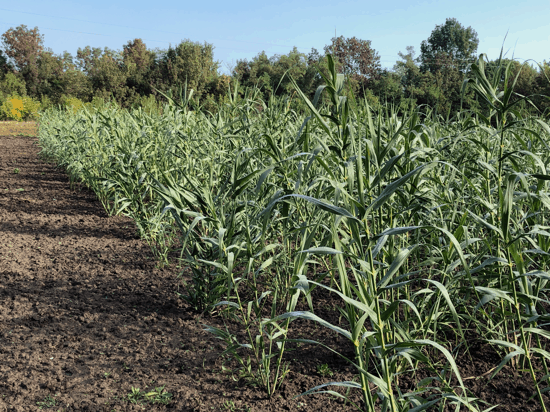
Growing Arundo Donax as an energy crop has proven to be highly productive, yielding approximately 8-10 tons of dry biomass per hectare in the first year, 20-25 tons of dry biomass per hectare in the second year, and up to 30-35 tons of dry biomass per hectare from the third year onwards. However, it’s essential to note that the yield may be lower in the first year due to limited production and only becomes appreciable from the second year forward.
Why Arundo Donax?
Compared to other polyn annual crops like miscanthus and panic grass, growing Arundo Donax offers several advantages. One of the key benefits is its ease of cultivation, which can be done using the same equipment and tools used by conventional agricultural practices. This makes it an attractive option for farmers looking to diversify their crops and reduce their environmental impact.
A Brief History of Arundo Donax
Arundo Donax is a perennial grass native to the Middle East, widely distributed throughout the Mediterranean region. It has adapted well to hot and temperate climates, making it an ideal crop for regions with limited arable land. Its ability to thrive in marginal or secondary lands also makes it an excellent choice for areas where other crops may struggle.
Key Characteristics of Arundo Donax
One of the most striking features of Arundo Donax is its remarkable water efficiency. Under normal conditions, the crop produces 2-3 grams of dry biomass per liter of water, while under drought stress, this value can increase to 6-10 grams per liter. Another notable characteristic is that the crop is typically cultivated through mowing, rather than sowing, like miscanthus and panic grass.
Cultivation Methods
As with miscanthus and panic grass, Arundo Donax is usually harvested in the winter months, which offers several benefits. For one, it allows for better soil aeration, reducing evaporation and restoring nutrients to the soil. Additionally, this practice can help reduce nutrient losses due to leaching. In terms of cultivation, Arundo Donax shares some similarities with miscanthus and panic grass, including its reliance on mowing rather than sowing.
Mineral Requirements
Arundo Donax has relatively high mineral requirements, particularly during the growth and rhizome accumulation phases. This means that the crop will require regular fertilization to maintain optimal health and productivity.
Propagation Methods
Like miscanthus and panic grass, Arundo Donax can be propagated using mowing rather than sowing. This method involves creating a “tall cut” of the crop, which allows for new shoots to emerge from the base of the plant.
Growth Stages and Management Practices
Understanding the growth stages and management practices of Arundo Donax is crucial for optimizing its productivity and sustainability. The crop can be divided into three main phases: establishment, growth, and maturation.
- Establishment Phase: During this phase, the crop requires regular watering and fertilization to promote healthy growth and development.
- Growth Phase: Once established, Arundo Donax enters a period of rapid growth, where it can be mowed regularly to control its height and promote new shoots.
- Maturation Phase: As the crop reaches maturity, it becomes less productive, but still requires regular mowing and maintenance to ensure its sustainability.
Soil Requirements
Arundo Donax prefers well-drained soils with a pH range of 6.0-7.0. It can tolerate a wide range of soil types, including clay, loam, and sand, making it an excellent choice for areas with limited arable land.
Climate and Weather Considerations
Arundo Donax is adapted to hot and temperate climates, making it suitable for regions with limited rainfall. However, the crop requires adequate water supply during its growth phase, particularly during periods of drought or extreme heat.
Pest and Disease Management
While Arundo Donax is generally considered a low-maintenance crop, it can be susceptible to pests and diseases if not properly managed. Regular monitoring and maintenance practices, such as mowing, pruning, and applying pesticides, are essential for maintaining the crop’s health and productivity.
Fertilization Requirements
Arundo Donax requires regular fertilization to maintain optimal health and productivity. The fertilizer application should be based on the crop’s mineral requirements, taking into account factors such as soil type, pH, and climate.
Irrigation and Water Management
Arundo Donax has a high water efficiency rate, making it an excellent choice for regions with limited water availability. However, regular irrigation is still necessary during periods of drought or extreme heat to maintain the crop’s health and productivity.
Conclusion
Growing Arundo Donax as an energy crop offers several benefits, including its ease of cultivation, water efficiency, and adaptability to marginal or secondary lands. By understanding its unique characteristics and cultivation methods, farmers can optimize their yields and reduce their environmental impact.
Frequently Asked Questions (FAQs)
- Q: How long does it take for Arundo Donax to mature?
A: Arundo Donax typically takes 3-5 years to reach full maturity. - Q: What are the ideal soil conditions for growing Arundo Donax?
A: Arundo Donax prefers well-drained soils with a pH range of 6.0-7.0. - Q: How often should I mow my Arundo Donax crop?
A: The frequency of mowing will depend on the specific cultivar and growth stage, but typically ranges from 2-4 times per year. - Q: Can Arundo Donax be grown in areas with limited water availability?
A: Yes, Arundo Donax is highly drought-tolerant and can thrive in areas with low rainfall. - Q: Are there any specific fertilization requirements for growing Arundo Donax?
A: Yes, Arundo Donax requires regular fertilization to maintain optimal health and productivity, particularly during the growth and rhizome accumulation phases. - Q: Can Arundo Donax be propagated using seeds or tissue culture?
A: While Arundo Donax can be propagated using seeds, mowing is a more efficient and effective method for large-scale cultivation. - Q: How does Arundo Donax compare to other energy crops in terms of yields and environmental impact?
A: Arundo Donax has been shown to have higher yields and lower environmental impacts compared to other energy crops like miscanthus and panic grass. - Q: Are there any potential drawbacks or challenges associated with growing Arundo Donax?
A: While Arundo Donax is generally considered a low-maintenance crop, it can be susceptible to pests and diseases if not properly managed.
Future Directions and Research Opportunities
Research into the cultivation and management of Arundo Donax as an energy crop has significant potential for improving its productivity and sustainability. Some areas that require further research include:
- Genetic Improvement: Developing new cultivars with improved yields, disease resistance, and drought tolerance.
- Soil Management: Investigating optimal soil management practices to maximize water efficiency and reduce nutrient losses.
- Integrated Pest Management: Developing integrated pest management strategies to minimize the use of pesticides and maintain crop health.
By addressing these research gaps, we can unlock the full potential of Arundo Donax as a sustainable energy crop, contributing to a more environmentally friendly and food-secure future.


