
As we strive to reduce our environmental impact, many of us wonder if it’s possible to use carbon dioxide (CO2) in a beneficial and eco-friendly way. The answer is yes, thanks to the technology known as dry ice blasting or cryosabbiatura.
What is Dry Ice Blasting?
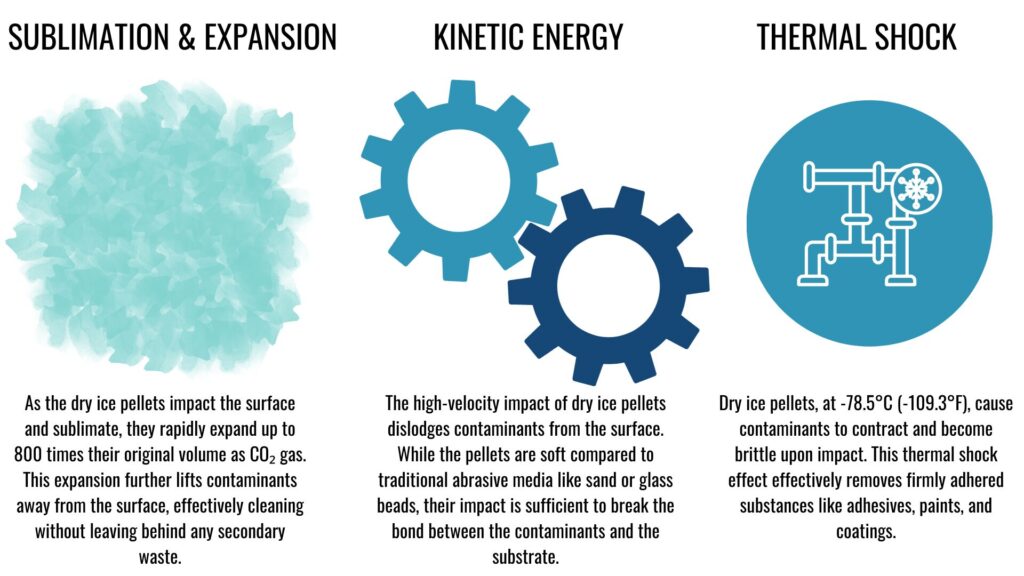
Dry ice blasting uses the properties of solid CO2 to clean various materials contaminated with substances of different natures. This process involves a dry cleaning technique that utilizes a thermal shock to detach surface deposits, leaving no residues behind.
How Does it Work?
The CO2 gas is transformed into dry ice through compression, from its gaseous state to a solid state at ambient temperature and pressure of 200 bar. The compressed CO2 is then liquefied, injected into a vacuum chamber, solidified, and finally reduced to pellets. These pellets are launched at high velocity on the surface to be cleaned, producing a thermal shock that sublimates further energy, removing deposits in the transition from solid to gas without going through liquid phase. The process can be defined as dry washing: it doesn’t release moisture residues like water ice (idrolavaging).
What Can Be Removed with Dry Ice Blasting?
This technique is widely used for the removal of:
- Adhesives
- Asphalt
- Tar
- Decals
- Efflorescences (mineral salt crystallization)
- Chewing gum
- Graffiti
- Grease
- Ink
- Calcified deposits
- Black patina (soot, smoke)
- Organic stains (molds)
- Resins
- Paints
Advantages of Dry Ice Blasting
- Cleans without using harsh chemicals: This makes it an ideal solution for cleaning delicate surfaces or items that may be damaged by chemical-based cleaners.
- Reduces waste from cleaning processes and doesn’t generate special hazardous by-products: By eliminating the need for water or other cleaning agents, dry ice blasting significantly reduces the amount of waste produced during the cleaning process.
- Non-toxic for users and non-flammable, making it suitable where water or other cleaning products are not allowed. This makes it an excellent choice for use in areas with limited access to water or where chemical-based cleaners pose a health risk.
- Acts as a biodegradable and eco-friendly treatment compared to chemical treatments: By avoiding the use of harsh chemicals, dry ice blasting offers a more environmentally friendly alternative that is gentler on the environment.
Applications of Dry Ice Blasting
Dry ice blasting has numerous applications across various industries. Some of these include:
- Automotive Industry: The technique is widely used in car repair shops and dealerships to clean surfaces such as engines, chassis, and wheels.
- Construction Industry: Dry ice blasting is employed for cleaning concrete, asphalt, and other surfaces after construction or renovation projects.
- Manufacturing Industry: Companies use dry ice blasting to clean machinery, equipment, and production lines, ensuring smooth operations and minimizing downtime.
- Restoration Industry: The technique is used in the restoration of historical buildings, monuments, and cultural artifacts to remove pollutants and restore original surfaces.
- Environmental Conservation: Dry ice blasting can be employed for cleaning up oil spills and other environmental hazards.
Equipment Used in Dry Ice Blasting
Several types of equipment are required to perform dry ice blasting effectively. These include:
- Dry Ice Generators: These machines produce high-pressure CO2 gas, which is then compressed into liquid form.
- Vacuum Chambers: Vacuum chambers create a pressure difference that allows the CO2 to sublimate and be transported to the surface for cleaning.
- Pelletizing Equipment: This equipment converts the liquid CO2 into solid pellets, which are launched at high velocity onto the surface to be cleaned.
- Control Systems: Advanced control systems monitor the blasting process, adjusting temperature and pressure as needed to optimize efficiency.
Safety Precautions
When working with dry ice blasting equipment, several safety precautions must be taken:
- Personal Protective Equipment (PPE): Wearing gloves, goggles, and a face mask is essential for protecting against thermal shock and CO2 exposure.
- Ventilation: Proper ventilation is necessary to prevent the accumulation of CO2 in enclosed spaces.
- Emergency Procedures: Regular drills and emergency procedures should be established in case of accidents or equipment malfunctions.
Conclusion
Dry ice blasting offers a promising eco-friendly cleaning solution that leverages the unique properties of carbon dioxide for effective, residue-free cleaning processes without the need for harsh chemicals or water-based washing methods. By understanding how dry ice blasting works, its applications, and safety precautions, individuals can unlock the full potential of this innovative technique.
Future Directions
As technology advances, it’s likely that we’ll see more efficient and cost-effective ways to utilize CO2 in cleaning processes. Some possible areas for future research include:
- Improving Pelletizing Efficiency: Developing more efficient pelletizing equipment could reduce energy consumption and increase overall productivity.
- Developing Customized Blasting Techniques: Creating tailored blasting techniques for specific industries or applications could enhance the effectiveness of dry ice blasting.
Challenges and Limitations
While dry ice blasting presents numerous benefits, there are also several challenges and limitations to consider:
- Noise Pollution: The loud noise generated by dry ice blasting equipment can be a concern in residential areas or other spaces with sensitive equipment.
- Equipment Maintenance: Regular maintenance is necessary to ensure the longevity of dry ice blasting equipment, which can add to operational costs.
- Scalability: Large-scale applications of dry ice blasting may require significant investments in equipment and personnel.
Conclusion
In conclusion, dry ice blasting offers a promising eco-friendly cleaning solution that leverages the unique properties of carbon dioxide. By understanding its advantages, applications, safety precautions, and future directions, we can unlock the full potential of this innovative technique.


