
Correct Posture: Exercises and Advice
Maintaining a correct posture is not only important for looking fit and well-maintained, but also for avoiding chronic back pain and muscle discomfort that can have serious consequences, including irreversible damage to the spine. Incorrect posture may also lead to issues with body shape and bone structure.
It’s often assumed that someone who appears hunched or moves clumsily has poor posture. However, this is not always the case, as many people develop poor habits due to fatigue or distraction. It’s essential for everyone to be aware of their posture, regardless of whether they appear to have good posture or not.
The Importance of Posture
Maintaining a correct posture can help improve overall health and well-being by reducing strain on muscles and joints, improving breathing efficiency, and preventing injuries. When your body is in the correct position, it allows for optimal functioning of the muscles, tendons, and ligaments that support it.
Poor posture can lead to a range of problems, including:
- Chronic back pain: Weakened core muscles can put unnecessary strain on the spine, leading to discomfort and pain.
- Muscle fatigue: Poor posture can cause muscle imbalances, leading to overworked and underworked muscles.
- Bone density issues: Weakened bones due to lack of use or poor alignment can increase the risk of osteoporosis and fractures.
- Respiratory problems: Breathing difficulties can be caused by a slouched spine that restricts lung expansion.
Assessing Your Posture
Before you start making changes, it’s essential to assess your posture. Take a few moments to observe how you stand, sit, and move throughout the day. Pay attention to any areas of tension or discomfort in your body.
Consider using a mirror or asking a friend to provide feedback on your posture. You can also try recording yourself standing or sitting and watching the video to identify areas for improvement.
Standing Posture
When standing, it’s best to keep your knees slightly bent and your chest open, allowing your abdominal muscles to expand and enable you to breathe more efficiently. Ensure that your weight is evenly distributed on both legs.
- Feet: Keep your feet shoulder-width apart and parallel to each other.
- Knees: Slightly bend your knees to take pressure off your spine.
- Hips: Keep your hips relaxed and down, avoiding tilting forward or backward.
- Shoulders: Relax your shoulders, avoiding scrunching them up towards your ears.
When walking, make sure to keep your head and neck straight and avoid looking down, as this can lead to cervical strain. When walking, start with the heel of your foot touching the ground first, followed by the ball of your foot, rather than the other way around (unless you’re dancing).
Sitting Posture
When sitting, avoid dangling your feet off the edge of the chair or bench, and instead keep them firmly on the floor. Keep your back straight and your shoulders relaxed, with no forward curvature.
- Feet: Place your feet flat on the floor or on a footrest if needed.
- Knees: Keep your knees at or below hip level to maintain proper alignment.
- Hips: Relax your hips and avoid tilting forward or backward.
- Shoulders: Keep your shoulders relaxed and down, avoiding scrunching them up towards your ears.
It’s generally recommended to avoid crossing your legs, as this can restrict blood flow and lead to issues like swelling and fatigue. Consider using a footrest or adjusting the height of your chair to achieve proper alignment.
Computer Posture
When working at a computer, follow the same guidelines as when sitting. Make sure to stand up every hour or so to stretch your legs and move around. Use this opportunity to also stretch your arms and rotate your hips, flex your back, and loosen your muscles.
- Monitor: Place your monitor directly in front of you, about 20-25 inches away.
- Keyboard and mouse: Keep your keyboard and mouse close to your body, with wrists straight and elbows at a 90-degree angle.
- Chair height: Adjust the chair height so that your feet are flat on the floor or on a footrest if needed.
Sleeping Posture
Getting into bed can be challenging, especially since it’s common for people to shift positions during sleep without realizing it. To maintain a correct posture while sleeping, try lying on your side with your legs bent and your spine aligned. Using a supportive mattress and pillow can also help alleviate discomfort and promote better sleep.
- Sleeping position: Try to sleep in the same position every night to develop good habits.
- Mattress: Use a supportive mattress that maintains proper spinal alignment.
- Pillow: Choose a pillow that keeps your neck and spine in alignment.
Office Posture
In an office setting, it’s essential not to spend too much time sitting down and to take regular breaks to stretch your legs and move around. Take a walk around your workspace every hour or so, and consider using an anti-fatigue mat or ergonomic chair to support good posture.
- Workspace setup: Arrange your workspace to encourage standing and movement.
- Chair height: Adjust the chair height so that your feet are flat on the floor or on a footrest if needed.
- Monitor placement: Place your monitor directly in front of you, about 20-25 inches away.
Posture Exercises
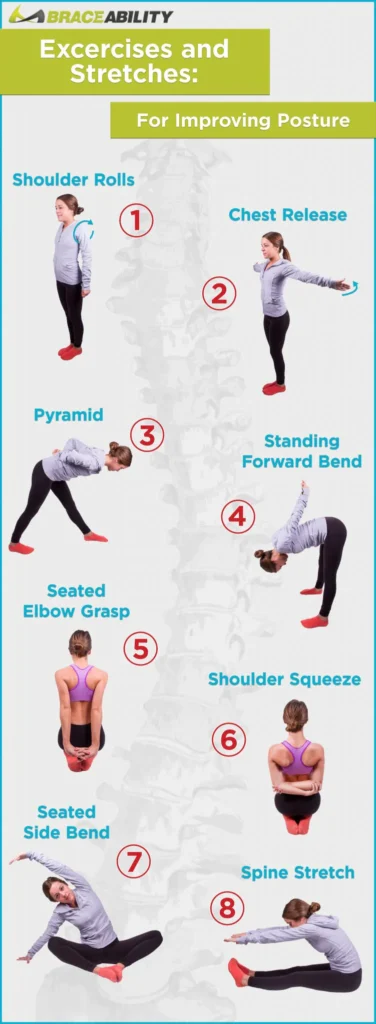
These exercises can be done at home or in any other setting, without requiring specialized equipment. Start by sitting on the floor with your legs straight out in front of you and try to lower your torso down until your hands reach the ball of your feet. This will help stretch your back, shoulders, and neck.
- Pelvic Tilt: Lie on your back with your knees bent and feet flat on the floor. Tilt your pelvis upwards and then back down again, repeating the motion for 10-15 repetitions.
- Shoulder Rolls: Stand or sit with good posture and roll your shoulders forward and backward in a circular motion. Repeat for 10-15 repetitions.
- Chest Stretch: Stand in a doorway with your hands on the doorframe at shoulder height. Lean forward, stretching your chest and shoulders. Hold for 30 seconds.
- Spinal Twist: Sit or stand with good posture and twist your torso to one side, keeping your feet and hips facing forward. Hold for 30 seconds and then repeat on the other side.
Posture Advice
For those looking to improve their posture immediately, there’s a comprehensive guidebook available that offers exercises and tips for achieving correct posture. You can find it on Amazon for around $30.
Consider working with a physical therapist or fitness professional who specializes in posture and spinal alignment. They can provide personalized guidance and support to help you achieve optimal posture.
Additional Resources
- How to Sit Correctly: What It Means
- Sink or Swim: Finding the Perfect Lavabo Height
- The Chinesology Connection
About the Author
Marta Abbà is a health and wellness expert who has written extensively on various topics related to posture, fitness, and self-care. With years of experience in the field, Marta provides actionable advice and exercises to help readers improve their posture and overall well-being.
By incorporating these tips and exercises into your daily routine, you can improve your posture and reduce the risk of chronic back pain and muscle discomfort. Remember, maintaining good posture is a long-term investment in your health and well-being.


