
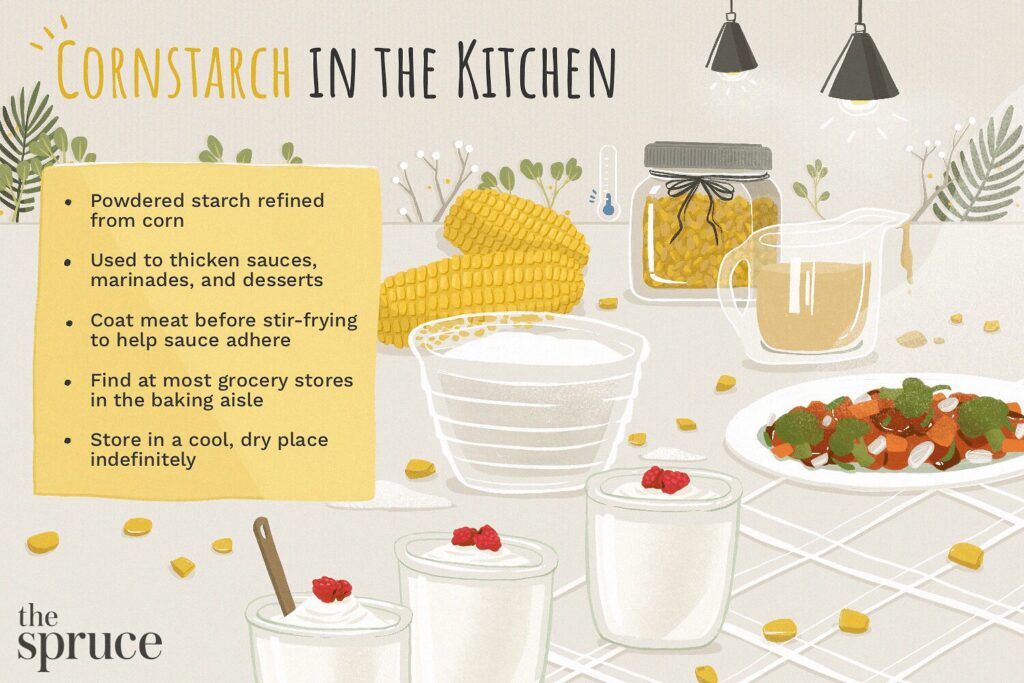
Cornstarch, often mistakenly referred to as wheat flour, is a carbohydrate derived from corn kernels. This white powder has been used for various culinary, domestic, and industrial purposes throughout history, with its roots dating back to the development of cornstarch in 1844 in New Jersey.
Understanding Cornstarch vs. Wheat Flour
Cornstarch and wheat flour are two distinct substances. While wheat flour is primarily made from grains, cornstarch is produced from corn kernels and contains only carbohydrates (without proteins), making it a gluten-free alternative to wheat-based additives in sauces and dressings.
Due to its characteristics, cornstarch is an ideal substitute for wheat flour in many recipes, particularly those that require a clear gel-like texture. Additionally, cornstarch has a negligible flavor compared to wheat flour, providing approximately twice the thickening power. However, it’s worth noting that substituting one with the other might not yield the same results in all recipes.
Using Cornstarch
Cornstarch is highly valued for its thickening properties and versatility. Its ability to gelatinize when heated in the presence of moisture allows it to thicken liquids effectively. When applied correctly, cornstarch can be used as an anti-agglomerant or to absorb moisture from condensation, preventing unwanted texture changes.
Moreover, a small amount of cornstarch mixed with sugar is often used to prevent ice crystals from forming in frozen desserts.
Cooking with Cornstarch
When using cornstarch, it’s crucial to avoid adding it directly to hot liquids, as this can cause the formation of lumps. Instead, mix the cornstarch with a cooler liquid or at room temperature before heating it up to create an even distribution of starch molecules. Once heated, the mixture should be brought to a boil and then cooled to prevent over-gelatinization.
When making thick sauces, dressings, or soups containing cornstarch, avoid freezing them as this can disrupt the gelatinized starch matrix, leading to an unpleasant texture.
Replacing Cornstarch
Various food items can serve as substitutes for cornstarch in different proportions. For instance, using twice the amount of wheat flour will provide a similar thickening effect. Another option is tapioca flour (or rice flour), which can be used in a 1:2 ratio to cornstarch.
Cornstarch in Recipes
Cornstarch’s versatility and thickening properties make it an ideal ingredient for various dishes, such as meat sauces, dressings, soups, custard pastries, and even desserts like cakes and fruit-based treats. Its use is also common in fried foods, marinades for meats, and even ice cream to prevent ice crystals.
Some popular recipes that use cornstarch include:
- Chinese Wonton Soup: Cornstarch is used as a thickening agent to create a clear broth.
- Fried Chicken: Cornstarch helps to achieve a crispy exterior while maintaining juiciness.
- Homemade Pasta: Cornstarch can be used as an alternative to egg in pasta dough for those with gluten intolerance.
Where to Buy Cornstarch
Most grocery stores or supermarkets carry cornstarch at affordable prices, making it easily accessible for experimentation with recipes that include this versatile ingredient.
FAQs
- What is the difference between cornstarch and wheat flour?
- Cornstarch is a carbohydrate derived from corn kernels, whereas wheat flour comes from grains and contains proteins, making it unsuitable as a substitute in gluten-free recipes.
- How do I use cornstarch in cooking?
- To use cornstarch effectively, mix it with a cooler liquid before heating to create an even distribution of starch molecules. Avoid adding it directly to hot liquids.
- Can I replace wheat flour with cornstarch?
- While cornstarch has thickening properties similar to wheat flour, substituting one for the other in recipes may not yield the same results.
- Is cornstarch gluten-free?
- Yes, cornstarch is a gluten-free ingredient, making it suitable for use in gluten-containing diets.
- What are some uses of cornstarch besides thickening sauces and dressings?
Cornstarch has various applications beyond thickening sauces and dressings; it can also prevent ice crystals from forming in frozen desserts and act as an anti-agglomerant for food products like formaggio or other foods prone to clumping.
6. Can I use cornstarch to thicken soups, stews, and casseroles?
* Yes, cornstarch is commonly used to thicken various liquids, including soup and stew mixtures, but it should be added correctly (before heating) to prevent lumps from forming.
7. What are some common mistakes when using cornstarch in cooking?
Mistakes include adding too much cornstarch at once or failing to heat the liquid mixture properly before adding the starch.
8. Are there any health benefits associated with consuming cornstarch?
* While cornstarch is primarily a source of carbohydrates, some research suggests that it may provide certain health benefits due to its prebiotic properties and low glycemic index.
9. How can I store cornstarch after purchase?
Store cornstarch in an airtight container at room temperature or in the refrigerator to maintain its texture and effectiveness.
10. What are some potential side effects of excessive cornstarch consumption?
* Consuming large quantities of cornstarch may cause digestive issues due to its high carbohydrate content.
By understanding the characteristics, uses, and applications of cornstarch, individuals can better incorporate this versatile ingredient into their cooking repertoire, creating delicious and gluten-free dishes that cater to a variety of dietary needs.


