
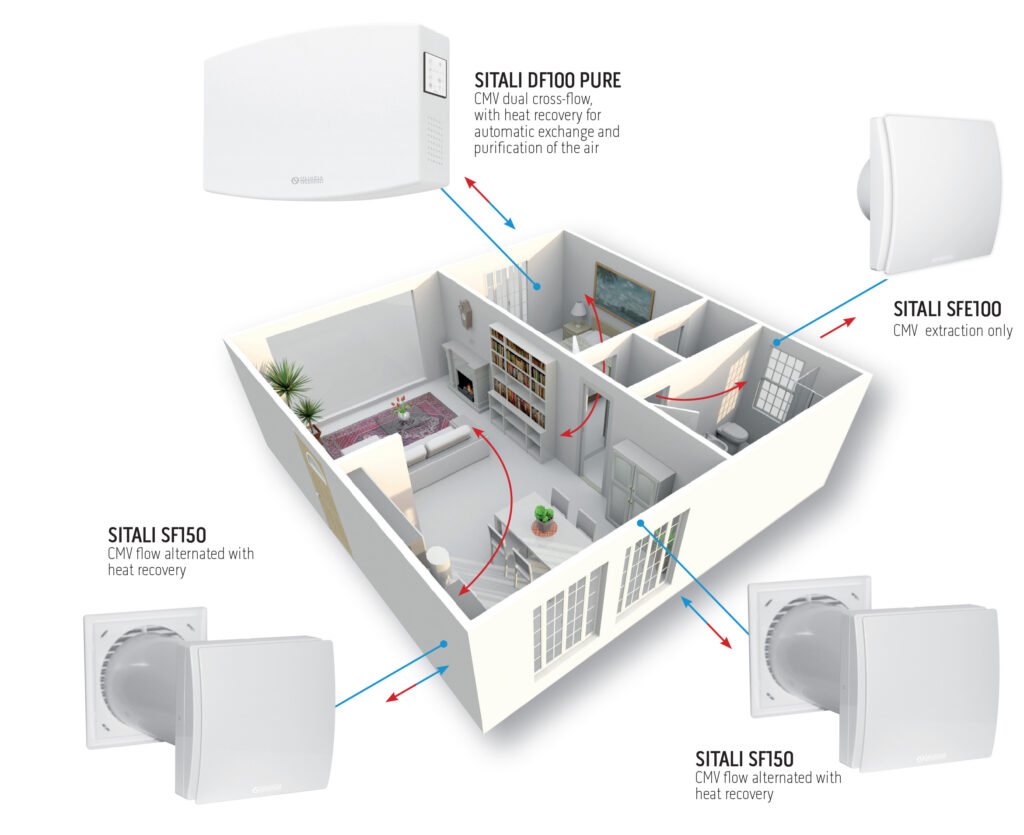
As we spend more time at home, it’s easy to assume that our living spaces are safe from indoor air pollution. However, the World Health Organization (WHO) and the Environmental Protection Agency (EPA) report that indoor air can be five times more polluted than outdoor air.
Fortunately, there is a solution: Mechanical Ventilation Control Systems with Heat Recovery (VMC). These systems ensure that our homes breathe fresh air while reducing energy consumption and minimizing environmental impact. In this article, we’ll explore the benefits of VMC, its characteristics, installation options, and top-rated products on the market.
What are Mechanical Ventilation Control Systems?
Mechanical ventilation control systems are composed of one or more machines that circulate air in our homes, ensuring a continuous exchange of stale air with fresh air. These systems can be centralised or decentralised, depending on the size of the space and the type of building.
Benefits of Mechanical Ventilation Control Systems with Heat Recovery
VMC offers numerous benefits, including:
- Improved indoor air quality by removing pollutants and allergens
- Reduced energy consumption through heat recovery technology
- Increased comfort and reduced humidity levels
- Enhanced value for homes and businesses
- Environmental sustainability
Characteristics of Mechanical Ventilation Control Systems with Heat Recovery
The key characteristics of VMC systems include:
- Heat recovery technology, which eliminates the need for external heating sources
- Air purification capabilities to remove pollutants and allergens
- Decentralised installation options, making them suitable for small spaces or existing buildings
- Compact designs that blend seamlessly into home decor
Decentralized Installation Options
Decentralized VMC systems are ideal for:
- Small homes or apartments
- Existing buildings with limited space
- Single-room ventilation solutions
These systems can be installed on a wall, using a perforated surface and an inclined design to ensure proper airflow.
Top-Rated Products on the Market
Some top-rated products in the VMC market include:
- Prana24: Offers natural air sterilization through rame-based air exchanges
- Compact designs with two channels for separate inlets and outlets
- Easy maintenance and cleaning
Other notable features include noise reduction, silent operation during nighttime hours, and a comprehensive warranty.
VMC Systems in High-Efficiency Buildings
In high-efficiency buildings (Class A or B), VMC systems are now considered essential. They help improve indoor air quality while minimizing energy consumption.
For those looking to sell or rent their property, installing VMC systems can enhance its value and appeal.
Conclusion
Mechanical Ventilation Control Systems with Heat Recovery offer a comprehensive solution for healthy indoor air, reduced energy consumption, and environmental sustainability. By understanding the benefits, characteristics, and installation options of these systems, homeowners and businesses can create a healthier, more comfortable living space.
Here are 8 FAQs to address common questions about Mechanical Ventilation Control Systems:
- What is the primary function of a Mechanical Ventilation Control System with Heat Recovery?
- The primary function of a VMC system is to provide a continuous exchange of stale air with fresh air, while reducing energy consumption and minimizing environmental impact.
- How does heat recovery technology in VMC systems reduce energy consumption?
- Heat recovery technology captures waste heat from the exhaust air and transfers it to the incoming fresh air, eliminating the need for external heating sources.
- What types of pollutants can VMC systems remove from indoor air?
- VMC systems are designed to remove a wide range of pollutants, including particulate matter, VOCs, CO2, and odors.
- Are decentralized VMC systems suitable for small homes or apartments?
- Yes, decentralized VMC systems are ideal for small homes or apartments due to their compact designs and ease of installation.
- Can VMC systems be installed on a wall, and how is it done?
- Yes, VMC systems can be installed on a wall using a perforated surface and an inclined design to ensure proper airflow.
- Which top-rated products in the market offer natural air sterilization?
- Prana24 offers natural air sterilization through rame-based air exchanges, making it a popular choice among homeowners and businesses.
- How often should I clean and maintain my VMC system?
- Regular cleaning and maintenance of your VMC system is essential to ensure optimal performance and hygiene.
- Are VMC systems essential in high-efficiency buildings (Class A or B)?
- Yes, VMC systems are now considered essential in high-efficiency buildings (Class A or B) due to their ability to improve indoor air quality while minimizing energy consumption.
Best Practices for Installing Mechanical Ventilation Control Systems
To ensure optimal performance and hygiene of your VMC system:
- Regularly clean and maintain the system
- Monitor airflow rates and adjust as needed
- Ensure proper installation and commissioning of the system
- Consider integrating with other smart home devices for enhanced convenience and control
Conclusion
Mechanical Ventilation Control Systems with Heat Recovery offer a comprehensive solution for healthy indoor air, reduced energy consumption, and environmental sustainability. By understanding the benefits, characteristics, and installation options of these systems, homeowners and businesses can create a healthier, more comfortable living space.
By incorporating VMC systems into your home or building, you can enjoy improved indoor air quality, reduced energy consumption, and enhanced value for your property.


