
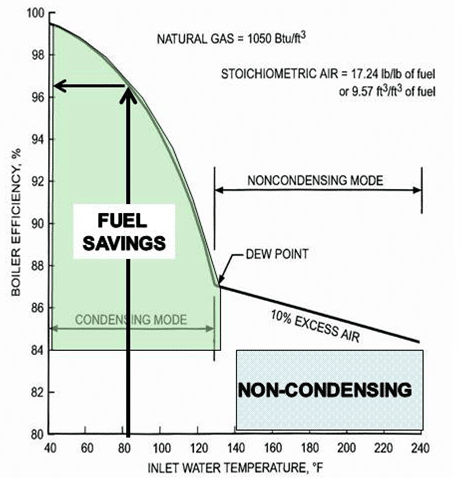
In this article, we will explore the advantages of condensing boilers for home heating, including their efficiency, cost savings, and environmental benefits. We’ll also delve into how they work, the different types available, and the incentives offered by governments to encourage their adoption.
Why Choose a Condensing Boiler?
Condensing boilers are designed to maximize energy efficiency by utilizing the heat that would otherwise be lost in traditional boilers. This process involves using a secondary heat exchanger to extract more energy from the exhaust gases, resulting in significant cost savings and reduced carbon emissions.
How Does a Condensing Boiler Work?
To understand how a condensing boiler works, let’s compare it to a traditional boiler:
- In a traditional boiler, only a portion of the heat is utilized, with the remaining energy being lost as steam.
- A condensing boiler uses a double heat exchanger to recover more energy from the exhaust gases, which are then used to produce hot water or space heating.
The Benefits of Condensing Boilers
Some of the key benefits of using a condensing boiler include:
- Energy Efficiency: Condensing boilers can achieve efficiency rates of up to 90%, compared to traditional boilers which typically have an efficiency rate of around 70-80%.
- Cost Savings: By extracting more energy from exhaust gases, condensing boilers can reduce fuel bills by up to 40%.
- Environmental Benefits: Condensing boilers produce fewer emissions and contribute less to greenhouse gas pollution.
- Longer Boiler Life: Condensing boilers have a longer lifespan than traditional boilers, as they are less prone to wear and tear due to the reduced heat output.
- Quieter Operation: Condensing boilers operate more quietly than traditional boilers, making them ideal for homes with noise restrictions.
Types of Condensing Boilers
There are several types of condensing boilers available, including:
- Standard Condensing Boilers: These are the most common type of boiler and offer a balance between efficiency and cost.
- High-Efficiency Condensing Boilers: These boilers offer higher efficiency rates than standard condensing boilers but may be more expensive to purchase.
- Combination Condensing Boilers: These boilers combine space heating and hot water production, making them ideal for small homes or apartments.
Incentives for Homeowners
Governments in many countries offer incentives to encourage homeowners to switch to more efficient boilers. Some of these incentives include:
- Tax Credits: Many governments offer tax credits for homeowners who install a new, energy-efficient boiler.
- Grants: Some governments provide grants to help homeowners cover the cost of installing an energy-efficient boiler.
- Schemes: Some companies and organizations offer schemes to help homeowners save money on their energy bills.
Conclusion
Condensing boilers are an excellent choice for home heating due to their high efficiency, cost savings, and environmental benefits. By understanding how they work and exploring the various types available, homeowners can make an informed decision about which boiler is right for them. Additionally, taking advantage of government incentives and schemes can help make the switch to a condensing boiler even more affordable.
Frequently Asked Questions
- What is the difference between a standard condensing boiler and a high-efficiency condensing boiler?
Standard condensing boilers offer a balance between efficiency and cost, while high-efficiency condensing boilers provide higher efficiency rates but may be more expensive. - Can I install a combination condensing boiler in my home?
Combination condensing boilers are ideal for small homes or apartments, as they combine space heating and hot water production into one unit. - How do I qualify for tax credits or grants to install an energy-efficient boiler?
Tax credits and grants are typically available for homeowners who meet specific energy efficiency standards, such as installing a new, energy-efficient boiler that meets minimum efficiency rates set by the government. - What is the process of installing an energy-efficient boiler, and what can I expect during the installation?
The installation process typically involves hiring a licensed plumber or heating technician to assess your home’s energy needs, select the appropriate boiler, and install it according to manufacturer instructions.
Tips for Choosing a Condensing Boiler
When choosing a condensing boiler, consider the following factors:
- Energy Efficiency: Look for boilers with high efficiency rates to minimize fuel consumption.
- Cost Savings: Consider the cost savings offered by condensing boilers over traditional boilers.
- Environmental Benefits: Choose boilers that produce fewer emissions and contribute less to greenhouse gas pollution.
- Longer Boiler Life: Opt for boilers with a longer lifespan to reduce replacement costs.
- Quieter Operation: Select boilers that operate more quietly to minimize disturbance.
Maintenance and Repair of Condensing Boilers
Regular maintenance is essential to ensure the longevity and efficiency of your condensing boiler. Here are some tips:
- Schedule Annual Maintenance: Arrange for a professional technician to inspect your boiler annually.
- Clean the Flue: Clean the flue regularly to prevent creosote buildup and ensure efficient operation.
- Replace Parts: Replace worn-out parts, such as burner components, to maintain optimal performance.
- Monitor Performance: Keep an eye on your boiler’s performance, watching for signs of wear or inefficiency.
Conclusion
In conclusion, condensing boilers offer numerous benefits for home heating, including high efficiency, cost savings, and environmental benefits. By choosing the right type of boiler, taking advantage of government incentives, and maintaining regular maintenance, homeowners can enjoy a comfortable and energy-efficient home heating system.


