
The Coltan: A Rare Mineral with a Complex History
Introduction
Coltan, a term derived from the contraction of “columbite-tantalite” or “columbo-tantalite,” has become a widely recognized name in relation to its presence in Africa and the subsequent exploitation of the territory and its populations. This complex mineral mixture is highly sought after for various electronic devices, including PlayStation consoles.
What is Coltan?
Coltan is a blend of two minerals: columbite (Fe, Mn)Nb2O6 and tantalite (Fe, Mn)Ta2O6, both belonging to the oxide class. These minerals are often found in complex combinations and rarely occur in pure form. The coltan mixture is primarily extracted on African soil, particularly in the region of the Congo River, where it plays a crucial role.
What’s so special about Coltan?
When extracted from this mixture, two essential elements are obtained: tantalum and niobium. These elements have extensive applications in metallurgy and electronics. Europe and other developed countries are particularly demanding of these materials, which are scarce globally.
Tantalum: An Essential Component for Electronics
Tantalum, in the form of powdered metal, is used in electronic devices and semiconductors to build high-capacity capacitors with reduced dimensions. These components may be present in smartphones, computers, or other electronic appliances without our knowledge.
Niobium: A Key Material in Metallurgy
In contrast, niobium is utilized in the metallurgical industry for creating high-temperature-resistant alloys used in corrosion-resistant steel and electromagnetic devices.
While we have not heard much about Coltan, it plays a vital role in modern electronics. It optimizes battery life, helping us conserve energy and prolong device lifespan.
Where is Coltan found?
Australia, Nigeria, and Brazil are among the countries hosting the most abundant colombo-tantalite deposits. In particular, Australia’s high tantalum concentration sets it apart from other African countries. The largest niobium producer, Brazil, extracts approximately 3,000 tons annually.
Other notable African producers include Mozambique, with 260 tons of columbo-tantalite extracted each year; the Democratic Republic of Congo (Katanga Province); Nigeria; Rwanda; Uganda; and Etiopia, with much lower production levels (less than 50 tons).
The high concentration of tantalum makes this variant particularly sought after due to its relative rarity compared to niobium.
Columbo-Tantalite: Exploitation
The Democratic Republic of Congo is where the presence of Tantalum has become a problem rather than an opportunity. With global demand for this element increasing, local conflicts have intensified, as groups vie for control over these territories rich in mineral resources.
In this region, close to Rwanda and Uganda, the conflict escalates due to the coltan trade controlled by armed groups and non-state actors. These groups use the profits from the illicit trade of tantalum to fuel their conflicts.
Today, the majority of Coltan trade is in the hands of non-state actors or Western/Asian companies without committing any crime according to Congo’s laws. European or Asian organizations are involved in organized crime, trading arms for this mineral.
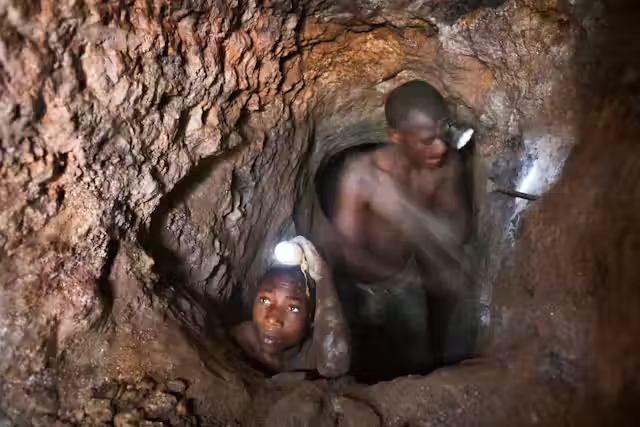
In many cases, local populations are exploited and displaced while their land is used to extract and smuggle coltan across borders, which do not control the origin of these minerals.
International Condemnation
The United Nations has already criticized companies extracting natural resources from the African continent, including Coltan, for indirectly perpetuating civil wars. Other precious resources like diamonds, rubies, uranium, gold, and other metals are also at risk.
In this context, what do countries receiving Coltan do? The Tantalum-Niobium International Study Center (TNISC), based in Belgium, has called upon its members to avoid sourcing columbo-tantalite from the Democratic Republic of Congo and Rwanda. This is due to ethical concerns regarding the conflict-ridden origin of these minerals.
Coltan’s impact on the environment
The mining process often leaves behind environmental damage such as deforestation, soil erosion, and pollution. The extraction of Coltan also contributes to local water shortages, affecting communities reliant on clean water sources.
Challenges in addressing the issue with Coltan
Addressing the complex problem surrounding Coltan requires a multi-faceted approach that considers government policies, international agreements, and individual actions. While some organizations prioritize sourcing minerals responsibly, others are unwilling to acknowledge the role of their products in fueling local conflicts.
The complexities involved make it difficult for companies to identify their Coltan sources without risking potential reputational damage. This creates a conundrum for businesses seeking to meet global demand while also considering social and environmental responsibilities.
Conclusion
Coltan, a rare mineral with significant importance for electronic devices, plays a critical role in modern electronics, but also fuels local conflicts and violence in its extraction region. As technology advances and the demand for these materials increases, it’s crucial that we address this complex issue and find solutions to minimize harm to local populations.
FAQs
1. What is coltan used for?
Coltan is a combination of minerals that serve as an essential component in electronic devices and semiconductors.
-
Where is Coltan found?
The most abundant colombo-tantalite deposits are located in Australia, Nigeria, Brazil, Mozambique, the Democratic Republic of Congo, Rwanda, Uganda, and Etiopia. -
Why is Tantalum essential for electronics?
Tantalum serves as a key material in building high-capacity capacitors with reduced dimensions in electronic devices. -
What’s the difference between Niobium and Tantalum?
While both are used extensively in metallurgy and electronics, Niobium has more widespread applications than Tantalum due to its greater availability. -
What countries have been criticized for their involvement in Coltan trade?
The Democratic Republic of Congo is heavily involved in the illicit trade of coltan, fueling local conflicts and violence. -
Can consumers avoid Coltan in electronic devices?
Yes, by choosing electronics from companies that adhere to ethical sourcing practices or those that explicitly state they avoid sourcing columbo-tantalite from conflict zones. -
What international organization has condemned the involvement of companies in Coltan trade?
The United Nations has criticized the role of companies extracting natural resources in perpetuating civil wars in regions like the Democratic Republic of Congo. -
Will technology advancements help resolve the issue with Coltan?
While technology can minimize harm and improve supply chains, it’s crucial to address the root causes of conflict through policies that promote responsible mining practices, support local communities, and ensure fair trade agreements.
Key Takeaways:
- The coltan mixture is a blend of columbite (Fe, Mn)Nb2O6 and tantalite (Fe, Mn)Ta2O6.
- This mineral plays a crucial role in electronic devices as a component in semiconductors.
- Tantalum has extensive applications but is relatively rare compared to Niobium.
In Conclusion:
Coltan, though an important element for modern electronics, fuels conflict in regions where it’s extracted. By understanding its origins and the impact of Coltan trade on local populations, we can work towards reducing harm and promoting responsible mining practices globally.


