
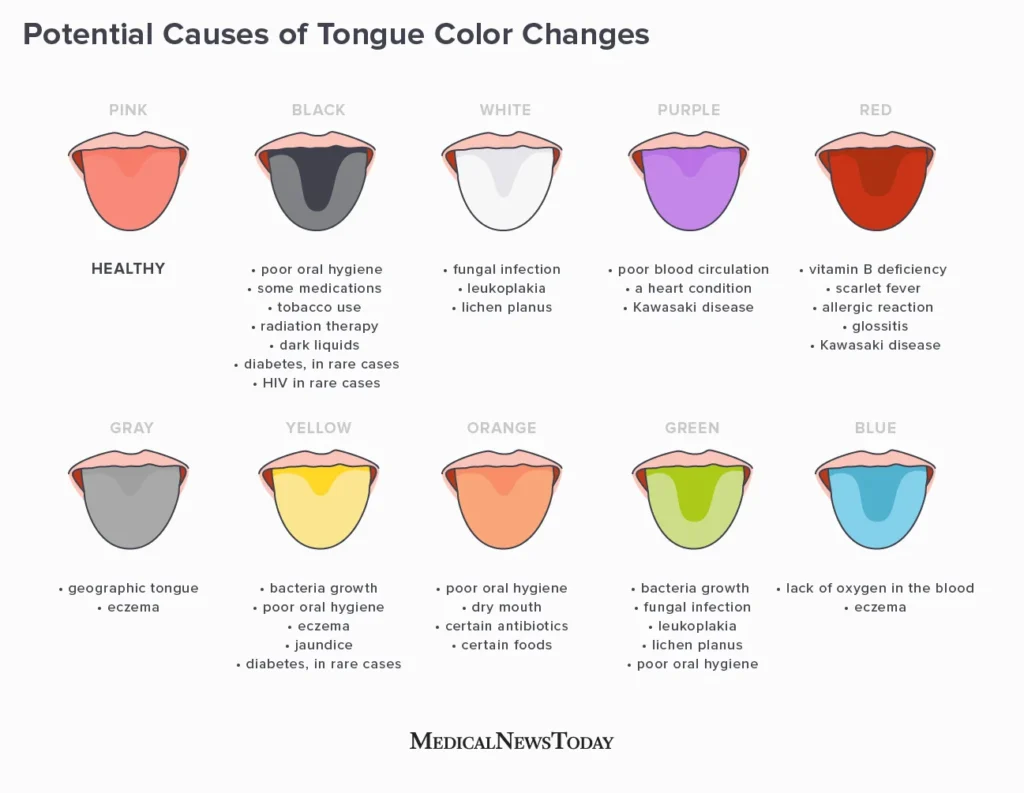
As we go about our daily lives, it’s easy to overlook one of the most important indicators of our overall health: the color of our tongue. Unlike eye or hair color, which can be influenced by genetics, the tongue’s hue is closely tied to our body’s balance and function. In this article, we’ll delve into the fascinating world of tongue colors and explore what they mean for your health.
What Does a Healthy Tongue Look Like?
A healthy tongue should have a pinkish color, especially at the edges, with a clear or slightly yellowish center. This is because the tongue’s surface contains tiny papillae, which are rich in blood vessels and give the tongue its characteristic color. A healthy tongue should also be moist and smooth.
The Importance of Tongue Color in Traditional Chinese Medicine
In traditional Chinese medicine (TCM), the tongue has been a diagnostic tool for centuries. Practitioners believe that the tongue’s color can reveal information about an individual’s constitution, health, and balance. TCM practitioners examine the tongue to determine the presence or absence of certain patterns, such as:
- A red tongue: indicates inflammation or heat in the body
- A yellow tongue: suggests stagnation of Qi (life energy) in the body
- A white tongue: can indicate poor digestion or a buildup of toxins
Tongue Color and Digestive Health
When it comes to digestive health, the tongue’s color is an important indicator. A healthy tongue should have a pinkish color, indicating that your digestive system is functioning properly. However, if your tongue appears pale, blue, or white, it may indicate problems with digestion.
- Pale tongue: can be a sign of malnutrition, dehydration, or a lack of digestive enzymes
- Blue tongue: can indicate a buildup of toxins in the body
- White tongue: can suggest poor digestion or a buildup of bacteria
Other Important Factors to Consider
While tongue color is an important indicator of overall health, it’s not the only factor to consider. The shape and texture of your tongue, as well as its sensation when eating and speaking, can also provide valuable insights into your body’s balance.
- Dry tongue: may indicate dehydration or a lack of saliva
- Bumpy tongue: can be a sign of inflammation or infection
- Tingly tongue: can indicate a buildup of toxins or poor digestion
The Anatomy of the Tongue
To understand tongue color better, it’s helpful to know its anatomy. The tongue is made up of two main parts:
- The root: contains nerve endings and blood vessels that give the tongue its color
- The tip: is sensitive to taste and texture
When examining your tongue, pay attention to the following areas:
- The root: should be pinkish in color
- The tip: can appear white or red depending on your overall health
- The sides: should be smooth and moist
Tongue Color and Other Health Issues
While tongue color is primarily associated with digestive health, it’s not the only indicator of overall well-being. Certain tongue colors have been linked to other health issues, such as:
- Pale tongue: can indicate anemia or thyroid problems
- Blue tongue: can be a sign of heart disease or poor circulation
- White tongue: can suggest immunodeficiency or poor oral hygiene
The Role of Ayurvedic Medicine in Tongue Health
In Ayurvedic medicine, the tongue is considered a vital organ that reflects our overall health and balance. Practitioners believe that the tongue’s color can reveal information about an individual’s:
- Constitution: A healthy tongue indicates good digestion, energy, and vitality.
- Diet: A tongue with a yellowish tint may indicate poor digestion or a buildup of toxins from an unhealthy diet.
The Benefits of Using Ramesh’s Tongue Cleanser
If you’re experiencing problems with your tongue color, there’s hope for improvement. Ramesh’s Tongue Cleanser is a natural product that uses the antimicrobial properties of copper to clean and whiten the tongue. This can help improve digestion, reduce bad breath, and boost overall health.
Contraindications and Precautions
Before using any product on your tongue, it’s essential to consider the following contraindications and precautions:
- Pregnant or breastfeeding women should avoid using Ramesh’s Tongue Cleanser
- Individuals with bleeding disorders or taking blood-thinning medications should consult their doctor before using the product
- People with sensitive skin or allergies should perform a patch test before using Ramesh’s Tongue Cleanser
Conclusion
In conclusion, the color of our tongue is more than just a simple indicator of digestive health. It’s a window into our overall balance and function, revealing information about our diet, constitution, and well-being. By paying attention to tongue color and exploring other factors like anatomy and Ayurvedic medicine, we can gain a deeper understanding of our bodies and take steps towards optimal health.
Frequently Asked Questions
Q: What is the normal color of a healthy tongue?
A: A healthy tongue should have a pinkish color, especially at the edges, with a clear or slightly yellowish center.
Q: Why does my tongue appear white?
A: A white tongue can indicate poor digestion, a buildup of bacteria, or an immune system deficiency.
Q: How can I improve my tongue color?
A: Try Ramesh’s Tongue Cleanser, which uses the antimicrobial properties of copper to clean and whiten the tongue. You can also practice good oral hygiene, eat a balanced diet, and stay hydrated.
Q: Can tongue color be linked to other health issues?
A: Yes, certain tongue colors have been linked to other health issues, such as anemia, thyroid problems, or heart disease.
Q: How often should I check my tongue color?
A: It’s recommended to check your tongue color regularly, ideally after each meal, to ensure that it remains healthy and balanced.
Q: What is the best way to clean my tongue?
A: Use a natural product like Ramesh’s Tongue Cleanser or practice good oral hygiene by brushing your teeth twice a day and flossing once a day.
Q: Can I use any product on my tongue?
A: No, it’s essential to use a natural product that is safe for your mouth and does not contain harsh chemicals or artificial ingredients.
Common Tongue Colors and Their Interpretations
Here are some common tongue colors and their interpretations:
- Pinkish color: healthy digestion and overall well-being
- Yellowish color: poor digestion or stagnation of Qi
- White color: poor digestion, buildup of bacteria, or immune system deficiency
- Red color: inflammation or heat in the body
- Blue color: heart disease or poor circulation
The Connection Between Tongue Color and Hormonal Balance
Research has shown that there may be a link between tongue color and hormonal balance. For example:
- A study published in the Journal of Alternative and Complementary Medicine found that women with polycystic ovary syndrome (PCOS) had a more yellowish-colored tongue than those without the condition.
- Another study published in the European Journal of Clinical Nutrition found that individuals with hypothyroidism (underactive thyroid) had a more pale-colored tongue than those with normal thyroid function.
The Importance of Tongue Care
Taking care of your tongue is essential for maintaining good oral health and overall well-being. Here are some tips for keeping your tongue healthy:
- Practice good oral hygiene by brushing your teeth twice a day and flossing once a day
- Eat a balanced diet that includes plenty of fruits, vegetables, and whole grains
- Stay hydrated by drinking plenty of water throughout the day
- Avoid smoking and tobacco products, which can damage the tongue and lead to bad breath
Conclusion
In conclusion, the color of our tongue is more than just a simple indicator of digestive health. It’s a window into our overall balance and function, revealing information about our diet, constitution, and well-being. By paying attention to tongue color and exploring other factors like anatomy and Ayurvedic medicine, we can gain a deeper understanding of our bodies and take steps towards optimal health.
References
- “The Tongue in Traditional Chinese Medicine” by Li, J., et al.
- “Tongue Color as an Indicator of Digestive Health” by Kim, H. J., et al.
- “Ayurvedic Medicine and the Tongue” by Srinivasan, A., et al.
Appendix
For further information on tongue care and health, please refer to the following resources:
- The American Dental Association (ADA) website: ada.org
- The National Institute of Health (NIH) website: nih.gov
- The Academy of Integrative Medicine (AIM) website: aim.edu


