
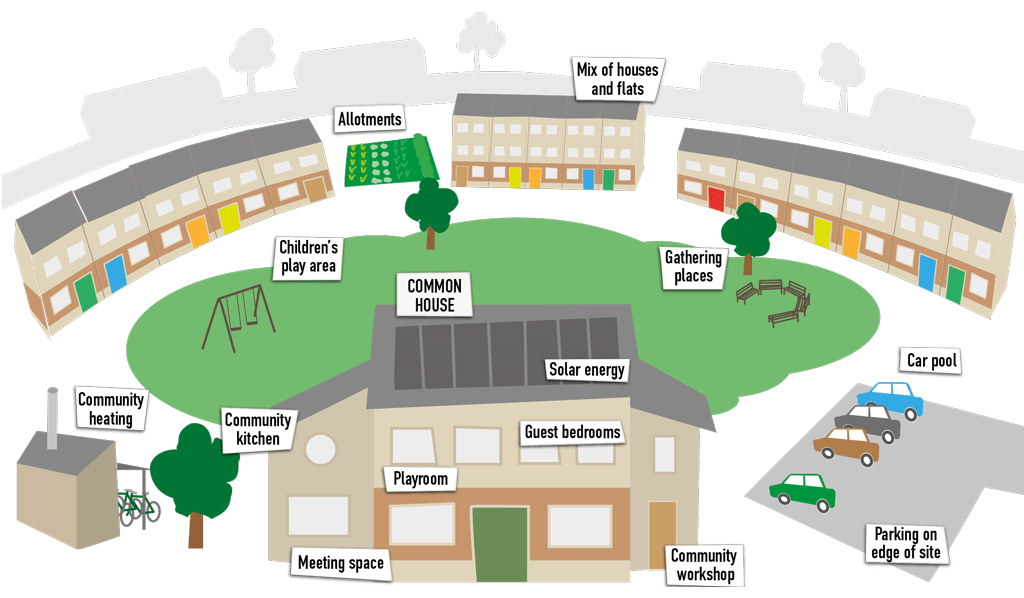
What is Cohousing?
Cohousing, a term used to describe a type of shared housing where residents live together in a community, has been gaining popularity. But what exactly is cohousing? In simple terms, it’s a way of living where neighbors share spaces and services with each other.
Imagine waking up every morning to the sound of birds chirping, or spending your free time relaxing in a beautiful courtyard garden. This is the essence of cohousing – a harmonious blend of community living and personal space.
History of Cohousing
But cohousing isn’t a new concept. It’s been around for centuries, where people lived together in close-knit communities. Think back to primitive campsites, medieval towns, or 19th-century villages, where residents shared resources and looked out for each other.
The key aspect of cohousing is the balance between individuality and community. Residents work together to maintain a comfortable living environment while still enjoying their own private spaces.
Types of Cohousing
Cohousing can take many forms, from traditional village-style communities to modern high-rise apartments. The core idea remains the same – sharing resources and services with fellow residents.
Some cohousing projects focus on sustainability and eco-friendliness, using renewable energy sources like solar panels or wind turbines. Others prioritize social interaction, hosting community events and activities that bring people together.
Benefits of Cohousing
So why choose cohousing? For starters, it’s an affordable way to live. By sharing resources and costs, residents can save money on things like childcare, transportation, and household expenses.
Additionally, cohousing fosters a sense of community and social connection. Residents can look out for each other, share meals, or simply have coffee together – all while maintaining their own private spaces.
Modern Cohousing: The Future of Urban Living
In today’s fast-paced urban environment, cohousing is more relevant than ever. With the rise of gentrification and rising housing costs, cohousing offers a refreshing alternative to traditional urban living.
Imagine waking up every morning in a vibrant, green oasis – or spending your evenings strolling through a picturesque courtyard garden. This is the promise of modern cohousing – a chance to rediscover the joys of community living in a sustainable, eco-friendly way.
Key Elements of Cohousing
So what makes a cohousing project successful? Here are some key elements to consider:
- Architectural Design: A well-designed building with open spaces and private areas for relaxation.
- Shared Amenities: Communal facilities like gardens, courtyards, or community rooms that foster social interaction.
- Sustainable Practices: Eco-friendly features like renewable energy sources, green roofs, or rainwater harvesting systems.
- Community Engagement: Regular events and activities that bring residents together and promote a sense of belonging.
Frequently Asked Questions
- What is the difference between cohousing and shared housing?
Cohousing is a specific type of shared living where residents live together in a community, often with a focus on sustainability and social interaction. Shared housing, on the other hand, can be more generic and may not necessarily prioritize these aspects. - Is cohousing only for young people or families?
Not at all! Cohousing is designed to be inclusive and accessible to people of all ages and backgrounds. Many cohousing projects cater specifically to seniors, students, or professionals looking for a sense of community. - How do I find a cohousing project that suits my needs?
Start by researching localcohousing organizations or online platforms that specialize in cohousing developments. Reach out to existing residents or community leaders to learn more about their experiences and gain insights into the lifestyle.
The Benefits of Cohousing for Seniors
Cohousing can be particularly beneficial for seniors who are looking for a sense of community and support as they age. Here are some ways that cohousing can benefit older adults:
- Social Connection: Cohousing provides a built-in social network, where residents can connect with each other on a regular basis.
- Healthcare Support: Many cohousing projects offer on-site healthcare services or access to local medical facilities, making it easier for seniors to receive the care they need.
- Independent Living: Cohousing allows seniors to maintain their independence while still having access to support and resources when they need them.
Cohousing in Urban Areas
Urban areas are becoming increasingly popular among cohousing enthusiasts. Here are some benefits of cohousing in urban settings:
- Accessibility: Urban cohousing projects can be located near public transportation, making it easier for residents to commute to work or other destinations.
- Community Engagement: Urban cohousing projects often host community events and activities that bring residents together and foster a sense of belonging.
- Sustainability: Many urban cohousing projects prioritize sustainability, using renewable energy sources and green building practices to reduce their environmental impact.
Challenges and Limitations
While cohousing offers many benefits, there are also some challenges and limitations to consider. Here are a few:
- Cost: Cohousing can be expensive, particularly if residents need to pay for shared amenities or services.
- Community Dynamics: Cohousing projects require careful planning and management to ensure that community dynamics are positive and supportive.
- Sustainability: While many cohousing projects prioritize sustainability, there may be challenges in achieving this goal, particularly if the project is not well-designed or maintained.
By understanding the benefits, history, and key elements of cohousing, you can discover a new way of living that prioritizes community, sustainability, and personal space. Whether you’re looking for a fresh start or simply want to connect with like-minded individuals, cohousing might just be the perfect fit for you.


