
Introduction
The coffee plant is a beloved and iconic symbol of the coffee culture that has been enjoyed by millions around the world. But have you ever stopped to think about what makes this plant so special? In this article, we’ll delve into the fascinating world of the coffee plant, exploring its origins, characteristics, and how to care for it.
The coffee plant is more than just a source of caffeine; it’s an integral part of many cultures and economies. From the lush green hills of Ethiopia to the bustling streets of Italy, the coffee plant has played a significant role in shaping history and daily life. In this comprehensive guide, we’ll explore everything you need to know about the coffee plant, from its origins and characteristics to how to care for it.
Coffee Plant Species
When it comes to coffee plants, there are two main species that are widely cultivated: Arabica (Coffea arabica) and Robusta (Coffea canephora). While both species are used in the production of coffee, Arabica is considered to be of higher quality and has a more delicate flavor profile.
Arabica coffee plants are native to Ethiopia and are known for their high altitudes and rich soil. They are more sensitive to temperature and humidity fluctuations than Robusta plants, but this sensitivity also contributes to their unique flavor profile.
Robusta coffee plants, on the other hand, are easier to grow and more resistant to disease. However, they have a harsher flavor profile and are often used as a base for instant coffee blends.
History of Coffee
Coffee originated in the highlands of Ethiopia around the 9th century AD. According to legend, a goatherd named Kaldi discovered the energizing effects of coffee after noticing that his goats became more energetic after eating red coffee cherries. From there, coffee spread throughout the Arabian Peninsula and eventually to the rest of the world.
In Italy, for example, coffee was introduced in the 16th century and quickly became a staple of daily life. Italian baristas perfected the art of brewing coffee, and the country became famous for its espresso culture.
The Arabica Plant
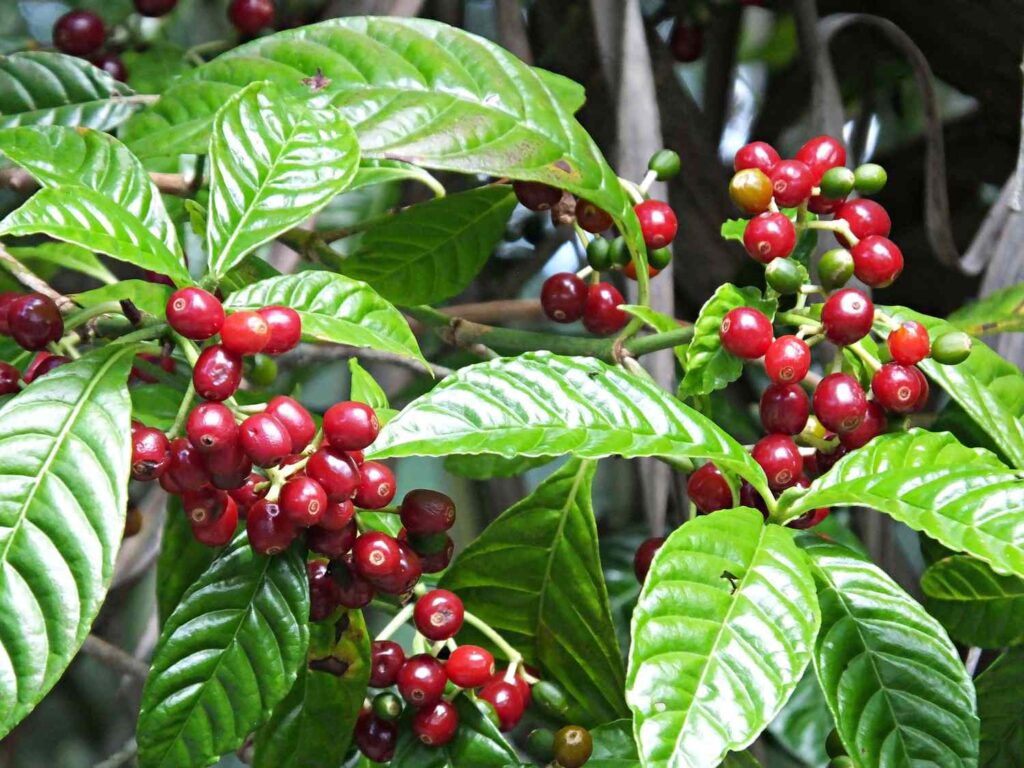
The Arabica plant is a small evergreen tree that grows up to 10 meters tall in its natural habitat. However, when cultivated in containers, it typically remains much shorter, around 2-3 feet tall. The leaves are dark green and oval-shaped, while the flowers are white and bloom in clusters.
Flowers and Fruits
The coffee plant produces small white flowers that are highly fragrant. These flowers eventually develop into fruit, which is a drupe with two seeds. When ripe, the fruit turns red or purple and is harvested to produce the coffee beans that we all know and love.
Coffee cherries typically take 7-9 months to mature after flowering, and they’re usually picked by hand to ensure quality and quantity. The beans are then processed through a series of steps, including pulping, fermenting, and drying, to remove the skin and pulp and bring out the unique flavor profile.
Growing Coffee Plants
While it’s possible to grow coffee plants indoors in containers, they can be quite challenging to care for. To keep your plant healthy and thriving, make sure to provide it with plenty of light, water regularly, and fertilize it occasionally.
Here are some tips for growing coffee plants:
- Lighting: Coffee plants need bright, indirect light to photosynthesize and grow.
- Watering: Coffee plants prefer well-draining soil and should be watered thoroughly but not overwatered.
- Fertilization: Feed your coffee plant with a balanced fertilizer once a month during the growing season.
- Pruning: Regular pruning can help control the shape of your coffee plant and promote healthy growth.
Where to Buy Coffee Plants
If you’re interested in growing your own coffee plant at home, there are several options available online. You can find a variety of coffee plants on websites like Amazon, ranging from small potted plants to larger ones that can be grown in a garden bed.
Some popular places to buy coffee plants include:
- The Coffee Plant Store: Offers a wide selection of coffee plants and coffee-related products.
- Amazon: Offers a variety of coffee plants, including Arabica and Robusta varieties.
- Burpee Seeds: Offers high-quality coffee seeds for planting at home.
Conclusion
The coffee plant is a fascinating and complex organism that plays a vital role in our daily lives. Whether you’re a coffee connoisseur or just someone who loves the smell and taste of freshly brewed coffee, there’s no denying the importance of this incredible plant.
By understanding more about the coffee plant and how to care for it, we can appreciate its beauty and significance even more. So next time you take a sip of your favorite coffee, remember the journey that brought it to your cup – from seed to bean to brewing pot.
Frequently Asked Questions
- What is the main difference between Arabica and Robusta coffee plants?
Arabica coffee plants are considered to be of higher quality and have a more delicate flavor profile than Robusta plants. - How tall does a coffee plant grow in its natural habitat?
Coffee plants can grow up to 10 meters tall in their natural habitat. - Can I grow a coffee plant indoors in a container?
Yes, it is possible to grow a coffee plant indoors in a container, but it requires careful attention and maintenance. - What type of soil does a coffee plant prefer?
Coffee plants prefer well-draining soil that is rich in organic matter. - How often should I water my coffee plant?
Coffee plants need regular watering, but make sure not to overwater them as this can lead to root rot. - Can I grow multiple coffee plants together?
Yes, you can grow multiple coffee plants together, but make sure they have enough space and light to thrive. - How long does it take for a coffee plant to produce fruit?
Coffee plants typically take 3-5 years to start producing fruit after planting. - Can I use my homegrown coffee beans to make espresso?
While you can use your homegrown coffee beans to make espresso, they may not have the same flavor profile as commercial coffee beans.
Common Problems with Coffee Plants
- Pests: Check for pests like spider mites, mealybugs, and scale regularly.
- Diseases: Keep an eye out for diseases like root rot, leaf spot, and fungal infections.
- Nutrient Deficiencies: Fertilize your coffee plant regularly to prevent nutrient deficiencies.
Care Tips
- Prune your coffee plant regularly to control its shape and promote healthy growth.
- Monitor the temperature and humidity levels in your home to ensure they’re within the optimal range for coffee plants (65-75°F and 50-60% relative humidity).
- Keep an eye out for signs of pests or diseases, such as yellowing leaves or white powdery patches on the leaves.
Conclusion
Growing a coffee plant is a rewarding experience that requires attention to detail and care. By following these tips and understanding more about the coffee plant, you can grow your own Arabica or Robusta plants at home and enjoy the fruits of your labor. Whether you’re a seasoned coffee connoisseur or just starting out on your coffee journey, we hope this comprehensive guide has provided valuable insights into the world of coffee.
Additional Resources
For more information on growing coffee plants, visit these resources:
- The Coffee Institute: Offers articles, videos, and courses on coffee cultivation.
- The International Coffee Organization: Provides information on coffee production, trade, and sustainability.
- The Coffee Plant Store: Offers a variety of coffee-related products, including seeds, fertilizers, and accessories.
Final Thoughts
Growing your own coffee plant is a unique opportunity to experience the joy of harvesting and brewing your own coffee. Whether you’re an experienced gardener or just starting out, we hope this comprehensive guide has provided valuable insights into the world of coffee.
By following these care tips and understanding more about the coffee plant, you can grow your own Arabica or Robusta plants at home and enjoy the fruits of your labor. Happy growing!


