
Introduction
When it comes to natural sweeteners, there are several options available in the market. Two popular choices are coconut sugar and palm sugar, both derived from different parts of the palm tree. In this article, we will delve into the properties, uses, and nutritional values of these two natural sweeteners.
What is Coconut Sugar?
Coconut sugar, also known as palm sugar or jaggery, is a type of sugar extracted from the sap of the coconut palm tree (Cocos nucifera). The sap is rich in sugars, including sucrose, glucose, and fructose. Coconut sugar has been used for centuries in traditional medicine and cooking in many parts of the world.
How is Coconut Sugar Produced?
Coconut sugar is produced by collecting the sap from the coconut palm tree and boiling it to concentrate the sugars. The resulting liquid is then crystallized or granulated into a solid form, which can be stored for long periods. Palm sugar, on the other hand, is also derived from the sap of the coconut palm tree but is extracted from the trunk of the tree.
The Difference Between Coconut Sugar and Palm Sugar
While both coconut sugar and palm sugar are derived from the same source, there is a significant difference between them. Coconut sugar is produced from the inflorescence (flowering part) of the coconut palm tree, whereas palm sugar is extracted from the trunk of the tree.
Properties of Coconut Sugar
Coconut sugar has several properties that make it a popular choice among health-conscious individuals:
- Lower Glycemic Index: Coconut sugar has a lower glycemic index compared to regular sugar, making it a better option for people with diabetes or those who want to manage their blood sugar levels.
- Rich in Minerals: Coconut sugar is rich in minerals like iron, zinc, and potassium, which are essential for maintaining good health.
- Less Refined: Coconut sugar is less refined than regular sugar, making it a better option for those who want to reduce their sugar intake.
Nutritional Value of Coconut Sugar
Coconut sugar has several nutritional benefits:
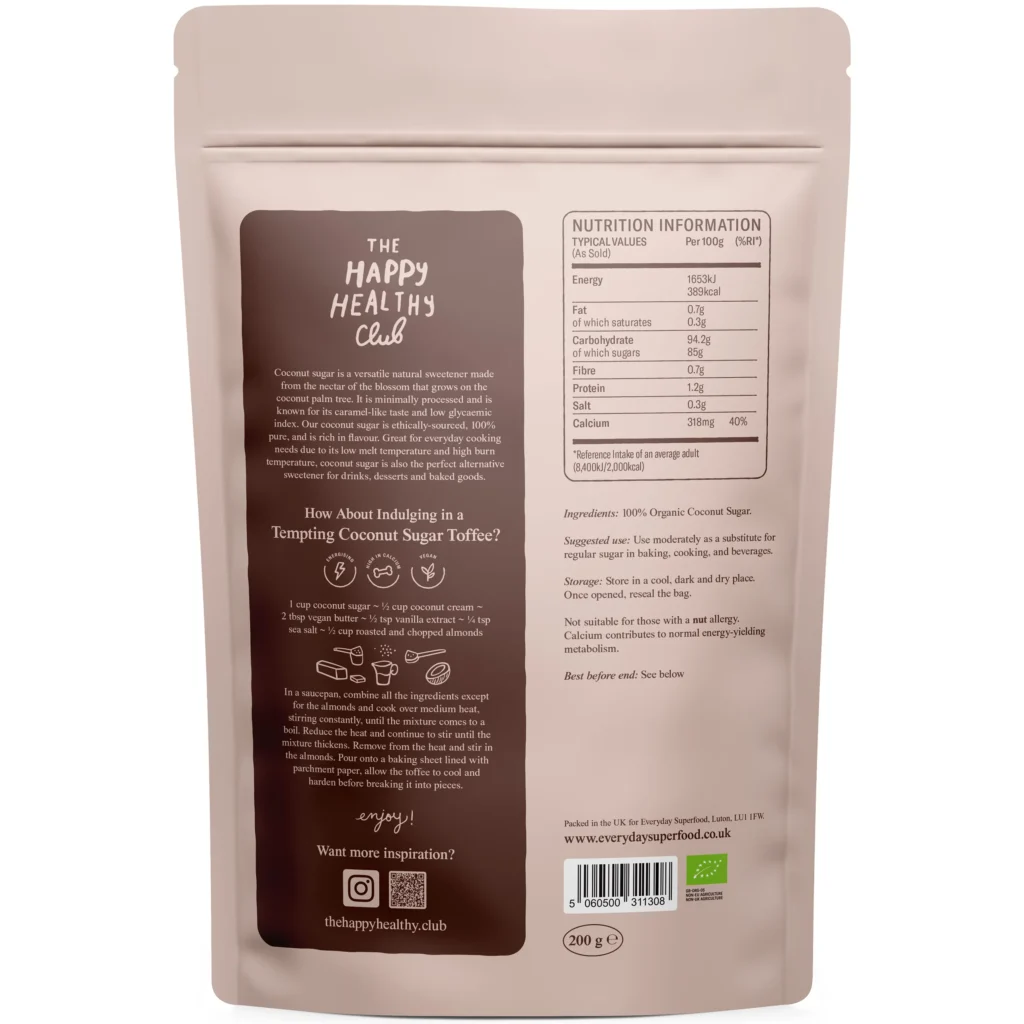
- Calories: Coconut sugar contains approximately 16 calories per tablespoon.
- Potassium Content: 100 grams of coconut sugar contain about 25% of the recommended daily intake of potassium.
- Mineral Content: Coconut sugar is rich in minerals like iron, zinc, and potassium.
Using Coconut Sugar
Coconut sugar can be used as a substitute for regular sugar in many recipes. It has a slightly caramel-like flavor and can be used to sweeten beverages, desserts, and savory dishes. Here are some tips for using coconut sugar:
- Substitute 1:1: Coconut sugar can be substituted 1:1 with regular sugar in most recipes.
- Adjust Amount: Depending on the recipe, you may need to adjust the amount of coconut sugar used due to its slightly stronger flavor.
Buying Coconut Sugar
Coconut sugar is available online and in many health food stores. Here are some tips for buying coconut sugar:
- Choose Organic: Opt for organic coconut sugar whenever possible to ensure that it is free from pesticides and other chemicals.
- Check Label: Always check the label for any additives or preservatives.
Frequently Asked Questions
Q: Is Coconut Sugar Good for Diabetics?
A: Yes, coconut sugar has a lower glycemic index compared to regular sugar, making it a better option for people with diabetes.
Q: How Much Does Coconut Sugar Contain Calories?
A: Coconut sugar contains approximately 16 calories per tablespoon.
Q: Can I Substitute Coconut Sugar 1:1 with Regular Sugar?
A: Yes, coconut sugar can be substituted 1:1 with regular sugar in most recipes. However, you may need to adjust the amount due to its slightly stronger flavor.
Q: Where Can I Buy Coconut Sugar?
A: Coconut sugar is available online and in many health food stores.
Q: Is Coconut Sugar Organic?
A: Yes, it’s recommended to choose organic coconut sugar whenever possible to ensure that it is free from pesticides and other chemicals.
Q: How Do I Store Coconut Sugar?
A: Coconut sugar can be stored at room temperature or in an airtight container in the refrigerator.
Conclusion
Coconut sugar is a natural sweetener that offers several benefits over regular sugar. Its lower glycemic index, rich mineral content, and less refined process make it a popular choice among health-conscious individuals. By understanding how coconut sugar is produced, its properties, nutritional value, and uses, you can incorporate this natural sweetener into your diet and enjoy the many benefits it has to offer.
Health Benefits of Coconut Sugar
Coconut sugar has several health benefits that make it an attractive alternative to regular sugar:
- Weight Loss: Coconut sugar is low in calories and high in fiber, making it a good choice for those trying to lose weight.
- Improved Digestion: Coconut sugar is rich in minerals like iron and zinc, which are essential for maintaining good digestion.
- Reduced Risk of Chronic Diseases: Coconut sugar has been shown to reduce the risk of chronic diseases like heart disease, type 2 diabetes, and certain types of cancer.
Comparison with Regular Sugar
Coconut sugar has several advantages over regular sugar:
- Lower Glycemic Index: Coconut sugar has a lower glycemic index compared to regular sugar, making it a better option for people with diabetes or those who want to manage their blood sugar levels.
- Richer in Minerals: Coconut sugar is rich in minerals like iron, zinc, and potassium, which are essential for maintaining good health.
- Less Refined: Coconut sugar is less refined than regular sugar, making it a better option for those who want to reduce their sugar intake.
Palm Sugar: A Natural Alternative
Palm sugar is another natural sweetener that offers several benefits:
- Lower Glycemic Index: Palm sugar has a lower glycemic index compared to regular sugar, making it a good choice for people with diabetes or those who want to manage their blood sugar levels.
- Rich in Minerals: Palm sugar is rich in minerals like iron and zinc, which are essential for maintaining good health.
- Less Refined: Palm sugar is less refined than regular sugar, making it a better option for those who want to reduce their sugar intake.
Conclusion
In conclusion, coconut sugar and palm sugar are two natural sweeteners that offer several benefits over regular sugar. Coconut sugar has a lower glycemic index, rich mineral content, and less refined process, while palm sugar is low in calories and high in fiber. By incorporating these natural sweeteners into your diet, you can enjoy the many benefits they have to offer.
Tips for Reducing Sugar Intake
Reducing sugar intake can be challenging, but there are several tips that can help:
- Read Labels: Always read the labels on packaged foods to identify added sugars.
- Choose Whole Foods: Choose whole foods like fruits, vegetables, and nuts instead of processed foods that contain added sugars.
- Use Herbs and Spices: Use herbs and spices to add flavor to your food instead of sugar.
By following these tips and incorporating coconut sugar or palm sugar into your diet, you can reduce your sugar intake and enjoy the many benefits these natural sweeteners have to offer.


