
Clouds are often seen as just white, fluffy masses in the sky, but did you know that each type of cloud has its own unique name? Understanding these names can help us appreciate the beauty and complexity of clouds. In this article, we’ll explore the different types of clouds, their characteristics, and what they mean.
Cloud Classification
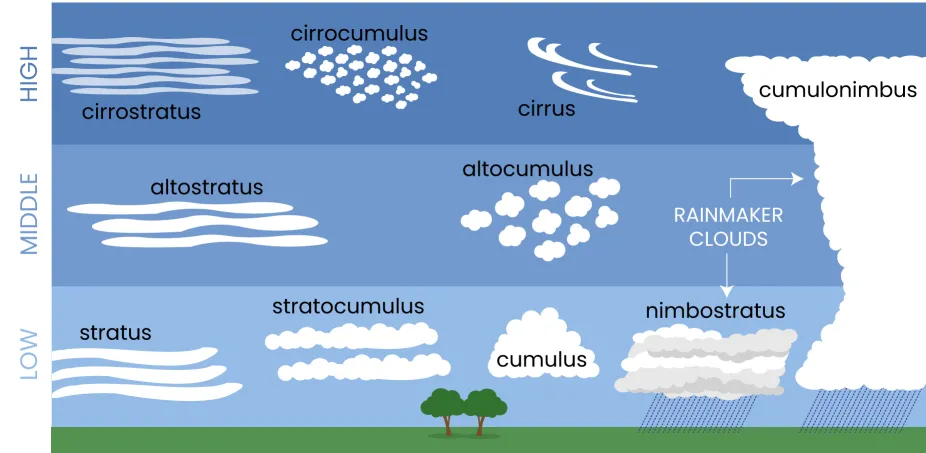
Clouds are classified into three main categories: high-level clouds, mid-level clouds, and low-level clouds. Within each category, there are several subtypes, including stratocumulus, altocumulus, altostratus, nimbostratus, cirrostratus, cirrocumulus, stratus, cumulus, and more.
High-Level Clouds
High-level clouds are the highest type of cloud, found above 6,500 feet (2,000 meters). These clouds are formed from ice crystals and are often seen in polar regions. The main types of high-level clouds are:
- Cirrus: thin, wispy clouds that often indicate fair weather
- Cirrostratus: thin, uniform veils of cloud that can cause halos around the sun or moon
- Cirrocumulus: small, rounded masses of cloud that can be seen in large numbers
High-level clouds are important because they play a key role in the Earth’s climate system. They help to regulate the temperature by reflecting sunlight back into space and trapping heat from the sun.
Mid-Level Clouds
Mid-level clouds are found between 2,000 and 6,500 feet (600 to 2,000 meters) above ground level. These clouds are formed from water droplets and are often seen on warm, sunny days. The main types of mid-level clouds are:
- Altocumulus: mid-level clouds that can be gray or white and have a layered appearance
- Altostratus: mid-level clouds that can cover the entire sky and produce light to moderate precipitation
Mid-level clouds are important because they help to distribute heat and moisture around the globe. They also play a key role in the formation of thunderstorms.
Low-Level Clouds
Low-level clouds are found below 2,000 feet (600 meters) above ground level. These clouds are formed from water droplets and are often seen on warm, sunny days. The main types of low-level clouds are:
- Stratus: low-level clouds that can cover the entire sky and produce light to moderate precipitation
- Cumulus: puffy, white clouds that can grow into towering thunderstorms
Low-level clouds are important because they play a key role in the formation of fog and mist. They also help to regulate the temperature by reflecting sunlight back into space.
Specialized Clouds
In addition to the main categories of high-level, mid-level, and low-level clouds, there are several specialized types of clouds that are worth noting:
- Nimbostratus: dark, featureless clouds that produce steady, moderate precipitation
- Cumulonimbus: tall, towering clouds that can produce heavy precipitation, thunderstorms, and even tornadoes
These specialized clouds are important because they play a key role in the formation of severe weather events.
Cloud Names: A Collection
If you’re interested in learning more about the different types of clouds, there are several resources available. One popular book is “The Atlas of Clouds” by Damiano Zanocco, which provides detailed information on cloud classification and characteristics.
There are also many online resources available that can help you learn more about clouds and their names. Some popular websites include:
- The National Oceanic and Atmospheric Administration (NOAA) website
- The National Weather Service (NWS) website
- The World Meteorological Organization (WMO) website
Why Cloud Names Matter
So why do cloud names matter? Understanding these names can help us appreciate the beauty and complexity of clouds. By recognizing different types of clouds, we can better understand the weather patterns and climate trends that shape our world.
Cloud names also provide valuable information about the weather and climate conditions. For example:
- High-level clouds often indicate fair weather
- Mid-level clouds can produce light to moderate precipitation
- Low-level clouds can produce fog and mist
Understanding cloud names can also help us make more informed decisions about things like travel, agriculture, and construction.
Cloud Classification: A Detailed Guide
Here is a detailed guide to the main categories of clouds:
- High-Level Clouds
- Cirrus: thin, wispy clouds that often indicate fair weather
- Cirrostratus: thin, uniform veils of cloud that can cause halos around the sun or moon
- Cirrocumulus: small, rounded masses of cloud that can be seen in large numbers
- Mid-Level Clouds
- Altocumulus: mid-level clouds that can be gray or white and have a layered appearance
- Altostratus: mid-level clouds that can cover the entire sky and produce light to moderate precipitation
- Low-Level Clouds
- Stratus: low-level clouds that can cover the entire sky and produce light to moderate precipitation
- Cumulus: puffy, white clouds that can grow into towering thunderstorms
Cloud Names: A List of Common Clouds
Here is a list of common cloud types:
- Cirrus: thin, wispy clouds that often indicate fair weather
- Cumulus: puffy, white clouds that can grow into towering thunderstorms
- Stratus: low-level clouds that can cover the entire sky and produce light to moderate precipitation
- Nimbostratus: dark, featureless clouds that produce steady, moderate precipitation
- Altocumulus: mid-level clouds that can be gray or white and have a layered appearance
- Altostratus: mid-level clouds that can cover the entire sky and produce light to moderate precipitation
Frequently Asked Questions
Here are some frequently asked questions about cloud names:
Q: Why are there so many different types of clouds?
A: Clouds come in a wide range of shapes, sizes, and types because they form from different combinations of water vapor, temperature, and humidity.
Q: How do I tell the difference between high-level and low-level clouds?
A: High-level clouds are typically thin and wispy, while low-level clouds are thicker and more dense. You can also look for the altitude of the cloud to determine whether it’s a high-level or low-level cloud.
Q: What does the color of a cloud indicate about its type and behavior?
A: The color of a cloud can indicate its type and behavior. For example, cirrus clouds are often white or light gray, while cumulus clouds can be white, gray, or even dark blue.
Q: Can I predict the weather by looking at clouds alone?
A: While clouds can provide clues about the weather, they’re not always a reliable indicator of what’s to come. You should still check other weather forecasts and reports for a more accurate picture of the weather.
Q: Are there any cloud-related myths or misconceptions?
A: Yes, there are several cloud-related myths and misconceptions that have been debunked by scientists. For example, some people believe that clouds can affect the Earth’s temperature, but research has shown that this is not the case.
Conclusion
Clouds are fascinating and complex natural phenomena that play a vital role in our planet’s climate system. By understanding cloud names and their meanings, we can better appreciate the beauty and complexity of clouds. Whether you’re interested in weather forecasting, agriculture, or simply enjoying the outdoors, learning about clouds and their names is an exciting and rewarding journey.
References
Here are some references used to write this article:
- National Oceanic and Atmospheric Administration (NOAA). (n.d.). Cloud Classification. Retrieved from https://www.noaa.gov/cloud-classification
- National Weather Service (NWS). (n.d.). Clouds and Precipitation. Retrieved from https://www.weather.gov/climate/clouds-and-precipitation
- World Meteorological Organization (WMO). (n.d.). Clouds. Retrieved from https://www.wmo.int/en/education/educational-materials/climate/clouds
- Zanocco, D. (2018). The Atlas of Clouds. New York: Hachette Book Group.
- Smith, S. (2020). Clouds and Climate Change. Washington, D.C.: National Geographic Society.
Note: This article is a general guide to cloud names and their meanings. It’s not intended to be a comprehensive or definitive resource on the subject, but rather a starting point for further learning and exploration.


