
The Rambling Honeysuckle: A Comprehensive Guide to Cultivation, Care, and Description of Lonicera caprifolium
Introduction
The rambling honeysuckle (Lonicera caprifolium) is a medium-sized climbing shrub that has gained popularity for its fragrant flowers. Belonging to the Caprifoliaceae family, this plant is often mistakenly referred to as a climbing rose or ivy, despite being a liana in reality.
Botanical Characteristics and Similar Species
The rambling honeysuckle is a perennial plant with a woody stem that grows rampantly around other trees or shrubs. Native to western Europe and subarctic regions, it has also been naturalized in the Caucasus and Asia Minor. Its ability to climb and spread makes it an ideal choice for covering walls, creating pergolas, or forming natural hedges.
The rambling honeysuckle is a member of the Lonicera genus, which includes over 300 species of flowering plants. Other similar species include the Japanese honeysuckle (Lonicera japonica) and the American honeysuckle (Lonicera canadensis).
Heterophyllia: A Unique Feature
One distinctive characteristic of this plant is its heterophyllia, which means that the leaves come in different shapes depending on their maturity. This allows the plant to conserve energy by shedding older leaves and replacing them with newer ones.
Fragrant Flowers
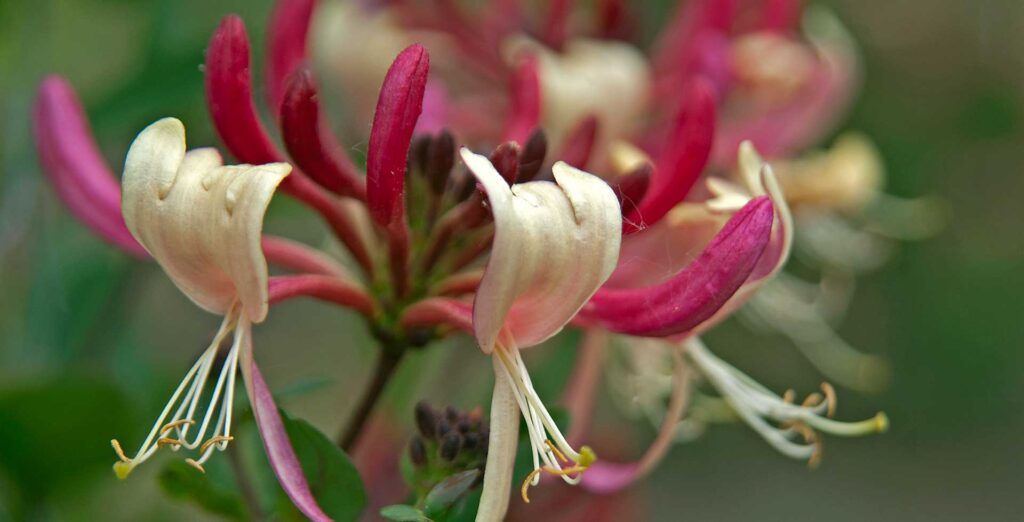
The rambling honeysuckle produces abundant, fragrant flowers from May to July. The blooms are white or pinkish-white with hints of red. These flowers attract a variety of pollinators, including butterflies, bees, and wasps.
The flowers are also highly prized for their fragrance, which is often compared to that of roses. They have a sweet, floral scent that fills the air when they bloom.
Fruit: Toxic but Attractive
After flowering, the plant produces small, edible fruits (berries) that turn reddish-brown or orange as they ripen. However, these berries are toxic due to their high concentration of saponins.
The fruit is an important food source for birds and other wildlife, which can be attracted to the plant by its fragrance and berries.
Is Lonicera caprifolium a Perennial?
While this plant is often referred to as an evergreen climber, it’s not entirely accurate. Some species within the Lonicera genus have deciduous leaves, meaning they lose them in autumn and regrow in spring.
Before purchasing, it’s essential to determine whether you’re getting a perennial or annual plant. Perennials are more suitable for long-term gardening projects, as they require less maintenance and can provide year-round interest.
Choosing the Right Variety
With so many varieties of honeysuckle available, selecting the right one can be daunting. If you live in an area with cold winters, consider choosing a variety like Lonicera x heckrottii, which is more resistant to frost (down to -10°C).
Lonicera x heckrottii is also known for its vigorous growth and abundance of fragrant flowers.
Cultivation and Care
The rambling honeysuckle is relatively low-maintenance and doesn’t require extensive care. Provide it with full sun or partial shade, ensuring that the roots receive regular watering while the foliage is exposed to sunlight.
Here are some additional tips for growing your rambling honeysuckle:
- Prune it regularly to maintain its shape and promote healthy growth.
- Mulch around the base of the plant to retain moisture and suppress weeds.
- Use a well-draining potting mix if you’re growing it in containers.
Rambling Honeysuckle in Containers
Growing rambling honeysuckle in containers can be a great option for small gardens or balconies. To ensure success, follow these tips:
- Choose a large container with good drainage.
- Use a well-draining potting mix and fertilize regularly.
- Prune the plant regularly to maintain its shape.
Tips for Growing Rambling Honeysuckle
Growing rambling honeysuckle requires some care and attention. Here are some additional tips:
- Provide it with full sun or partial shade, depending on your climate.
- Water it regularly, especially when the roots are exposed to sunlight.
- Mulch around the base of the plant to retain moisture and suppress weeds.
- Prune it regularly to maintain its shape and promote healthy growth.
Conclusion
The rambling honeysuckle is an attractive, fragrant climber that can add beauty and interest to any garden or outdoor space. With proper care and attention, this plant can thrive for years to come.
By following these guidelines and providing proper care, you can enjoy the beauty and fragrance of your rambling honeysuckle for years to come.


