
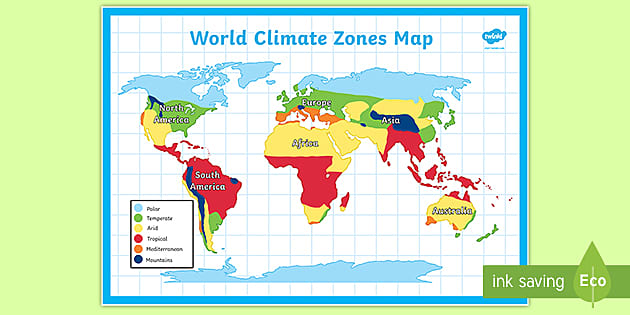
The Earth’s climate is a complex and dynamic system, influenced by various factors such as wind, mountains, latitude, ocean currents, human activities, and atmospheric composition. To simplify and categorize these diverse climate conditions, we’ve identified six main climate zones that serve as reference points for understanding our planet’s climate.
Understanding Climate Zones
Climate zones are defined by the unique combination of factors that shape local weather patterns. These zones can be broadly classified into temperate, tropical, polar, subpolar, and desert climates. Each zone has distinct characteristics, such as temperature ranges, precipitation patterns, and vegetation types.
The concept of climate zones was first introduced by American geographer Ellen Churchill Semple in the early 20th century. She proposed that the Earth’s climate could be divided into six main zones based on temperature and rainfall patterns. This idea has since been refined and expanded upon, with various researchers adding their own insights and classifications.
Tropical and Subtropical Climates
The tropical and subtropical climate zones are characterized by high temperatures and high humidity throughout the year. These regions experience little seasonal variation in temperature, with average temperatures ranging from 20°C to 30°C (68°F to 86°F). The tropics stretch from the equator to around 23.5°N latitude, while the subtropics lie between 23.5°N and 35°N latitude.
Tropical climates are further divided into two subcategories: equatorial and intertropical. Equatorial climates are found near the equator and experience high temperatures and high humidity throughout the year. Intertropical climates, on the other hand, have a more pronounced dry season and are characterized by lower temperatures and humidity.
Subtropical climates, such as those found in southern Europe, North Africa, and parts of Asia, experience mild winters and hot summers. These regions often have a Mediterranean climate, with warm summers and cool winters.
Temperate Climates
Temperate climates are found in regions with moderate temperatures and rainfall throughout the year. These zones experience four distinct seasons, with cold winters and warm summers. Temperate climates can be further divided into subcategories, such as Mediterranean, oceanic, montane, and continental climates.
Mediterranean climates are characterized by mild winters and hot, dry summers. These regions often have a low precipitation pattern, with most of the rainfall occurring during the winter months. Examples of Mediterranean climates include parts of California, Spain, and Italy.
Oceanic climates, on the other hand, experience high levels of rainfall throughout the year and are often associated with cold, wet winters. These regions are typically found near large bodies of water, such as the Pacific Northwest in North America or the west coast of Europe.
Montane climates are found at higher elevations and are characterized by cooler temperatures and more pronounced seasonal variation. Examples of montane climates include parts of the Rocky Mountains in North America and the Alps in Europe.
Polar Climates
The polar climate zone is characterized by extremely cold temperatures and limited sunlight during the winter months. The Arctic and Antarctic regions are home to unique ecosystems that have adapted to these harsh conditions.
Arctic climates experience long, cold winters with limited daylight hours. These regions are often covered in ice and snow, with some areas experiencing up to 24 hours of darkness during the winter solstice.
Antarctic climates, on the other hand, are characterized by extremely cold temperatures and dry conditions. The continent experiences almost complete darkness during the winter months, making it one of the most inhospitable places on Earth.
Climate Zones in Italy
Italy is divided into six climate zones, each denoted by a letter (A to F) based on the daily temperature gradient (GG). These zones range from alpine (A) to Mediterranean (F), with varying levels of rainfall and temperature fluctuations throughout the year.
Alpine climates are found at high elevations and are characterized by cool temperatures and limited precipitation. Examples of alpine climates include parts of the Italian Alps, such as the Dolomites and the Gran Paradiso National Park.
Temperate climates in Italy experience mild winters and hot summers. These regions often have a Mediterranean climate, with warm summers and cool winters.
Mediterranean climates are found along the coastlines of southern Italy, including the Campania region and the Calabria peninsula. These regions often have a dry summer and a wet winter, with most of the rainfall occurring during the winter months.
Subtropical climates in Italy experience hot summers and mild winters. Examples of subtropical climates include parts of Sicily and Sardinia.
Continental climates are found in central Italy and are characterized by cold winters and hot summers. These regions often have a relatively dry climate, with most of the rainfall occurring during the summer months.
European Climate Zones
Europe experiences a diverse range of climates due to its extensive latitudinal range. The continent is divided into five climate zones, including subarctic, continental, oceanic, montane, and Mediterranean climates.
Subarctic climates are found in northern Europe, including parts of Norway, Sweden, and Finland. These regions experience long, cold winters with limited daylight hours.
Continental climates are found in central and eastern Europe, including parts of Germany, Poland, and Russia. These regions often have a relatively dry climate, with most of the rainfall occurring during the summer months.
Oceanic climates are found along the west coast of Europe, including parts of the United Kingdom, France, and Spain. These regions experience high levels of rainfall throughout the year and are often associated with cold, wet winters.
Montane climates are found at higher elevations in southern Europe, including parts of the Alps and the Pyrenees. Examples of montane climates include parts of Switzerland, Austria, and Italy.
Mediterranean climates are found along the coastlines of southern Europe, including parts of Spain, France, and Greece. These regions often have a dry summer and a wet winter, with most of the rainfall occurring during the winter months.
Conclusion
Climate zones play a crucial role in understanding our planet’s complex weather patterns. By recognizing these distinct climate conditions, we can better appreciate the diversity of Earth’s ecosystems and develop strategies to mitigate the impacts of climate change.
Understanding climate zones also has practical applications in various fields, including agriculture, urban planning, and disaster management. For example, knowing the climate zone of a particular region can help farmers choose crops that are well-suited to local conditions, while also allowing for more effective resource allocation and infrastructure development.
In addition, recognizing climate zones is essential for addressing global issues such as climate change, deforestation, and biodiversity loss. By understanding how human activities impact local ecosystems, we can develop more effective strategies for reducing our carbon footprint and promoting sustainable development.
FAQs
- What is the main factor that determines climate zones?
A) Latitude
B) Elevation
C) Ocean currents
D) Atmospheric composition
Answer: A) Latitude
- Which climate zone experiences four distinct seasons?
A) Tropical
B) Temperate
C) Polar
D) Subpolar
Answer: B) Temperate
- What is the primary characteristic of a Mediterranean climate?
A) High rainfall throughout the year
B) Low humidity and mild winters
C) Hot summers and cool winters
D) Extreme temperature fluctuations
Answer: C) Hot summers and cool winters
- Which continent has the most diverse range of climates?
A) Africa
B) Asia
C) Europe
D) North America
Answer: D) North America
- What is the purpose of climate zones in understanding Earth’s weather patterns?
A) To identify regions with high temperatures
B) To categorize ecosystems by temperature and rainfall
C) To determine the impact of human activities on climate change
D) To predict weather patterns
Answer: B) To categorize ecosystems by temperature and rainfall


