
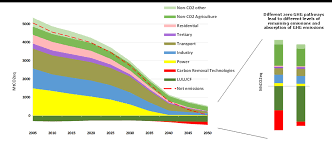
As the world grapples with the challenges of climate change, international diplomacy has taken center stage in shaping the future of our planet. In this context, climate diplomacy refers to the process of negotiation between governments to agree on measures to mitigate the effects of global warming. This article delves into the evolution of climate diplomacy, from its roots in environmental diplomacy to the emergence of a new framework for sustainable cooperation in Europe.
The Origins of Climate Diplomacy
Environmental diplomacy, which emerged in the 1970s, was the precursor to climate diplomacy. This early initiative promoted the first international agreements on environmental issues, laying the groundwork for future negotiations. The Intergovernmental Negotiating Committee (INC) for a framework convention on climate change was established in 1990, followed by the adoption of the United Nations Framework Convention on Climate Change (UNFCCC) in 1992.
The Birth of Climate Diplomacy
The creation of the INC marked the beginning of a new era in international cooperation. The UNFCCC provided a framework for countries to discuss and agree on measures to reduce greenhouse gas emissions. However, this initial approach had limitations, as it focused primarily on sectoral discussions and did not address the interconnected nature of environmental issues.
Two Phases of Climate Diplomacy
Climate diplomacy has undergone two significant phases since its inception:
- Global Deal Strategy: The first phase was characterized by a focus on achieving a global agreement (global deal strategy). This approach led to the adoption of the Kyoto Protocol, which aimed to reduce greenhouse gas emissions. However, this model proved insufficient in replicating previous successes and failed to yield new agreements.
- Bottom-Up Approach: The second phase marked a shift towards a bottom-up approach, where countries defined their own objectives based on local interests and development needs. This approach led to the creation of the Paris Agreement, which set a new standard for international cooperation.
The European Framework 2030-2050
In 2014, the European Union (EU) adopted the Quadro per le politiche dell’energia e del clima per il periodo dal 2020 al 2030 (Energy and Climate Policy Framework for the period 2020-2030). This framework aimed to reduce greenhouse gas emissions by at least 40% by 2030, increase energy from renewable sources to 27%, and enhance energy efficiency by 27%.
Key Objectives of the European Framework
The EU’s climate policy has several key objectives:
- Reduce greenhouse gas emissions by at least 40% by 2030
- Increase energy from renewable sources to 27%
- Enhance energy efficiency by 27%
- Produce energy for nearly 100% from zero-carbon sources by 2050
The Roadmap to a Resource-Efficient Europe
In 2011, the European Commission defined a roadmap towards a resource-efficient Europe (CE, 2011b). This ambitious plan aimed to achieve an economy that is competitive at the same time as being low in carbon emissions. To achieve this goal, the EU set out several key objectives:
- Reduce greenhouse gas emissions by 80-95% by 2050
- Produce energy for nearly 100% from zero-carbon sources
- Enhance energy efficiency by 30%
International Cooperation and Bilateral Agreements
The Paris Agreement has been a major success story in international cooperation. However, bilateral agreements between countries have also played a crucial role in achieving climate goals. For example, the United States and China signed an agreement to reduce greenhouse gas emissions in 2014.
Country-Specific Initiatives
Several European countries have developed their own initiatives to address climate change:
- Germany’s Energiewende program aims to increase renewable energy production by 65% by 2030.
- France has set a goal of reducing greenhouse gas emissions by 40% by 2030, with a focus on nuclear power and carbon capture technology.
Cities and Regions
Cities and regions have also become key players in climate diplomacy. Many European cities have developed their own sustainability strategies and are working closely with national governments to address climate change:
- The City of Amsterdam has set a goal of becoming carbon neutral by 2050.
- The German state of Bavaria aims to reduce greenhouse gas emissions by 50% by 2030.
Individual Actions
While governments and international organizations play a crucial role in addressing climate change, individual actions can also make a significant impact:
- Reduce energy consumption by using public transport, carpooling, or driving electric vehicles.
- Use renewable energy sources like solar panels or wind turbines to power homes and businesses.
- Support companies that prioritize sustainability and reduce carbon emissions.
Conclusion: A New Era of Sustainable Cooperation
Climate diplomacy has come a long way since its inception. From the early days of environmental diplomacy to the emergence of a new framework for sustainable cooperation in Europe, we have seen significant progress. As we move forward, it is essential that we continue to work together to address the challenges posed by climate change.
Frequently Asked Questions (FAQs)
- What is climate diplomacy?
- Climate diplomacy refers to the process of negotiation between governments to agree on measures to mitigate the effects of global warming.
- What are the key objectives of the European Framework 2030-2050?
- The EU’s climate policy aims to reduce greenhouse gas emissions by at least 40% by 2030, increase energy from renewable sources to 27%, and enhance energy efficiency by 27%.
- How has international cooperation contributed to achieving climate goals?
- Bilateral agreements between countries have played a crucial role in achieving climate goals. For example, the Paris Agreement and the US-China agreement on reducing greenhouse gas emissions are notable successes.
- What is the roadmap to a resource-efficient Europe?
- The European Commission defined a roadmap towards a resource-efficient Europe (CE, 2011b), which aims to achieve an economy that is competitive at the same time as being low in carbon emissions.
- How can individuals contribute to achieving climate goals?
- Individuals can contribute by making conscious lifestyle choices, such as reducing energy consumption and using public transport.


