
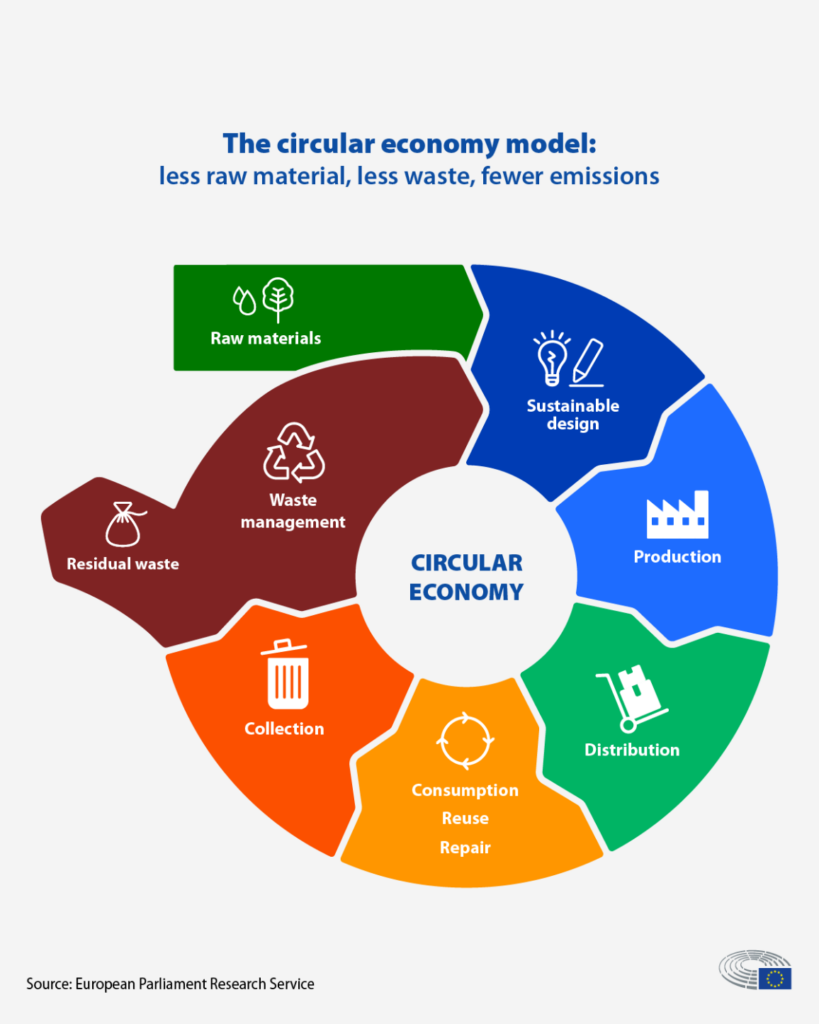
Introduction
In recent years, the concept of a circular economy has gained significant attention. But what exactly is it? And how does it differ from traditional economic systems? In this article, we will explore the principles and benefits of a circular economy, as well as its potential applications in various industries.
The term “circular economy” was first coined by Walter Rastl in 1995. However, it wasn’t until the mid-2000s that the concept began to gain traction, particularly in Europe and North America. The idea is simple: a circular economy is a system where materials are designed to be recycled and reused, reducing waste and the consumption of new resources.
What is a Circular Economy?
A circular economy is a system where materials are designed to be recycled and reused, reducing waste and the consumption of new resources. This approach aims to create a regenerative system where materials are constantly cycled back into production, rather than being discarded or depleted.
The concept of a circular economy has been gaining traction in recent years, with many companies and governments adopting it as a way to reduce their environmental impact. The idea is to move away from the traditional “take, make, dispose” approach, which is based on the extraction and consumption of natural resources, towards a more sustainable and regenerative model.
Key Principles of a Circular Economy
The circular economy is based on three key principles:
- Design for recyclability: Products and materials should be designed to be easily recycled and reused.
- Sharing and collaboration: Companies and individuals should share resources and collaborate to reduce waste and increase efficiency.
- Closed-loop production: Materials should be constantly cycled back into production, reducing the need for virgin materials.
These principles are designed to work together to create a system that is more sustainable, efficient, and regenerative than traditional economic systems.
Benefits of a Circular Economy
The circular economy offers several benefits, including:
- Reduced waste and pollution
- Conservation of natural resources
- Increased efficiency and productivity
- Job creation and economic growth
These benefits are achieved by reducing the amount of waste generated by production and consumption, conserving natural resources, increasing efficiency, creating new jobs, and stimulating economic growth.
History of the Circular Economy
The concept of a circular economy dates back to the 1970s. In 1976, Walter Stahel and Genevieve Reday published a report titled “The Potential for Substituting Manpower for Energy,” which introduced the idea of a circular economy.
Since then, the concept has evolved and gained traction, with many countries and companies adopting it as a way to reduce their environmental impact. The success of Expo Milan 2015 demonstrates that a circular economy is not only possible but also desirable.
Economic Circolare: Why It Matters
So why is it that we need to rethink our economic system? The answer lies in the fact that traditional economies are based on consumption and growth, rather than sustainability. This approach has led to pollution, resource depletion, and social inequality.
In contrast, a circular economy offers a new paradigm for economic growth that prioritizes regeneration and reuse over consumption and waste.
Economic Circolare: Goals
The goals of an economic circle are ambitious but achievable:
- Extend the life of products: Products should be designed to last longer and be more durable.
- Produce goods with long-lasting materials: Goods made from recycled or sustainable materials should have a lower environmental impact.
- Encourage rerecycling and reuse: Companies should design their products for easy disassembly, repair, and reuse.
These goals are designed to work together to create a system that is more sustainable, efficient, and regenerative than traditional economic systems.
Economic Circolare nel settore dei rifiuti
In the context of waste management, the circular economy offers a solution to reduce waste and increase recycling rates. According to the circular economy approach, righ waste is not “waste” in the classical sense but rather raw material waiting to be reused or recycled.
To achieve this goal, we need to rethink our current methods for waste disposal and adopt more sustainable practices.
Economic Circolare: L’Eredità di Expo Milano
The success of Expo Milan 2015 demonstrates that a circular economy is not only possible but also desirable. The event’s focus on sustainability and waste reduction inspired many participants, including visitors, to rethink their consumption habits.
In terms of concrete examples, Expo 2015 achieved:
- 67% of waste reduction: Visitors were encouraged to recycle, reducing waste by over two-thirds.
- Efficient energy use: Expo Milan reduced its energy consumption by using LED lighting and other efficient technologies.
- Green buildings: The event was built with sustainable materials and designed for maximum energy efficiency.
These examples demonstrate the potential of a circular economy to reduce waste, conserve resources, and promote sustainability.
Conclusion
The circular economy offers a promising solution to the environmental challenges we face today. By prioritizing regeneration, reuse, and recycling, we can reduce waste, conserve resources, and create more sustainable economic systems.
As individuals, companies, and governments, we must work together to implement the principles of the circular economy and create a better future for all.
Frequently Asked Questions
- What is the main goal of the circular economy?
- How does the circular economy differ from traditional economic systems?
- What are some key benefits of adopting a circular economy?
- What role can individuals play in promoting a circular economy?
- How can companies implement the principles of the circular economy?
These questions provide additional insights into the concept of a circular economy and its potential applications.
Additional Resources
- Economia Circolare: definizione ed esempi
- Economia comportamentale: definizione
- Materia Rinnovabile: la rivista internazionale di economia circolare
- Green Marketing: definizione
These resources provide further information on the concept of a circular economy and its potential applications.


