
When we think about color, we often associate it with our surroundings – the clothes we wear, the cars we drive, the walls of our homes. But did you know that colors can also have a profound impact on our mental and physical well-being? In this article, we’ll explore the concept of chromotherapy, also known as color therapy, and how it can be used to promote balance and harmony in our lives.
What is Chromotherapy?
Chromotherapy is an ancient practice that uses colors to restore equilibrium in the body and mind. While it may seem like a modern concept, chromotherapy has been around for centuries, with evidence of its use found in ancient cultures such as Egypt, China, and Greece. Today, many spas and wellness centers offer chromotherapy treatments as part of their therapies.
Chromotherapy is based on the idea that colors can be used to stimulate specific parts of our brain, influencing our emotions, energy levels, and physical responses. This is achieved by using light or color therapy devices that emit specific wavelengths of light, which are then absorbed by the body.
How Do Colors Affect Us?
Colors can have a profound impact on our emotions, energy levels, and overall well-being. When we’re exposed to certain colors, they can stimulate or calm us, influencing our mood, behavior, and physical responses. For example, the color red can increase our heart rate and blood pressure, while blue can help reduce stress and anxiety.
But how do colors work their magic? The answer lies in the way our brains process visual information. When we see a color, it sends signals to our brain’s limbic system, which processes emotions and sensations. Different colors stimulate different parts of the brain, influencing our emotional state and physical responses.
The Science Behind Color Therapy
The science behind color therapy is based on the principles of biophotonics, which study the interactions between light and biological systems. When we’re exposed to specific wavelengths of light, it can interact with our cells, influencing their behavior and activity.
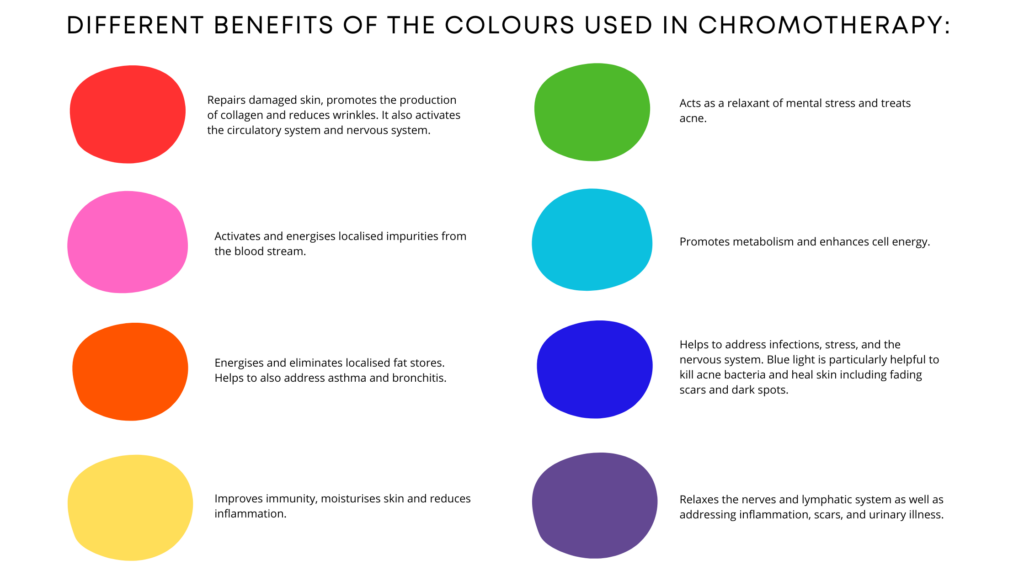
For example, red light has been shown to increase blood flow and circulation, while blue light can help reduce inflammation and pain. Green light, on the other hand, is believed to promote balance and harmony in the body.
The Benefits of Chromotherapy
Chromotherapy can be used to treat a range of health issues, from stress and anxiety to insomnia and digestive problems. By using specific colors to balance our energy, we can:
- Reduce stress and anxiety
- Improve mood and overall well-being
- Enhance concentration and focus
- Support digestion and gut health
- Even alleviate symptoms of chronic diseases such as cancer and fibromyalgia
Colors for Energy and Vitality
When we’re feeling tired or sluggish, our bodies need a boost of energy. Chromotherapy can help by using colors that stimulate the production of adrenalin, such as:
- Red: increases heart rate and blood pressure
- Orange: energizes and stimulates
- Yellow: promotes sunshine and warmth
These colors can be used in various ways, such as through light therapy devices or by incorporating them into our daily routines. For example, we could wear clothes with red or orange hues to boost our energy levels, or use a yellow light bulb in our home to promote a sense of sunshine.
Colors for Relaxation and Calmness
On the other hand, when we’re feeling stressed or overwhelmed, our bodies need a break. Chromotherapy can help by using colors that calm and soothe us, such as:
- Blue: reduces stress and anxiety
- Green: promotes balance and harmony
- Purple: calms and relaxes
These colors can be used in various ways, such as through light therapy devices or by incorporating them into our daily routines. For example, we could wear clothes with blue hues to reduce stress, or use a green plant in our home to promote balance and harmony.
The Role of Light in Chromotherapy
Light plays a crucial role in chromotherapy. Different wavelengths of light correspond to different colors, and by using specific light frequencies, we can target specific areas of the body or mind. For example:
- Red light: increases blood flow and circulation
- Blue light: reduces inflammation and pain
The History of Chromotherapy
Chromotherapy has a rich history that spans thousands of years. In ancient Egypt, chromotherapy was used to promote healing and balance in the body. In China, chromotherapy was used to treat a range of health issues, from stress and anxiety to insomnia and digestive problems.
In the Western world, chromotherapy was largely forgotten until the 1960s, when it experienced a resurgence as part of the New Age movement. Today, chromotherapy is recognized as a legitimate form of alternative therapy, and its benefits are being studied by researchers around the world.
Conclusion
Chromotherapy is a powerful tool that can be used to promote balance and harmony in our lives. By understanding how colors affect us, we can harness their energy to support our physical and mental well-being. Whether you’re looking to reduce stress, improve your mood, or simply feel more alive, chromotherapy may be just what you need.
Frequently Asked Questions
- Is chromotherapy a recognized medical practice?
While chromotherapy is not yet widely accepted as a conventional medical treatment, it is used in many alternative therapies and wellness centers. - How does chromotherapy work?
Chromotherapy works by using specific colors to stimulate the brain’s limbic system, influencing emotions, energy levels, and physical responses. - Can anyone use chromotherapy?
While anyone can benefit from chromotherapy, it may not be suitable for people with certain medical conditions, such as epilepsy or photosensitivity disorders. - How often should I receive chromotherapy treatments?
The frequency of treatment depends on individual needs and goals. Some people may require regular treatments to maintain balance, while others may only need occasional sessions. -
Can I use chromotherapy at home?
Yes! You can use color therapy in your daily life by incorporating colors into your environment, fashion choices, or even using light therapy devices specifically designed for this purpose. -
What are the benefits of chromotherapy for stress and anxiety?
Chromotherapy can help reduce stress and anxiety by promoting relaxation, calming the mind, and reducing cortisol levels. - Can chromotherapy treat chronic diseases?
While chromotherapy may not be a cure-all for chronic diseases, it can support treatment by promoting balance, reducing symptoms, and improving overall well-being. -
How long do chromotherapy treatments last?
Treatment times vary depending on the individual’s needs and goals, but typically range from 30 minutes to several hours. -
Can I combine chromotherapy with other therapies?
Yes! Chromotherapy can be combined with other therapies such as acupuncture, massage, or meditation to create a holistic treatment plan. - Are there any potential side effects of chromotherapy?
While generally considered safe, some people may experience mild side effects such as dizziness, nausea, or headaches during or after treatment.
Conclusion
Chromotherapy is a powerful tool that can be used to promote balance and harmony in our lives. By understanding how colors affect us, we can harness their energy to support our physical and mental well-being. Whether you’re looking to reduce stress, improve your mood, or simply feel more alive, chromotherapy may be just what you need.
Additional Resources
If you’re interested in learning more about chromotherapy, there are many additional resources available:
- Books: “The Art of Chromotherapy” by Dr. Carl Jung, “Chromotherapy: The Science and Practice of Light Therapy” by Dr. Robert A. Schadewald
- Online Courses: “Introduction to Chromotherapy” on Coursera, “Chromotherapy Certification Program” on Udemy
- Conferences: The International Association of Chromotherapy (IAC) hosts an annual conference on the latest research and advancements in chromotherapy.
- Websites: The IAC website provides a wealth of information on chromotherapy, including articles, videos, and FAQs.
By exploring these resources and learning more about chromotherapy, you can unlock its full potential to promote balance, harmony, and overall well-being.


