
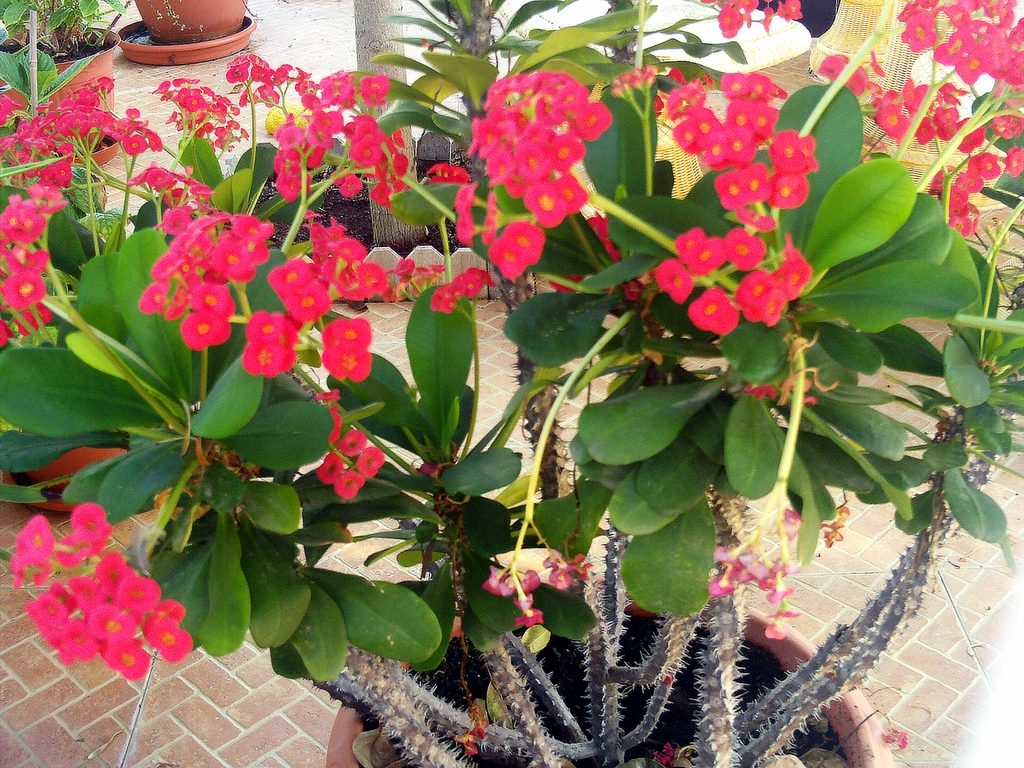
What is Euphorbia milii?
Euphorbia milii, commonly known as the Christ’s Thorn, is a semi-succulent plant often mistaken for a cactus. It belongs to the Euphorbia genus, which comprises diverse plants with varying characteristics. The Christ’s Thorn is native to Africa and has spread throughout Asia and America.
Origin and Characteristics
The Christ’s Thorn originates from Africa, where it naturally grows as a shrub with small dimensions, consisting of succulent stems and semileathery bases. As a semi-succulent plant, it possesses fleshy stems but non-succulent leaves and distinctive characteristic flowers, known as ciazi.
Stem Characteristics
The Christ’s Thorn features ramified stems with numerous large spines. These spines serve as an adaptation to secure the stem to other trees during growth, especially when the stem reaches a certain height. The maximum resistance limit is approximately one meter.
One of the most distinctive features of Euphorbia milii is its ability to produce new shoots and stems from the top of the plant, creating a unique branching pattern. This characteristic allows the plant to thrive in environments with limited light, making it an ideal choice for indoor gardens.
Leaf Structure and Health Indicators
The plant has oval-shaped, dark green leaves covered in sparse hair, which renders them less visible. The leaf condition serves as an indicator of the plant’s health. Excessive drought can cause leaves to fall off, while regular watering promotes new growth.
Euphorbia milii is a relatively low-maintenance plant when it comes to leaf care. However, it does require occasional pruning to maintain its shape and encourage healthy growth. Regularly inspecting the plant’s leaves for signs of disease or pests can also help prevent problems from spreading.
Flower Characteristics
In late spring, small flowers with yellow petals and red bracts emerge from the top of the stem. While typically yellow and red, some hybrids exhibit white or pink flowers. In a garden setting, these flowers follow seasonal patterns but can appear at any time if the plant is well-cared for indoors.
The flowers of Euphorbia milii are relatively small compared to other plants in the genus, measuring around 1-2 cm in diameter. Despite their size, they are highly noticeable due to their vibrant colors and unique shape.
Etymology and Misconceptions
The Christ’s Thorn got its name from an apocryphal legend claiming it was used to create Jesus’ crown of thorns. Although unlikely, this story highlights the plant’s widespread presence in the Mediterranean region by the early 19th century. It is essential to note that only Euphorbia milii is referred to as the Christ’s Thorn; other Euphorbia species are distinct and have different characteristics.
This myth has led some people to believe that Euphorbia milii is a symbol of Christianity or that it has special spiritual significance. However, this is largely anecdotal and not supported by scientific evidence. The plant’s name is simply a result of its association with the region where it was first introduced.
Care and Maintenance
The Christ’s Thorn is an easy-to-grow plant suitable for indoor or outdoor cultivation. To thrive, it requires well-draining soil with a moderate level of moisture. A combination of terricolo universale, perlite, or pietra pomice can help maintain air circulation while ensuring optimal humidity levels. Adding slow-release fertilizer with low nitrogen content will support healthy growth.
When placing the plant indoors, provide direct sunlight for several hours a day without overexposure, which could cause dehydration. Avoid exposing the plant to extremely cold temperatures that might lead to leaf drop and hinder flowering.
Growing Conditions
The Christ’s Thorn prefers a well-draining potting mix, moderate watering, and protection from extreme heat or drought. It is suitable for containers with adequate drainage holes. When growing indoors, provide sufficient light, avoiding direct sunlight during the hottest part of the day, while preventing frost damage.
In outdoor settings, Euphorbia milii can tolerate temperatures between 32°F and 90°F (0°C and 32°C). However, it is essential to protect the plant from extreme temperatures and wind.
Conclusion
In conclusion, Euphorbia milii, commonly known as the Christ’s Thorn, is a unique plant species that deserves attention due to its distinctive features and versatility in cultivation. With proper care and maintenance, this plant can thrive in various environments, making it an excellent choice for gardeners of all skill levels.
Frequently Asked Questions (FAQs)
- What makes Euphorbia milii different from other cacti?
Euphorbia milii exhibits fleshy stems but non-succulent leaves, setting it apart from typical cacti. - Can I grow Euphorbia milii in hot climates?
While it can tolerate extreme heat, the plant prefers moderate temperatures and adequate moisture to thrive. - How do I choose the right potting mix for my Christ’s Thorn?
Select a well-draining terricolo universale or a combination of perlite and pietra pomice. - Can I propagate Euphorbia milii through stem cuttings?
Cut stems can be used to create new plants, but be cautious not to overwater the cutting during the propagation process. - What is the ideal temperature range for growing Euphorbia milii indoors?
Maintain a consistent temperature between 65°F and 75°F (18°C and 24°C) to promote healthy growth. - How often should I water my Christ’s Thorn?
Water moderately, taking care not to overwater or underwater the plant. - Can Euphorbia milii be grown outdoors year-round?
Yes, but it may require protection from frost during winter months and extreme heat during summer. - What are some common pests that target Euphorbia milii?
The plant is susceptible to spider mites, mealybugs, and scale insects; regular monitoring can help prevent infestations.
Propagation Methods
Euphorbia milii can be propagated through stem cuttings, leaf cuttings, or division. Here are some step-by-step instructions for each method:
- Stem Cuttings: Cut a section of stem from the mother plant, removing any lower leaves. Dip the cut end in rooting hormone and plant it in well-draining soil. Keep the soil moist until roots develop.
- Leaf Cuttings: Take a healthy leaf from the mother plant and remove the petiole (stem). Place the leaf on a pot of well-draining soil, ensuring good air circulation. Water sparingly until roots develop.
- Division: Carefully dig up the entire plant, separating the stems into individual sections. Replant each section in new pots filled with well-draining soil.
Pest Control
Regular monitoring can help prevent pest infestations on Euphorbia milii. Here are some common pests that target this plant:
- Spider Mites: These tiny insects feed on plant sap, causing yellowing leaves and fine webbing.
- Mealybugs: Small, white insects that secrete a sticky substance, attracting ants and other insects.
- Scale Insects: Armored insects that feed on plant sap, causing damage to stems and leaves.
To control pests, use neem oil or insecticidal soap. Remove any infested plants from the potting area to prevent further infestation.
Common Problems
Euphorbia milii can experience various problems when grown indoors or outdoors. Here are some common issues:
- Leaf Drop: Caused by overwatering or underwatering, leading to yellowing leaves and dry stems.
- Fungal Diseases: Fungi that feed on plant tissue, causing black spots or lesions on leaves and stems.
- Root Rot: Overwatering causes roots to rot, leading to reduced growth and leaf drop.
To prevent common problems, ensure proper watering, provide good air circulation, and inspect the plant regularly for signs of disease or pests.


