
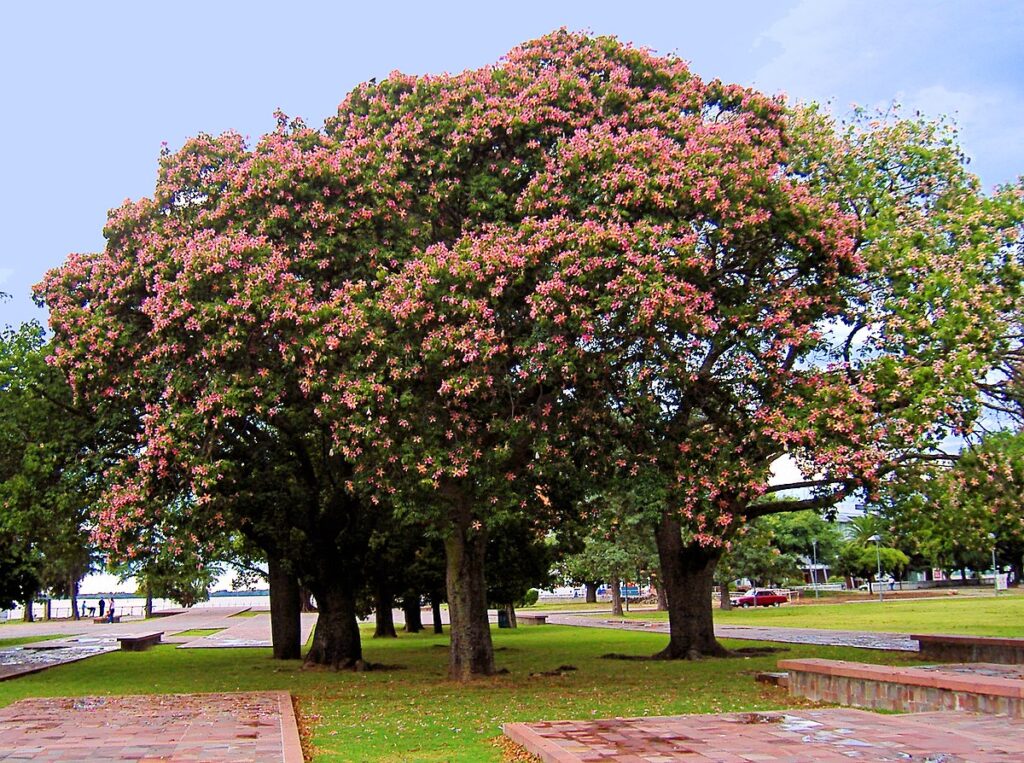
What is Chorisia Speciosa?
The Chorisia speciosa, also known as the “drunken tree,” is a species of tree in the Bombacaceae family. Its distinctive trunk, covered in large, cone-shaped spines, makes it stand out among other trees.
Physical Characteristics and Habitat
The Chorisia speciosa can grow up to 20 meters tall in its natural habitat, with a broad base that stores water during times of drought. The tree’s unique bark, similar to that of the baobab tree, has become a striking feature in many gardens and landscapes.
- Height: In their natural habitat, they can grow up to 20 meters tall.
- Habitat: Native to Brazil, Paraguay, and Argentina, this tropical species thrives in well-drained soil with full sun to partial shade.
Distribution and Cultivation
Introduced to Italy in the late 19th century, the Chorisia speciosa has since spread throughout the country as a popular garden tree. Its cultivation extends beyond Italy, with many countries in South America and Africa adopting it for its ornamental value.
- Cultivation: The tree is commonly grown in tropical and subtropical regions for its aesthetic appeal.
- Distribution: Native to Brazil, Paraguay, and Argentina, this tropical species has been introduced to many other parts of the world, including Italy and countries in South America and Africa.
Uses of Chorisia Speciosa
The Chorisia speciosa is primarily cultivated for its aesthetic appeal, but its uses extend beyond decoration:
- Ornamental purposes: The tree’s striking trunk and branches make it an attractive addition to gardens and landscapes.
- Fruit production: The fruit, a bumpy, oval-shaped berry, contains edible seeds and a soft, white pulp that can be used in various industrial applications.
- Industrial uses: The fibers extracted from the fruit have been used for centuries to create soft, flexible materials like ropes, paper, and packaging materials.
The Fruit of Chorisia Speciosa
When mature, the seeds are surrounded by a fluffy material, reminiscent of cotton or silk. This unique property has made it an attractive option for industries seeking natural fiber alternatives:
- Industrial applications: The fibers have been used to create a variety of products, including ropes, paper, and packaging materials.
- Textile production: The soft, flexible fibers can be woven into fabric, making them suitable for clothing and upholstery.
The Flowers of Chorisia Speciosa
The tree’s showy flowers are a striking feature in any garden:
- Appearance: Large, fragrant flowers with pink or red petals attract pollinators like butterflies.
- Fragrance: The sweet scent of the flowers makes them a popular choice for gardens and floral arrangements.
Conclusion
The Chorisia speciosa is a fascinating tree with a rich history and versatile uses. From its striking trunk to its edible fruit, this tropical species has captivated gardeners and industrialists alike.
Here are some frequently asked questions about Chorisia Speciosa:
- What is the typical height of Chorisia Speciosa trees?
- In their natural habitat, they can grow up to 20 meters tall.
- Is the Chorisia speciosa tree edible?
- The fruit and seeds are edible, but only when fully mature.
- Can I use the fibers from Chorisia Speciosa for paper production?
- While it is technically possible, the fibers may not be as strong or durable as those used in traditional paper production.
- How do I care for a Chorisia Speciosa tree?
- The tree prefers well-drained soil and full sun to partial shade. Regular watering and fertilization will help promote healthy growth.
If you have any more questions about the Chorisia Speciosa, please feel free to ask!


