
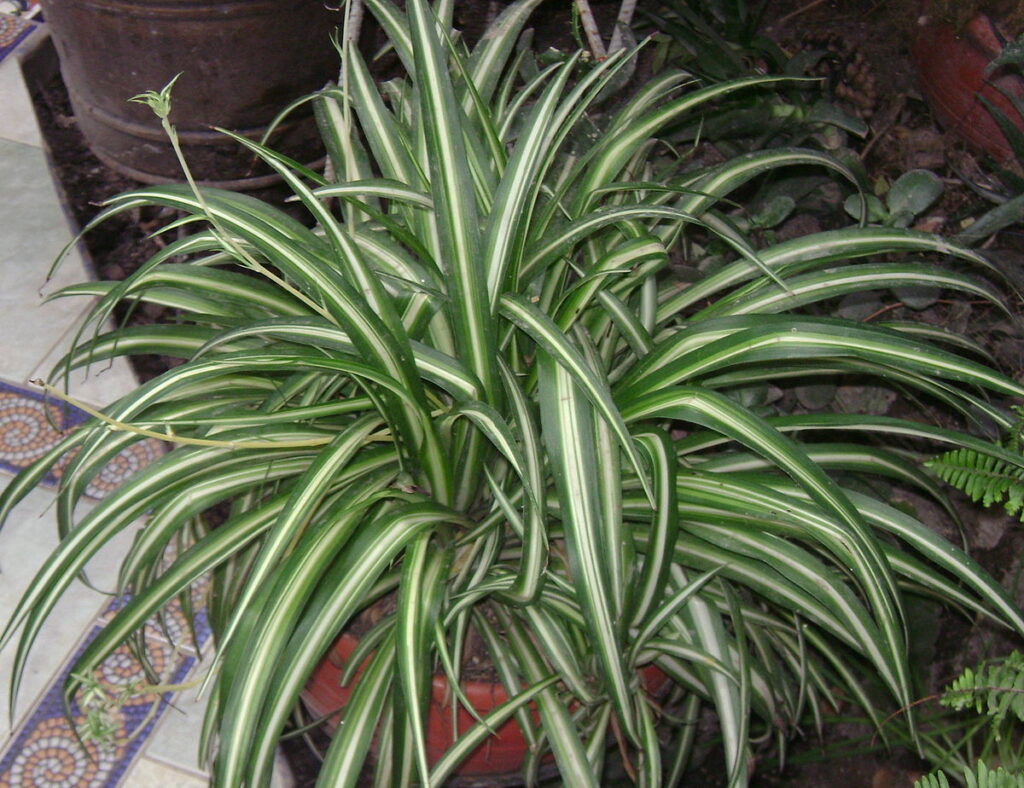
What is Chlorophytum Comosum?
Chlorophytum Comosum, commonly known as “Nastrino” or “Falangio,” is a popular, low-maintenance houseplant that has gained immense popularity worldwide. Native to Africa, this perennial plant boasts an attractive foliage with white-greens stripes, making it a great addition to any indoor space.
Characteristics of Chlorophytum Comosum
This evergreen plant features rosette-shaped leaves that are long and narrow, with a distinctive white or yellowish band running along the center. The stems are white and fleshy, producing small white flowers that create a stunning visual effect when paired with its green foliage.
Types of Chlorophytum Comosum
Within the Chlorophytum species, there exist several varieties distinguished by their leaf color and size. Some notable types include:
- Chlorophytum Comosum variegatum: Features leaves with white margins.
- Chlorophytum Vittatum: Exhibits striations on its leaves with a range of colors from green to cream.
- Chlorophytum Undulatum: Boasts narrower, wavy-shaped leaves.
Cousins of Chlorophytum Comosum
Several other plants are classified under the same genus as Chlorophytum Comosum. These include:
- Chlorophytum laxum: Native to Ghana and Nigeria, this plant has small dimensions and green leaves with white borders.
- Chlorophytum undulatum: Hails from South Africa, boasting narrow, wavy-shaped leaves with blackish-red variegations.
Air-Purifying Properties
While the efficacy of Chlorophytum Comosum in air purification is still debated, it’s claimed to have a significant capacity for absorbing carbon dioxide. According to NASA research, this plant can effectively remove pollutants from indoor environments.
Growing and Caring for Chlorophytum Comosum
To cultivate and maintain Chlorophytum Comosum:
- Place the plant in bright, indirect light.
- Maintain temperatures between 14°C (57°F) and 18°C (64°F).
- Avoid extreme temperatures and drafts.
- Water sparingly, ensuring the soil remains consistently moist.
Propagation and Reproduction
Chlorophytum Comosum can be propagated through division of its plantlets or by rooting small sections in a well-draining medium.
Common Problems
Some common issues associated with Chlorophytum Comosum include:
- Overwatering, leading to yellowing leaves.
- Underwatering, causing leaf browning.
- Fungal infections, resulting in blackened foliage.
By understanding the needs and characteristics of this versatile houseplant, you can create a thriving environment for your Chlorophytum Comosum.
Frequently Asked Questions (FAQs)
Q: Is Chlorophytum Comosum effective in air purification?
A: While its air-purifying abilities are still debated, it’s claimed to have a significant capacity for removing carbon dioxide from indoor environments.
Q: Can I grow Chlorophytum Comosum indoors?
A: Yes, this plant thrives in bright, indirect light and temperatures between 14°C (57°F) and 18°C (64°F).
Q: How often should I water my Chlorophytum Comosum?
A: Water sparingly, ensuring the soil remains consistently moist.
Q: Can I propagate Chlorophytum Comosum through division or rooting?
A: Yes, both methods can be effective for propagating this plant.
Q: What are some common problems associated with Chlorophytum Comosum?
A: Overwatering, underwatering, and fungal infections are some potential issues to watch out for.
Care Tips
To ensure the longevity of your Chlorophytum Comosum, consider these care tips:
- Use a well-draining potting mix.
- Monitor humidity levels in your home.
- Avoid placing plants near heating vents or radiators.
- Prune old leaves to maintain plant shape.
Propagation Methods
There are several methods for propagating Chlorophytum Comosum. Here are a few options:
- Division: Separate the plantlets from the mother plant and replant them in a new pot.
- Rooting: Place small sections of stem or leaf on a rooting medium and wait for roots to form.
Pest Control
To protect your Chlorophytum Comosum from pests, consider the following methods:
- Inspect plants regularly for signs of infestation.
- Use insecticidal soap or neem oil to treat any infestations.
- Prune infected areas to prevent the spread of pests.
Common Varieties
Some popular varieties of Chlorophytum Comosum include:
- Chlorophytum comosum variegatum: Features leaves with white margins.
- Chlorophytum vittatum: Exhibits striations on its leaves with a range of colors from green to cream.
- Chlorophytum undulatum: Boasts narrower, wavy-shaped leaves.
Air-Purifying Capabilities
While the efficacy of Chlorophytum Comosum in air purification is still debated, it’s claimed to have a significant capacity for absorbing carbon dioxide. According to NASA research, this plant can effectively remove pollutants from indoor environments.
Frequently Asked Questions (FAQs)
Q: Is Chlorophytum Comosum effective in air purification?
A: While its air-purifying abilities are still debated, it’s claimed to have a significant capacity for removing carbon dioxide from indoor environments.
Q: Can I grow Chlorophytum Comosum indoors?
A: Yes, this plant thrives in bright, indirect light and temperatures between 14°C (57°F) and 18°C (64°F).
Q: How often should I water my Chlorophytum Comosum?
A: Water sparingly, ensuring the soil remains consistently moist.
Q: Can I propagate Chlorophytum Comosum through division or rooting?
A: Yes, both methods can be effective for propagating this plant.
Q: What are some common problems associated with Chlorophytum Comosum?
A: Overwatering, underwatering, and fungal infections are some potential issues to watch out for.


