
Photosynthesis is often misunderstood as being only important for plants. However, this process is essential for human life as well. Without it, we would literally be out of breath. Let’s dive into the fascinating world of chlorophyll photosynthesis and explore its importance.
How Photosynthesis Works
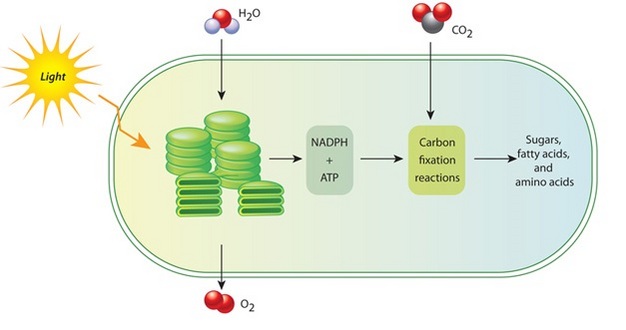
Photosynthesis is a biochemical process by which plants capture sunlight through chlorophyll, converting it into usable energy to synthesize glucose and release oxygen. This phenomenon is crucial for plant survival, not just ours.
The chemical equation for photosynthesis can be represented as:
6 CO2 + 6 H2O → C6H12O6 (glucose) + 6 O2
In simpler terms, plants absorb six molecules of carbon dioxide and six molecules of water, transforming them into glucose and releasing oxygen. This process is central to the survival of both plants and humans.
What Do Plants Focus On During Photosynthesis?
So, what do plants focus on during photosynthesis? They absorb carbon dioxide and water and convert them into glucose and oxygen. This is a fundamental aspect of the process.
Plants have specialized structures called chloroplasts that contain pigments such as chlorophyll. Chlorophyll absorbs light energy from the sun, which is then used to power the conversion of carbon dioxide and water into glucose and oxygen.
Photosynthesis: Light-Dependent and Dark-Reactions
We can break down photosynthesis into two stages: light-dependent and dark reactions. The first stage, or luminous phase, requires sunlight to produce energy in the form of ATP (adenosine triphosphate). In this stage, chlorophyll absorbs sunlight, transferring electrons that generate ATP.
The second stage, or dark reaction, occurs when carbon dioxide is fixed into glucose without the presence of light. This phase takes place in the stroma of chloroplasts and involves the transformation of carbon dioxide into organic compounds.
Oxygen: The Unsung Hero
When we look at photosynthesis from the perspective of oxygen, it’s clear that plants are responsible for producing oxygen through this process. Without photosynthesis, we would not have enough oxygen to breathe. This is why preserving forests and promoting plant growth is essential for our survival.
In fact, it’s estimated that plants produce around 70-80% of the world’s oxygen through photosynthesis. This highlights the critical role that plants play in maintaining the balance of our atmosphere.
Glucose: The Energy Source
Another crucial aspect of photosynthesis is glucose production. Glucose serves as an energy source for plants, allowing them to synthesize the energy needed for metabolic processes.
In essence, without photosynthesis, plants would not be able to produce glucose and sustain themselves. This means that we would also face food shortages, as plants are a primary source of nutrition for many animals.
Curious Case of the Photosynthetic Lumaca
Recently, a species of sea slug (Elysia chlorotica) was discovered that can absorb light through photosynthesis like plants do. This remarkable creature has been studied by biologists, who have found that it can eat algae, keeping its color and replicating plant genes.
This phenomenon has sparked interest in the scientific community, as it highlights the complexity and diversity of plant biology. It also raises questions about the potential for other organisms to undergo photosynthesis, which could revolutionize our understanding of this process.
Significance of Chlorophyll Photosynthesis
In conclusion, chlorophyll photosynthesis is a vital process that not only sustains plant life but also supports human existence. Without this biochemical process, we would face severe consequences for our survival.
Here are some key points to remember:
• Chlorophyll photosynthesis is essential for both plants and humans.
• The chemical equation for photosynthesis illustrates the conversion of carbon dioxide and water into glucose and oxygen.
• Plants focus on absorbing carbon dioxide and water during photosynthesis, producing glucose and releasing oxygen.
• Photosynthesis involves two stages: light-dependent and dark reactions.
• Oxygen is produced through photosynthesis, making it essential for human life.
• Glucose serves as an energy source for plants during the photosynthetic process.
• The discovery of a sea slug that can undergo photosynthesis highlights the complexity and diversity of plant biology.
Frequently Asked Questions
- What is the primary function of chlorophyll in photosynthesis?
Answer: Chlorophyll absorbs light energy from the sun, which is then used to power the conversion of carbon dioxide and water into glucose and oxygen. - How do plants absorb carbon dioxide and water during photosynthesis?
Answer: Plants absorb carbon dioxide through their leaves and water through their roots. - Why is oxygen produced through photosynthesis, and what does it mean for human life?
Answer: Oxygen is produced as a byproduct of glucose synthesis, making it essential for human respiration. - Can humans undergo photosynthesis like plants do?
Answer: Humans cannot undergo photosynthesis in the same way that plants do, but we can benefit from the oxygen produced through photosynthesis. - What role does glucose play in the photosynthetic process?
Answer: Glucose is an energy source for plants, synthesized during the photosynthetic process.
Conclusion
Photosynthesis is an intricate process that has far-reaching implications for both plants and humans. By grasping its mechanisms and significance, we can better appreciate the interconnectedness of our planet’s ecosystems and take steps to preserve them for future generations.
In addition to understanding the importance of chlorophyll photosynthesis, it’s essential to recognize the impact of human activities on plant growth and oxygen production. By adopting sustainable practices and preserving natural resources, we can ensure a healthier environment for both plants and humans to thrive in.


