
Chitosan in agriculture: a natural solution for plant care. Using chitosan in organic farming as a fertilizer and growth stimulant.
What is Chitosan?
Chitosan is a natural substance that improves the resistance of plants to various harmful organisms. What is chitosan? Let’s talk about a polysaccharide (a type of sugar) extracted from chitin. Chitin is a substance found in the exoskeletons of insects and crustaceans, as well as in some fungal cell walls.
Chitosan is obtained by grinding the shells of crustaceans such as crabs, shrimp, and lobsters. The extraction process involves treating the shells with acid to break down the chitin into a soluble form, which can then be extracted using various methods such as solvent-based or enzymatic methods.
Chitosan in Agriculture
Chitosan is an alternative product used in organic farming without any contraindications for plants. This substance can be used to improve plant health but must be used as an integrator and not as a miracle cure. In agriculture, chitosan is used to stimulate plant growth and increase resistance to various pathogens.
In addition to integrating the growth of plants with chitosan, it’s essential to ensure that the plants you purchase are suitable for their environment, taking into account factors such as exposure, temperature, climate, and soil quality. Plants should not be subjected to stress, which is the primary cause of susceptibility to plant diseases.
Chitosan constitutes an excellent natural remedy to strengthen plant growth, making it a good fertilizer that can increase resistance to bacteria, viruses, fungi, and other pathogens. Along with chitosan supplementation as an integrator, it’s necessary to provide proper irrigation, pruning, and cleaning of the soil… In short, no natural remedy can replace good agricultural practices necessary for plant development and growth.
How Chitosan Works and Its Purpose
Chitosan is not a true fertilizer but is defined by its action mechanism. In agriculture, it is distributed on leaves or through roots. To ensure effectiveness, chitosan must be applied every 3-4 weeks. By doing so, the plant is induced to recognize this substance as a threat and produces defensive structures.
The plant activates defense mechanisms triggered by chitosan but are useful in defending the plant from real pathogens that can attack it. Chitosan, therefore, has no direct action on pathogens (viruses, fungi, bacteria, parasites…) but stimulates plants to activate defensive mechanisms against various infections.
Using Chitosan in Agriculture
Chitosan is also used as a growth stimulant for both plants and seedlings. When applied to seeds, chitosan stimulates the growth of healthy germ cells and strong roots, quickly able to protect themselves from parasitic attacks.
As mentioned earlier, chitosan in organic farming or at home has no contraindications and can be used safely. Solutions with diluted chitosan can be irrigated on plants even during harvesting. No need to wait for a “safe interval” before harvesting fruits and vegetables.
For more details, you can read our article on how Chitosan works.
Benefits of Using Chitosan in Agriculture
The use of chitosan in agriculture offers several benefits, including:
- Increased resistance to plant diseases: Chitosan stimulates plants to produce defensive structures that help protect them from various infections.
- Improved plant growth: Chitosan promotes healthy root development and increases plant yields.
- Reduced pesticide usage: By using chitosan as a natural fertilizer, farmers can reduce their reliance on synthetic pesticides.
- Environmental benefits: Chitosan is biodegradable and non-toxic, making it an environmentally friendly alternative to traditional fertilizers.
Other Uses of Chitosan
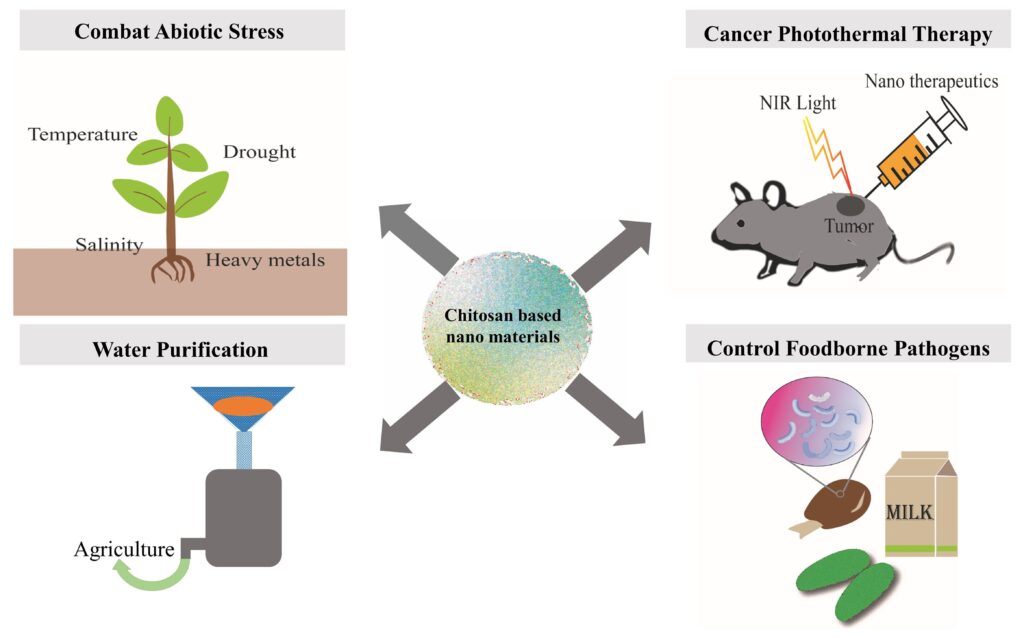
Chitosan is not only used in agriculture but also has various other applications, including:
- Food industry: Chitosan is used as a food additive to improve texture and prevent spoilage.
- Medical applications: Chitosan is used in wound dressings, surgical implants, and as a drug delivery system.
- Textile industry: Chitosan is used as a biodegradable and sustainable alternative to synthetic fibers.
Frequently Asked Questions
- What is the purpose of using chitosan in agriculture?
Chitosan is used to improve plant health and increase resistance to various pathogens. - How often should I apply chitosan to my plants?
Apply chitosan every 3-4 weeks for optimal effectiveness. - Is chitosan safe to use on crops during harvesting?
Yes, it is safe to use chitosan during harvesting and no interval is required before harvesting fruits and vegetables. - How does chitosan stimulate plant growth?
Chitosan stimulates plant growth by inducing plants to produce defensive structures against pathogens and promoting healthy root development. - Can I use chitosan as a fertilizer instead of other fertilizers?
No, chitosan is not a true fertilizer but should be used in conjunction with other fertilizers for optimal results. - Is chitosan effective against all types of plant diseases?
Chitosan can stimulate plants to activate defensive mechanisms that help protect them from various infections, but its effectiveness may vary depending on the specific disease and pathogen involved. - Can I use chitosan in combination with other natural substances for improved results?
Yes, it is recommended to use chitosan in combination with other natural substances, such as compost or manure, for enhanced plant growth and health.
Tips for Using Chitosan Effectively
To get the most out of using chitosan in agriculture, follow these tips:
- Use the right concentration: Use a diluted solution of chitosan (typically 0.5-2%) to avoid burning your plants’ roots.
- Apply it at the right time: Apply chitosan during the growing season, when plants are actively producing new growth.
- Monitor plant health: Regularly inspect your plants for signs of stress or disease and adjust your chitosan application schedule accordingly.
By following these tips and using chitosan effectively, you can improve plant health, increase resistance to diseases, and promote healthy growth in your crops.


