
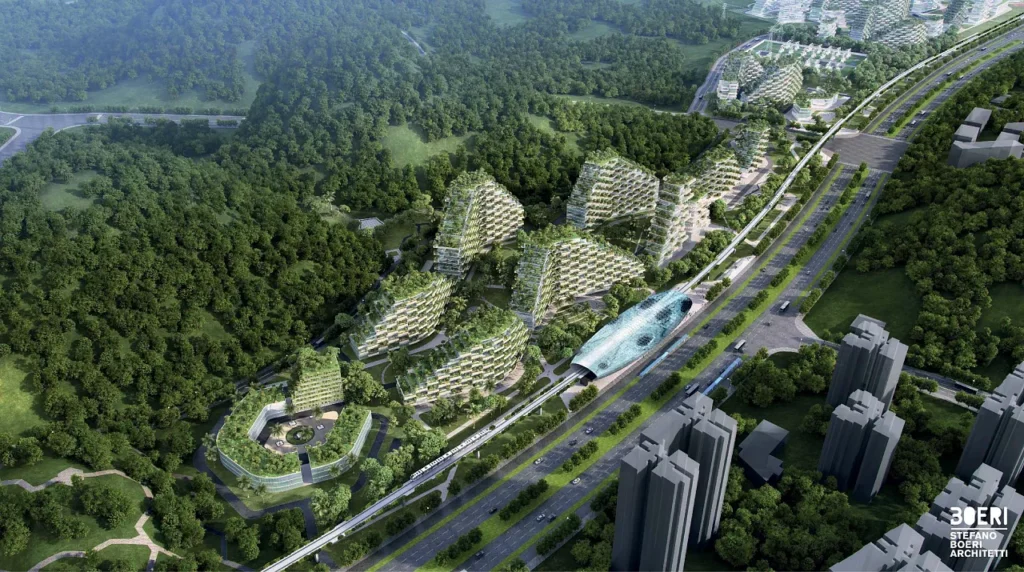
The Chinese Forest City: A New Era of Sustainable Urban Planning
As the world teeters on the brink of climate catastrophe, cities are being forced to confront their environmental impact. With over 70% of the global population projected to live in urban areas by 2050, it’s time for us to rethink how we build and inhabit our cities. Enter the Chinese Forest City, a pioneering project that aims to redefine urban planning and create a more sustainable future.
The Birth of a New Kind of City
Located in Liuzhou, China, this innovative city is being designed by Italian architect Stefano Boeri, renowned for his futuristic and environmentally conscious designs. The project has been years in the making, with the first phase completed in 2017. This city forest is not just a novelty; it’s a game-changer for urban planning.
A City of Living Nature
Covering an area of 175 hectares, the Chinese Forest City will be home to 30,000 humans and 40,000 trees – yes, you read that right! The project aims to create a symbiotic relationship between humans and nature. This is not just a city; it’s a forest, with towering trees, lush green spaces, and a diverse array of plant species.
Green and Innovative
This futuristic city will be powered entirely by renewable energy, with an innovative transportation system that combines high-speed trains with electric vehicles. The city’s climate control system is also being designed to harness geothermal energy, making it one of the most sustainable cities on the planet.
The Science Behind the Magic
So, how does a forest make a city green? Recent studies have shown that increasing tree cover in urban areas can significantly reduce carbon emissions. In fact, a 20% increase in trees could reduce climate change impacts by up to 40%. The Chinese Forest City is taking this idea to new heights.
How Trees Help Us
Trees are more than just pretty faces; they’re also superheroes when it comes to tackling urban environmental challenges. Here’s how:
- Air Purification: Trees absorb carbon dioxide, producing oxygen and reducing air pollution.
- Temperature Regulation: Trees provide shade, cooling the air through evapotranspiration and reducing the need for air conditioning.
- Soil Stabilization: Tree roots hold soil in place, preventing erosion and landslides.
A City That Cares
The Chinese Forest City is not just a symbol of innovation; it’s also a beacon of hope for urban communities. By incorporating green spaces, parks, and gardens into the city plan, residents will have access to clean air, water, and food – essential components of a healthy lifestyle.
Case Study: The Benefits of Urban Forestry
Urban forestry is an increasingly important aspect of sustainable urban planning. Cities that prioritize tree planting and maintenance can expect significant benefits, including:
- Reduced energy consumption
- Improved air quality
- Enhanced biodiversity
- Increased property values
Conclusion: A New Era for Cities
The Chinese Forest City is more than just a futuristic concept; it’s a blueprint for sustainable urban planning. As cities continue to grow and evolve, we need to rethink our approach to building and inhabiting them. The future belongs to cities that prioritize the well-being of both humans and the planet.
Frequently Asked Questions
Q: How much energy will be required to power this city?
A: The Chinese Forest City is designed to be 100% powered by renewable energy, reducing its carbon footprint significantly.
Q: What kind of transportation system will be used in this city?
A: The city features an innovative high-speed train network, combined with electric vehicles and hyperloops for efficient transportation.
Q: Can you explain the geothermal energy system used in this city?
A: Yes, the city’s climate control system harnesses geothermal energy to regulate temperatures and reduce energy consumption.
Q: How many trees will be planted in this city?
A: The Chinese Forest City aims to plant over 100 species of trees across its vast area, creating a thriving ecosystem for both humans and wildlife.
Q: What about the air quality in this city?
A: Trees play a crucial role in improving air quality by absorbing pollutants and producing oxygen. This city is designed to be clean and fresh, with minimal pollution.
Q: Will there be opportunities for residents to engage with nature and improve their mental health?
A: Absolutely! The Chinese Forest City incorporates numerous parks, gardens, and green spaces, providing ample opportunities for residents to connect with nature and prioritize their well-being.
Additional Insights: Lessons from Other Sustainable Cities
Cities around the world are taking note of the innovative approach taken by the Chinese Forest City. Some notable examples include:
- Curitiba, Brazil: A city that has prioritized green spaces and urban forestry to create a thriving ecosystem.
- Singapore: A city-state that has implemented an innovative transportation system using electric vehicles and hyperloops.
- Copenhagen, Denmark: A city that aims to become carbon-neutral by 2025 through ambitious renewable energy targets.
Challenges Ahead: Overcoming the Complexity of Urban Planning
While the Chinese Forest City is a groundbreaking project, there are challenges ahead for urban planners. Some key considerations include:
- Scalability: As cities continue to grow, it’s essential to ensure that sustainable design principles can be scaled up while maintaining environmental benefits.
- Cost: Implementing renewable energy systems and innovative transportation infrastructure requires significant investment.
- Community Engagement: Urban planning must prioritize community needs and engagement to ensure that residents benefit from the city’s green initiatives.
Conclusion: A New Era for Cities
The Chinese Forest City represents a beacon of hope for sustainable urban planning. By prioritizing the well-being of both humans and the planet, we can create cities that are not only environmentally conscious but also thriving ecosystems. As cities continue to evolve, it’s essential to draw from lessons learned from innovative projects like the Chinese Forest City.


