
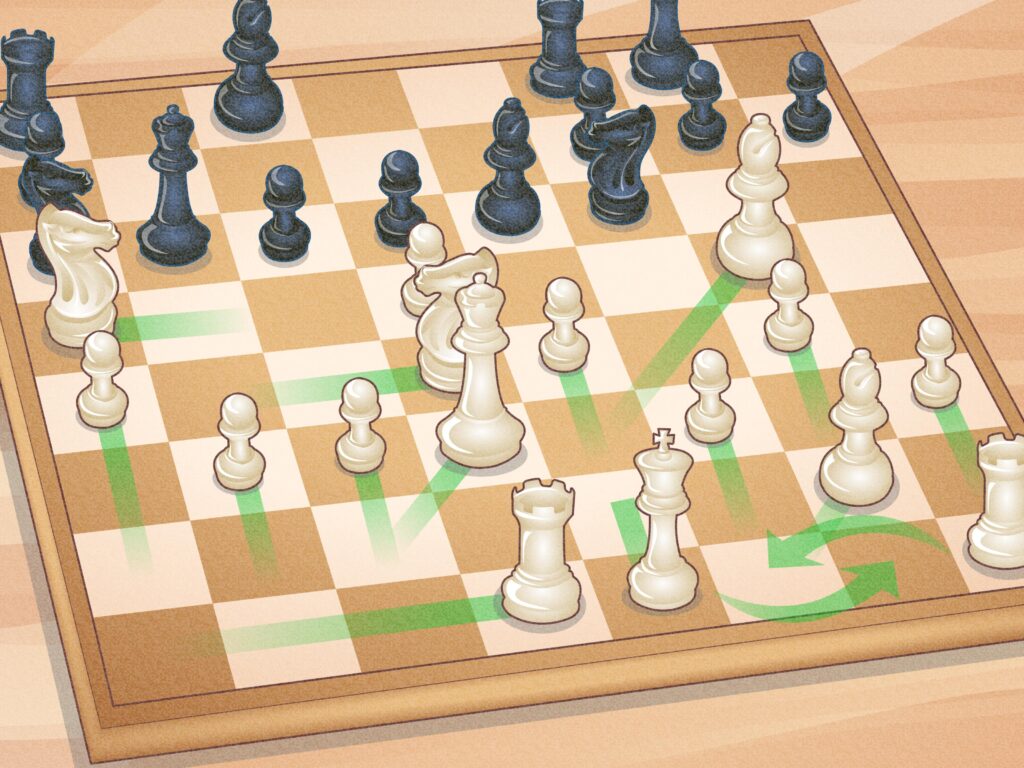
Chess is a two-player strategy board game that involves moving pieces on a square board with the ultimate goal of capturing your opponent’s king. In this article, we will cover the basics of the game, including the mechanics of play, the rules and regulations, and provide guidance for beginners.
Understanding the Basics
Before you start playing chess, it’s essential to understand the basic components of the game:
- The Board: The chess board consists of 64 squares, arranged in an 8×8 grid. The squares are usually colored in a checkered pattern, with light and dark squares alternating.
- The Pieces: Each player starts with 16 pieces: one king, one queen, two rooks, two knights, two bishops, and eight pawns.
- Objective: The objective of the game is to checkmate your opponent’s king. A piece can only be moved or captured if it follows certain rules, such as capturing an opponent’s piece by landing on its square.
Learning the Rules
Here are some key rules to get you started:
- Setup: The game begins with the setup of the pieces on the board.
- Turns: Players alternate turns, with each turn consisting of moving one piece or capturing an opponent’s piece.
- Capturing: Pieces can capture opponent pieces by landing on their square.
- Castling: The king can castle (move the king to the opposite side of the board) with a rook if neither piece has moved and there are no pieces between them.
- En Passant: If a pawn moves two squares forward from its starting position, an opponent’s pawn that could have captured it if it had only moved one square can still capture it “en passant” as if it had only moved one square.
Special Moves
There are several special moves in chess:
- Promotion: When a pawn reaches the opposite side of the board, it can be promoted to any piece.
- Arrocco: A rook and king combination that allows them to move two squares towards each other.
- En Passant: As mentioned earlier, a special pawn capture.
Common Tactics
Here are some common tactics:
- Pinning: Attacking an opponent’s piece that is defended by a more valuable piece.
- Forking: Moving a piece to attack multiple opponent pieces at the same time.
- Skewering: Moving a piece to attack an opponent’s piece, which is protected by a less valuable piece.
Tips and Tricks
Here are some tips and tricks to improve your game:
- Control the Center: The center squares are the most important on the board. Try to control as many of them as possible with your pawns and pieces.
- Develop Your Pieces: Move your pieces out from their starting positions and develop them towards the center of the board.
- Protect Your King: Keep your king safe by castling and placing pieces in front of it to block potential attacks.
Frequently Asked Questions
Here are some frequently asked questions:
- Q: What is the objective of the game?
A: The objective of chess is to checkmate your opponent’s king. - Q: How many pieces does a player start with?
A: A player starts with 16 pieces: one king, one queen, two rooks, two knights, two bishops, and eight pawns. - Q: What happens if I put my king in checkmate?
A: If you put your opponent’s king in checkmate, you win the game!
Advanced Techniques
Once you have a solid understanding of the basics, it’s time to move on to more advanced techniques:
- Pawn Structure: The way pawns are arranged on the board can greatly affect the overall strategy. Try to create pawn chains and control key squares.
- Piece Development: Developing your pieces quickly is crucial in chess. Focus on moving your pieces out from their starting positions and developing them towards the center of the board.
- Endgame Strategies: The endgame is where most games are won or lost. Learn how to convert advantages into wins by using tactics such as promoting pawns, creating passed pawns, and attacking opponent’s king.
Common Mistakes
Even experienced players make mistakes. Here are some common ones to watch out for:
- Overextending: Moving pieces too far in front of your position can leave you vulnerable to attack.
- Lack of Piece Development: Failing to develop pieces quickly enough can put you at a disadvantage.
- Poor Pawn Structure: Creating weak pawn chains or failing to control key squares can make it difficult to execute strategies.
Conclusion
Chess is a complex and strategic game that requires skill and practice to master. By understanding the basics of the game, learning key rules and tactics, and mastering advanced techniques, you can improve your skills and become a better player. Whether you’re a beginner or an experienced player, there’s always room for improvement in chess. So, keep practicing and you’ll be well on your way to becoming a chess master.


