
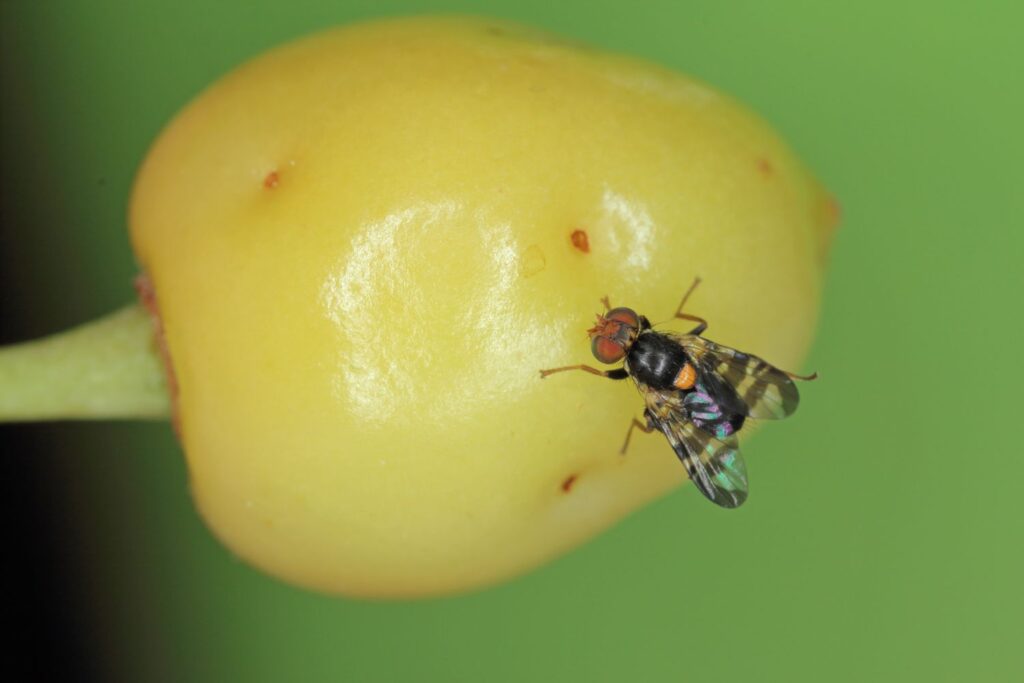
Are you tired of finding unwanted visitors on your apple trees? The apple fly, also known as the fruit fly or cider fly, can be a nuisance in gardens and orchards. But don’t worry, we’ve got some effective natural remedies to help you keep these pesky insects away.
Understanding the Apple Fly
The apple fly is attracted to the color yellow and is caught using traps with adhesive discs of this color. This system is simple, cost-effective, and works perfectly from May to June, when the apple fly is at its peak activity. However, it’s essential to note that these traps should not be left in place for too long, as they can attract other harmless insects and sometimes even beneficial ones.
The Life Cycle of the Apple Fly
The apple fly lays eggs in the pulp of unripe apples, which eventually turn yellow and become infested with bruchi (fruit flies). The first sign of an attack is the appearance of these yellow spots on the fruit. Some apple varieties are more susceptible to this pest than others, especially those that mature early.
Natural Traps for Apple Flies
The most commonly used trap is the mechanical one, which excludes chemical pesticides and is just as effective. However, it’s crucial to use this method in conjunction with preventative measures during the blooming season (spring). For example, applying an organic parasitoid like worm tea can help deter the apple fly from laying eggs.
Worm Tea: A Natural Parasitoid
Worm tea, made from red wiggler worms, is a natural and non-toxic way to keep the apple fly at bay. This liquid solution helps prevent eggs from hatching and also repels other pests like acarids, larvae of butterflies, and snails. It’s essential to apply this treatment at least three weeks before blooming to maximize effectiveness.
Preventing Insulation Colonies
To avoid re-infestation the following year, it’s vital to remove and destroy infested apples as soon as possible after they fall from the tree. This helps prevent the survival of craspidotermine wasps, which can lay eggs in the fruit pulp. If you don’t take action promptly, these insects may emerge the next spring, returning with a new generation of apple flies.
Additional Tips and Prevention Methods
- Regularly inspect your apple trees for signs of infestation.
- Use physical barriers to prevent adult flies from reaching your apples.
- Keep your orchard clean and remove weeds, which can harbor pests.
- Apply a natural fungicide if you notice any fungal diseases in the fruit.
- Consider using companion planting, such as planting lavender or chamomile near your apple trees, as these herbs have natural repellent properties.
Companion Planting for Apple Fly Control
Some plants are more effective at repelling apple flies than others. For example:
- Lavender: Known for its calming effects on humans, lavender also repels apple flies and other pests.
- Chamomile: This herb is a natural repellent for many pests, including apple flies.
- Garlic: The strong smell of garlic can help deter apple flies from approaching your trees.
Using Essential Oils for Apple Fly Control
Essential oils like peppermint, lemongrass, and tea tree oil have natural insect-repelling properties that can be effective against apple flies. Mix a few drops of these oils with water and spray them around the base of your trees to help keep the pests at bay.
Using Bt (Bacillus thuringiensis) for Apple Fly Control
Bt is a naturally occurring bacterium that produces a toxin that kills insect larvae, including those of apple flies. Spraying Bt on your apple trees can help prevent infestations and reduce the need for pesticides.
Organic Pesticides for Apple Fly Control
If you prefer to use commercial pesticides, consider using organic options like neem oil or pyrethrin sprays. These products are safer for humans and beneficial insects than chemical pesticides, but still effective against apple flies.
Avoiding Over-Reliance on Traps
While traps can be an effective way to control apple fly populations, they shouldn’t be relied upon exclusively. Instead, use a combination of prevention methods, like those mentioned earlier, to create a comprehensive pest management plan.
Conclusion
Keeping the apple fly under control requires a multi-faceted approach. By understanding their life cycle, using natural traps, and implementing preventative measures during the blooming season, you can protect your apple trees from infestation. Remember to remove infested apples promptly, apply worm tea regularly, and consider companion planting and essential oil applications to create an effective barrier against these pesky insects.
Frequently Asked Questions
Q: How often should I check my apple trees for signs of infestation?
A: Regularly inspect your trees at least once a month during peak flying season (May-June).
Q: Can I use commercial pesticides to control apple flies?
A: No, it’s recommended to avoid chemical pesticides due to their potential impact on beneficial insects and the environment.
Q: Are worm teas effective against other pests besides apple flies?
A: Yes, worm tea has a broad-spectrum effect and can help repel various pests, including acarids, larvae of butterflies, and snails.
Q: Can I use homemade traps instead of commercial ones?
A: While homemade traps may work, they’re often less effective than commercially available options. However, they can still be an affordable alternative.
Q: How long does it take for the worm tea to show its effects?
A: Apply the worm tea at least three weeks before blooming, and you should start seeing a decrease in apple fly activity within two weeks.
Q: Can I use worm teas on other types of fruit trees besides apples?
A: Yes, worm tea has been shown to be effective against various pests, including those affecting cherry, peach, and pear trees.
Q: Is worm tea safe for human consumption?
A: No, worm tea is intended as a natural pest control method, not a food product. It’s recommended to avoid ingesting worm tea or any other pesticide-related substances.
Q: Can I mix different types of worm teas to create a more effective solution?
A: While mixing worm teas might seem like an idea, it’s generally not necessary and may lead to ineffective or even counterproductive results. Stick with one type of worm tea for optimal effectiveness.
Q: How do I store worm tea safely after use?
A: Store worm tea in the refrigerator at a temperature below 40°F (4°C) to extend its shelf life and prevent bacterial growth.
Q: Can I reuse worm teas multiple times without losing their effectiveness?
A: Worm teas lose their potency quickly, so it’s best to make fresh batches regularly to ensure optimal effectiveness.


