
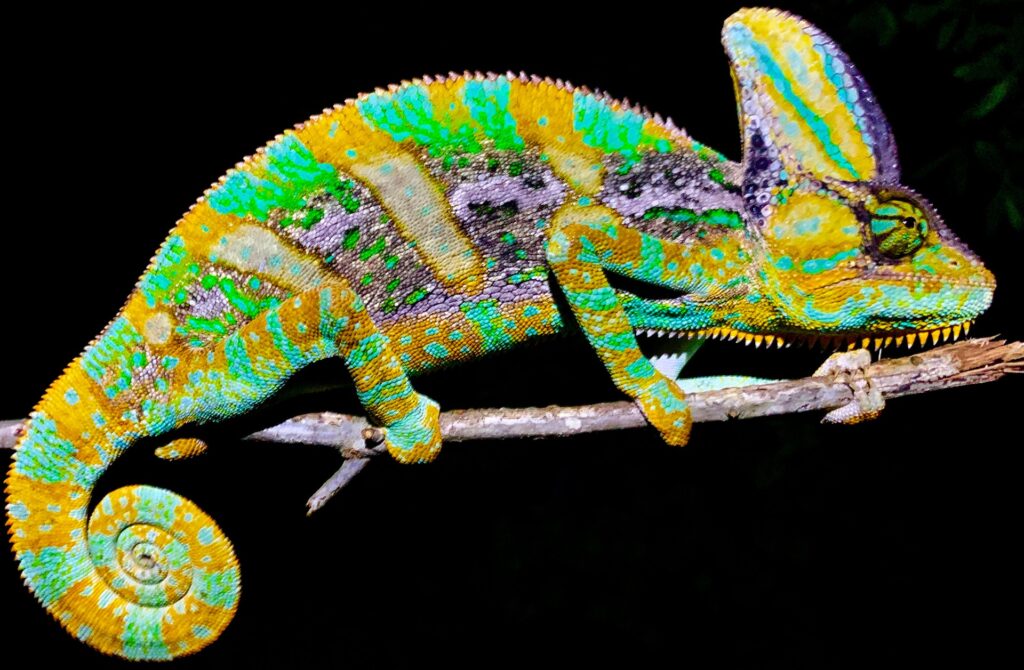
As we step into the world of reptiles, one species stands out for its unique features and fascinating behaviors – the chameleon. Specifically, let’s dive into the captivating world of Camaleonte calyptratus, also known as the Yemen Chameleon.
Origin and Habitat
Native to the Arabian Peninsula, particularly in Yemen and Saudi Arabia, this remarkable creature thrives in a variety of environments. Males can grow up to 35-60 cm in length, while females reach 20-45 cm. One distinctive feature of these chameleons is the presence of an escutcheon on their head, resembling a flattened helmet.
The Yemen Chameleon is primarily found in arid and semi-arid regions, where they inhabit rocky outcrops, cliffs, and mountainous areas. They are well adapted to the harsh desert climate, with specialized skin that helps them conserve water and regulate their body temperature.
Color Variations and Expression
The color palette of Camaleonte calyptratus is as diverse as it is intriguing. The color scheme can change based on mood and habitat, featuring a wide range of hues including:
- Green
- Brown
- Blue
- White
- Black
- Yellow
- Orange
Green is often the dominant color, with unique bands of yellow on its sides. Occasionally, these chameleons display four or five vertical stripes bordered by darker spots.
In addition to their striking colors, Camaleonte calyptratus are also known for their remarkable ability to change color in response to their environment and social interactions. This process is called “color polymorphism,” and it allows them to communicate with other chameleons and blend in with their surroundings.
Diet and Nutrition
If you’re considering keeping a Camaleonte calyptratus as a pet, it’s essential to understand their dietary needs. In the wild, they feed on small insects caught with their tongues and a sticky saliva. As adults, they also consume plant material, such as succulent leaves from Kalanchoe plants.
Camoelte calyptratus require a balanced diet that includes both meaty and vegetarian components. A good rule of thumb is to provide a mix of 70% insect-based food and 30% leafy greens. They are also known to eat small amounts of nectar, which provides essential nutrients for their growth and development.
Size and Lifespan
On average, Camaleonte calyptratus can live for 4-6 years in captivity, although some individuals have been known to thrive up to 8 years.
Their lifespan is influenced by various factors, including their diet, habitat quality, and exposure to predators. In the wild, they are preyed upon by birds of prey, snakes, and other reptiles, which can impact their survival rate.
Sex Determination
One key aspect of these chameleons is their dimorphic sexing. To distinguish between males and females, observe the head shape:
- Males typically have a more pronounced “helmet” on their heads.
- Females tend to be smaller in size but share similar head shapes.
In addition to their head shape, male Camaleonte calyptratus also exhibit distinctive courtship behaviors, such as displaying their brightly colored skin and performing complex rituals to attract mates.
Reproduction and Breeding
Camaleonte calyptratus are relatively easy to breed in captivity. Female chameleons lay eggs that incubate for 140-230 days, while males engage in courtship rituals before mating.
During this period, the male’s “helmet” becomes more pronounced, and they may exhibit unusual behaviors like rocking back and forth or moving their tail in a rhythmic motion.
Temperature and Humidity
To replicate the natural habitat of these chameleons, it’s essential to maintain a temperature range between 26-28°C during the summer months and 18-20°C at night. Additionally, ensure proper humidity levels by providing adequate lighting and misting the enclosure regularly.
In their natural habitat, Camaleonte calyptratus are exposed to extreme temperatures and humidity fluctuations, which have adapted them to thrive in these conditions.
Conclusion
The Camaleonte calyptratus is an enchanting creature that offers a unique opportunity for reptile enthusiasts to learn about and appreciate these fascinating animals. By understanding their behavior, habitat requirements, and dietary needs, you can create a nurturing environment that allows them to thrive.
As we continue to explore the world of these incredible creatures, it’s essential to recognize the importance of conservation efforts and sustainable practices that protect their populations and habitats.
Frequently Asked Questions
- What do Camaleonte calyptratus eat?
- Insects, small invertebrates, plant material
- How long do Camaleonte calyptratus live?
- 4-6 years (average), up to 8 years (rare)
- What distinguishes male from female Camaleonte calyptratus?
- Head shape, size, “helmet” on head
- How long do eggs incubate?
- 140-230 days
- Why is proper temperature and humidity important for Camaleonte calyptratus?
- Replicates natural habitat, promotes healthy growth and development
By embracing the wonders of these captivating creatures, we can foster a deeper appreciation for their importance in our ecosystem and work towards preserving their populations for future generations.
In conclusion, the Yemen Chameleon is a remarkable species that continues to fascinate reptile enthusiasts and scientists alike. By exploring its unique characteristics, behaviors, and habitat requirements, we can gain a deeper understanding of these incredible animals and take steps to protect them for years to come.


