
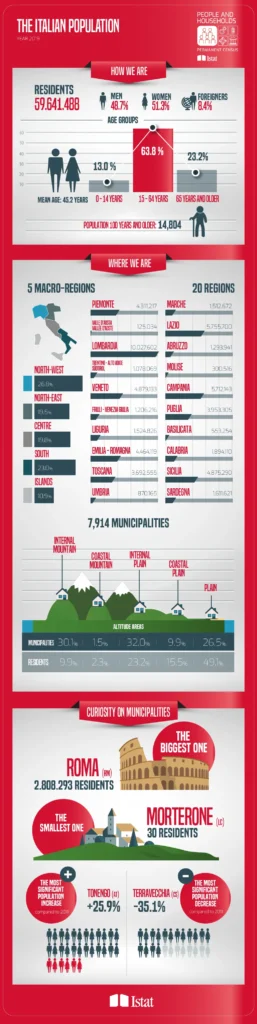
Introduction
In recent years, the concept of a “census” has become increasingly important in understanding the demographic and social landscape of Italy. The Italian National Institute of Statistics (Istat) is responsible for conducting this census, which provides valuable insights into the country’s population, housing, and economic trends. In this article, we will delve into the details of the new permanent population and housing census in Italy, exploring its history, methodology, and key findings.
What is a Census?
A census is a systematic collection of data about a population or group of people, typically conducted by a government agency. The purpose of a census is to gather information on various aspects of society, such as demographics, housing, employment, education, and health. In the context of Italy, the census has been conducted regularly since 1861, with the aim of understanding the country’s population growth, distribution, and economic development.
The History of Censuses in Italy
Italy’s first census was conducted in 1861, shortly after the unification of the country. The census was designed to gather information on the population’s size, demographics, and socioeconomic characteristics. Over the years, the census has undergone several changes, with the addition of new variables and methodologies. In recent decades, the Italian government has implemented various reforms aimed at improving the accuracy and efficiency of the census process.
The New Permanent Population and Housing Census
In 2018, Istat launched a new permanent population and housing census in Italy, designed to provide more accurate and up-to-date information on the country’s demographic trends. The new census has several key features:
- Permanent: Unlike previous censuses, which were conducted every decade or so, this census is designed to be permanent, with continuous updates and revisions.
- Continuous: The census will be updated annually, biennially, or triennially, depending on the data collected.
- Sample-based: The census will use a sample of families and individuals to gather data, rather than attempting to survey every single person in Italy.
Methodology
The new permanent population and housing census will employ a combination of traditional survey methods and modern technologies. Istat will:
- Use tablets: Rilevatori (census takers) will use tablets to collect data from families and individuals.
- Conduct online surveys: Some households will be able to complete the survey online, using a special portal provided by Istat.
Key Findings
The new census is expected to provide valuable insights into various aspects of Italian society. Some preliminary findings include:
- Demographic trends: The census will gather data on population growth, distribution, and aging.
- Housing conditions: The census will assess the quality of housing, including factors such as size, condition, and accessibility.
- Economic indicators: The census will collect data on employment, income, education, and health.
Challenges and Limitations
While the new permanent population and housing census in Italy has several key features that improve its accuracy and efficiency, there are also challenges and limitations to consider:
- Data quality: Ensuring that the data collected is accurate and reliable will be crucial for the success of the census.
- Sampling bias: The use of a sample-based approach may introduce biases into the data, particularly if certain groups or individuals are over- or under-represented in the sample.
- Technological challenges: Implementing modern technologies such as tablets and online surveys can pose technical challenges, particularly in rural areas where access to technology may be limited.
Implications for Policy-Makers
The new permanent population and housing census in Italy has significant implications for policy-makers at both national and local levels. By providing more accurate and up-to-date information on the country’s demographic trends, the census can inform policies aimed at promoting growth, sustainability, and inclusivity.
Some potential applications of the census include:
- Urban planning: The census will provide valuable insights into population density, housing conditions, and economic indicators, which can be used to inform urban planning decisions.
- Education policy: The census will gather data on education levels and access to educational resources, which can be used to inform policies aimed at improving educational outcomes.
- Healthcare policy: The census will collect data on health outcomes and access to healthcare services, which can be used to inform policies aimed at promoting public health.
Conclusion
The new permanent population and housing census in Italy represents an important step forward in understanding the country’s demographic and social trends. By leveraging modern technologies and methodologies, Istat aims to provide more accurate and up-to-date information for policymakers, researchers, and the general public. As the census continues to evolve, it is likely to shed light on various aspects of Italian society, informing policies and strategies aimed at promoting growth, sustainability, and inclusivity.
Frequently Asked Questions (FAQs)
Q: Why do we need a permanent census in Italy?
A: A permanent census will provide more accurate and up-to-date information on Italy’s demographic trends, helping policymakers and researchers better understand the country’s social and economic landscape.
Q: How will the new census be conducted?
A: The census will use a combination of traditional survey methods and modern technologies, including tablets and online surveys. Rilevatori (census takers) will visit households to collect data, while some households will be able to complete the survey online.
Q: What kind of data will the new census gather?
A: The census will collect data on population growth, distribution, aging, housing conditions, employment, income, education, and health.


