
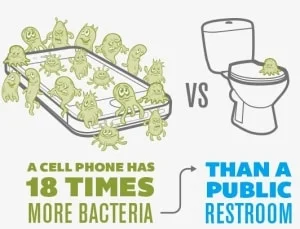
As we go about our daily lives, it’s easy to overlook the fact that our smartphones are breeding grounds for bacteria and germs. In fact, a recent study by the University of Arizona found that smartphones are more contaminated than toilets! This might sound like an exaggeration, but the research bears out this surprising claim.
The Bacteria on Our Phones
With over 99 million mobile phone users in Italy, it’s no wonder that our phones are exposed to a high amount of germs and bacteria. According to microbiologist Charles Gerba, who conducted the study, smartphones can harbor more bacteria than toilets! To put this into perspective, consider the fact that we spend an average of 3-4 hours per day using our phones.
So, how do these tiny microorganisms end up on our devices? It’s all about human contact. When we touch our phones to our faces or pass them to others, we transfer bacteria from our skin to the phone. Additionally, phones are often used in public places where germs and bacteria are already present.
The Source of Bacteria
Gerba explains that when we use our phones, we deposit bacteria onto the surface of the device. This can include sweat, dirt, and even the bacteria that live on our skin. Moreover, if your phone has a keyboard or touchscreen, you may be introducing more bacteria into the mix.
The Risks of Not Cleaning Your Phone
While it might seem like a minor concern, not cleaning your phone regularly can lead to serious health issues. Bacteria on our phones can cause a range of problems, from skin irritation to respiratory infections.
So, how often should you clean your phone? According to Gerba, it’s essential to wipe down your device at least once a week with an antibacterial solution. This will help keep your phone germ-free and reduce the risk of illness.
Beyond Phones: Other Devices Contaminated with Bacteria
But smartphones are just the beginning. Research has shown that other devices, like credit cards and keyboards, can also harbor bacteria. In fact, studies have found that:
- Credit cards can contain up to 10 times more bacteria than toilets!
- Keyboards can be contaminated with coliforms, Staphylococcus aureus, and enterobacteria, which can cause food poisoning.
- Public computers can be breeding grounds for bacteria, including E. coli and Salmonella.
The Importance of Proper Hygiene
Proper hygiene is crucial in preventing the spread of bacteria and germs. Here are some tips to keep in mind:
- Wash your hands frequently: Before using your phone or any other device, make sure to wash your hands with soap and water.
- Use a disinfectant wipe: Regularly clean your phone with an antibacterial solution and a soft cloth.
- Avoid touching your face: Try to avoid touching your face while using your phone, as this can transfer bacteria from your skin to your eyes, nose, and mouth.
- Keep public devices clean: If you use public computers or keyboards, make sure to wipe them down with a disinfectant wipe after each use.
Conclusion
In conclusion, our smartphones are not as clean as we think they are. By understanding the risks of bacterial contamination on our devices, we can take steps to protect ourselves and our health. Whether it’s wiping down your phone regularly or using an antibacterial solution, there are many ways to keep yourself safe from germs and bacteria.
Frequently Asked Questions
- How often should I clean my phone?
- At least once a week with an antibacterial solution.
- Can you get sick from bacteria on your phone?
- Yes, bacteria on your phone can cause skin irritation, respiratory infections, and other health issues.
- How do I prevent bacterial contamination on my phone?
- Use an antibacterial solution, wipe down your device regularly, and avoid touching your face while using your phone.
- Can credit cards be contaminated with bacteria?
- Yes, research has shown that credit cards can contain up to 10 times more bacteria than toilets!
- How often should I clean my keyboard?
- Daily, especially if you use it in a public setting or share it with others.
- Can computers be contaminated with bacteria?
- Yes, research has shown that public computers can harbor bacteria like E. coli and Salmonella.
- How do I know if my phone is clean?
- Look for visible dirt and grime on your device’s surface. If it looks dull or dirty, it’s time to give it a good cleaning!
- Can antibacterial wipes be used on my phone?
- Yes, but make sure to use a gentle solution specifically designed for electronics.
Additional Tips
- Use a sanitizer spray: There are many sanitizer sprays available that can help kill bacteria and germs on your phone.
- Dry your phone thoroughly: Make sure to dry your phone completely after cleaning it with an antibacterial solution.
- Avoid sharing your phone: Try to avoid sharing your phone with others, as this can transfer bacteria from one person’s skin to another.
By following these tips and being aware of the risks of bacterial contamination on our devices, we can take steps to protect ourselves and our health. Remember, it’s always better to be safe than sorry when it comes to germs and bacteria!


