
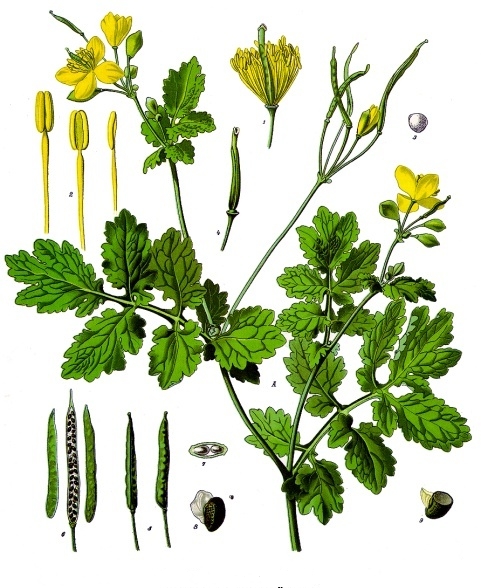
Celidonia (Chelidonium majus), also known as “Golpe Grass” or “Herb of Saint James”, is a perennial herbaceous plant. In this article, we will delve deeper into its knowledge, uncovering its characteristics, properties, and indications for proper cultivation.
Content Overview
- Appearance of Celidonia
- Properties of Celidonia
- Cultivation of Celidonia
- Reproduction of Celidonia
- Flowering of Celidonia
- Celidonia in Herbalism
Appearance of Celidonia
Celidonia is characterized by the presence of lobed and toothed green leaves, which grow along its slender and branching stems. The plant can reach a height of approximately 30-50 centimeters.
One of the most distinctive features is the latex that emerges from the fusts when they are cut or damaged. This yellow-orange liquid contains compounds with medicinal properties and has been used for various purposes.
The plant produces yellow flowers with five petals, which develop at the ends of the stems.
Properties of Celidonia
It is believed that Celidonia possesses antispasmodic properties, which can help relax muscles. This is why it is sometimes used to alleviate cramps and spasms.
Additionally, the plant is associated with epatoprotective properties, which may promote liver health.
The topical application of latex is also used to aid in wound healing and tissue formation.
Celidonia is commonly used as an emetic, expectorant, and sedative.
Cultivation of Celidonia
Celidonia adapts well to temperate climates with moderate temperatures between 15°C and 25°C. However, it can survive warmer conditions if cultivated in shaded areas.
The plant prefers well-draining soil rich in organic matter. While it can thrive on various types of soil, it is essential to avoid overly argillaceous or wet soils, which may cause waterlogging.
Proper irrigation is crucial for optimal growth. The soil should be kept consistently moist but not waterlogged.
Celidonia is a relatively low-maintenance plant that requires minimal care. However, monitoring for potential diseases or pests and taking appropriate measures is essential.
Reproduction of Celidonia
Celidonia reproduces mainly through vegetative means via underground rhizomes, although it can also propagate via seeds.
For reproduction, the rhizome sections from the mother plant can be divided and planted in a new location. It’s necessary to ensure that each section has at least one or two bud-like structures, which will develop into new plants.
Alternatively, propagation through seed involves harvesting mature seeds following flowering. The seeds should then be sown in a moist and well-draining soil, covering them with a thin layer of soil. Keeping the surrounding soil consistently moist until germination occurs typically takes 2-3 weeks.
It’s essential to note that Celidonia may be considered an invasive plant in certain regions. Before proceeding with propagation, it is crucial to verify local regulations.
Flowering of Celidonia
Celidonia blooms in spring and summer, between April and August, depending on climate conditions.
Each flower features four yellow petals and numerous orange-colored anthers. The flowering can be abundant, creating a picturesque sight.
Celidonia in Herbalism
In herbal medicine, Celidonia is commonly known as “Celidonia Major” or “Herb of Saint James”. These names are used to identify the plant within traditional folk remedies related to medicinal herbs.
Using Celidonia for Verruca Treatment
The use of Celidonia for treating verrucas is based on its latex, which contains compounds like celidonine. These have demonstrated antiviral properties and may help remove verrucas.
Here’s how to use Celidonia for verrucas:
- Break off the fust or a leaf from a Celidonia plant to release the latex.
- Apply a small amount of latex directly onto the verruca, being careful not to touch surrounding skin. A cotton ball may be useful for this purpose.
- Allow the latex to dry naturally.
- Repeat the treatment one or two times daily.
- Continue applying for several weeks until the verruca disappears.
Please note that despite its natural remedy status, Celidonia can cause allergic reactions in some individuals.
Important Note: If the verruca persists, spreads, causes discomfort, or triggers an allergic reaction, discontinue use and consult a doctor.
Counterindications of Celidonia
Celidonia contains compounds like chelidonine, which may be toxic if ingested in excessive amounts. Therefore, using preparations based on the plant can pose some health risks, including liver damage and gastrointestinal disturbances.
There are no sufficient evidence regarding the safety of using Celidonia during pregnancy and breastfeeding. It is recommended to avoid its use for these purposes to prevent potential harm to the fetus or newborn.
Interactions with Medications
Celidonia may interact with certain medications, reducing their effectiveness or increasing the risk of adverse effects. It’s advisable to consult a doctor or pharmacist before using any preparation containing Celidonia.
Some individuals might be allergic to the plant, experiencing symptoms such as pruritus, skin eruptions, or other issues. If you experience these symptoms after using Celidonia, it is recommended to stop immediately and seek medical attention.
Frequently Asked Questions (FAQs)
Q: What are the primary characteristics of Celidonia?
A: Celidonia has lobed and toothed leaves, produces yellow flowers with five petals, and contains latex with medicinal properties.
Q: Can I use Celidonia for my skin problems?
A: While Celidonia is used as a natural remedy for certain skin conditions, consult a doctor before using it to ensure its safety and efficacy for your specific condition.
Q: Is Celidonia safe during pregnancy?
A: Due to potential risks, it’s recommended to avoid the use of Celidonia during pregnancy.
Q: How do I care for my Celidonia plant?
A: To keep your Celidonia healthy, provide it with moderate temperatures between 15°C and 25°C. Maintain well-draining soil rich in organic matter, and ensure proper irrigation.
Q: Can I grow Celidonia indoors?
A: While possible, growing Celidonia indoors can be challenging due to its sensitivity to temperature fluctuations and humidity levels.
Q: What is the best way to harvest Celidonia latex for medicinal use?
A: The best approach involves cutting the fust or leaf with a sharp tool to release the latex. Be cautious not to damage the plant further.
Q: Can I propagate Celidonia through seed?
A: Yes, but it’s more challenging and typically yields fewer successful plants compared to vegetative propagation methods.
Q: What are the potential health risks associated with using Celidonia?
A: Although generally considered safe when used correctly, excessive consumption or improper preparation can lead to liver damage and gastrointestinal issues.
Q: Is Celidonia a good choice for skin care?
A: While it has been traditionally used as an emollient and anti-inflammatory agent, its effectiveness and safety in modern skincare have not been extensively scientifically proven.


