
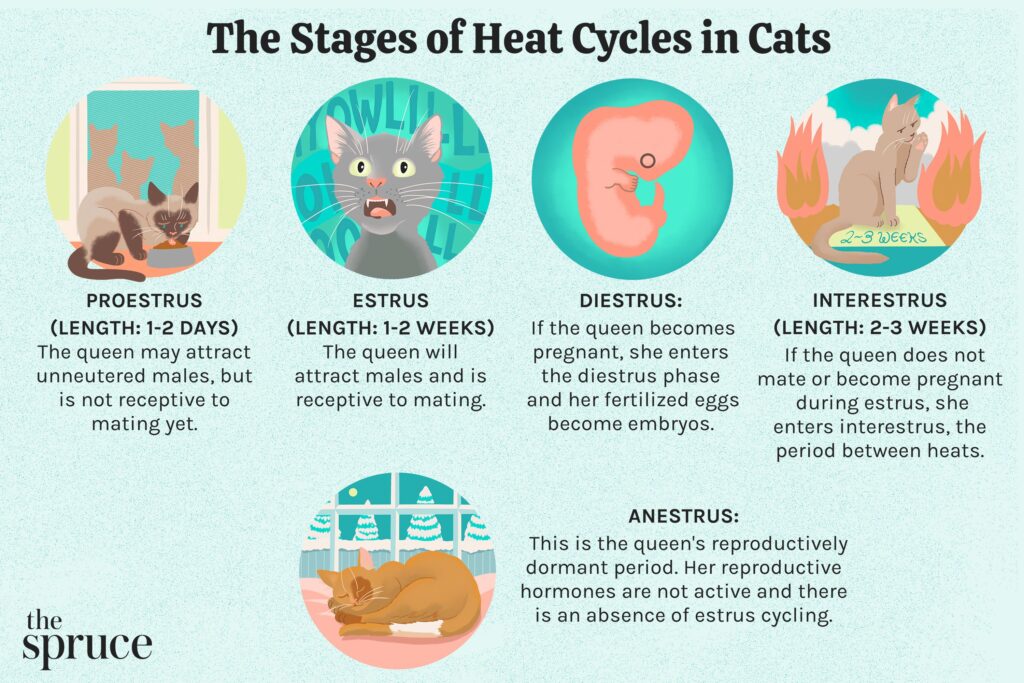
As a responsible cat owner, it’s essential to be aware of your feline friend’s reproductive cycle. The heat cycle in cats, also known as estrus, is a natural process that occurs every few months, and can last anywhere from 5 to 21 days.
Understanding the Heat Cycle in Cats
The heat cycle in cats is a complex process that involves hormonal changes, physical symptoms, and behavioral modifications. It’s divided into four phases: proestrus, estrus, metestrus, and anestrus. The most critical phase is the estrus phase, where the cat is fertile and receptive to mating.
The Proestrus Phase
During this initial phase, which lasts about 2-3 days, the cat becomes more affectionate and seeks attention from potential mates. Hormonal changes stimulate ovulation, but no eggs have been released yet.
In this phase, your cat may exhibit behaviors such as:
- Increased grooming and self-cleaning
- Restlessness and agitation
- Vocalization (loud meowing)
- Exploratory behavior
The Estrus Phase
This is the most critical phase of the heat cycle, lasting around 5-6 days. During this time, the cat is receptive to mating, and will often exhibit signs such as:
- Vocalization (loud meowing)
- Marking territory with urine
- Restlessness and agitation
Additionally, your cat may display behaviors such as:
- Increased affection towards potential mates
- Increased scent marking and rubbing
- Increased vocalization
It’s essential to note that every cat is different, and the duration of this phase can vary. Some cats may experience a shorter or longer estrus cycle than others.
The Metestrus Phase
After the estrus phase, the cat enters a short transitional phase called metestrus. This phase can last anywhere from 3-10 days.
During this phase, your cat’s reproductive system starts to return to its normal state. However, some cats may still exhibit behaviors such as:
- Increased grooming and self-cleaning
- Restlessness and agitation
The Anestrus Phase
In this final phase, which can last up to several weeks, the cat’s reproductive cycle comes to an end. The hormonal balance shifts again, and ovulation stops.
This phase is characterized by a decrease in hormones, leading to:
- Reduced aggression
- Decreased vocalization
- Decreased scent marking
Gesturing the Heat Cycle in Your Cat
Managing your cat’s heat cycle requires attention to their behavior, diet, and overall health. Here are some tips:
- Monitor Behavior: Keep a close eye on your cat’s behavior during this phase. If you notice any unusual signs, consult with your veterinarian.
- Provide Adequate Nutrition: Ensure your cat is receiving the necessary nutrients for optimal health.
- Keep Your Cat Safe: Prevent accidents by keeping an eye on your cat when they’re outside.
Managing the Heat Cycle
If you’re not planning to breed your cat, the best option is to have them spayed or neutered. This procedure eliminates the heat cycle altogether, reducing the risk of certain health problems and unwanted litters.
In some cases, veterinarians may recommend hormonal treatments or other options for managing symptoms during this phase. Always consult with a veterinarian before making any decisions about your cat’s care.
Additional Tips for Managing Your Cat’s Health
To keep your cat healthy and happy, make sure they:
- Have access to fresh water
- Receive regular veterinary check-ups
- Are kept indoors to protect them from dangers outside
By understanding the heat cycle in cats, you can better manage your feline friend’s reproductive health and ensure a long and happy life for both of you.
Frequently Asked Questions
- How often does my cat go into heat?: The frequency of the heat cycle varies among individual cats, but most cats experience it every 3-4 months.
- Can I prevent my cat from going into heat?: Yes, spaying or neutering can eliminate the heat cycle altogether.
- What are the signs that my cat is in heat?: Look for vocalization, marking territory with urine, restlessness, and agitation during this phase.
Conclusion
The feline heat cycle is a natural process that every cat will go through at some point in their lives. By understanding the signs and symptoms of this cycle, you can better care for your cat and manage any associated health issues. Regular veterinary check-ups and proper nutrition are essential for maintaining your cat’s overall health during this phase.
Common Heat Cycle Mistakes
- Not spaying or neutering: This can lead to unwanted litters and increase the risk of certain health problems.
- Ignoring behavioral signs: Failing to recognize the signs of heat cycle can result in accidents, injuries, or unwanted breeding.
- Not providing adequate nutrition: Poor diet can lead to health issues, such as weight gain or loss.
By being aware of these common mistakes and taking proactive steps, you can ensure a healthy and happy life for your feline companion.


