
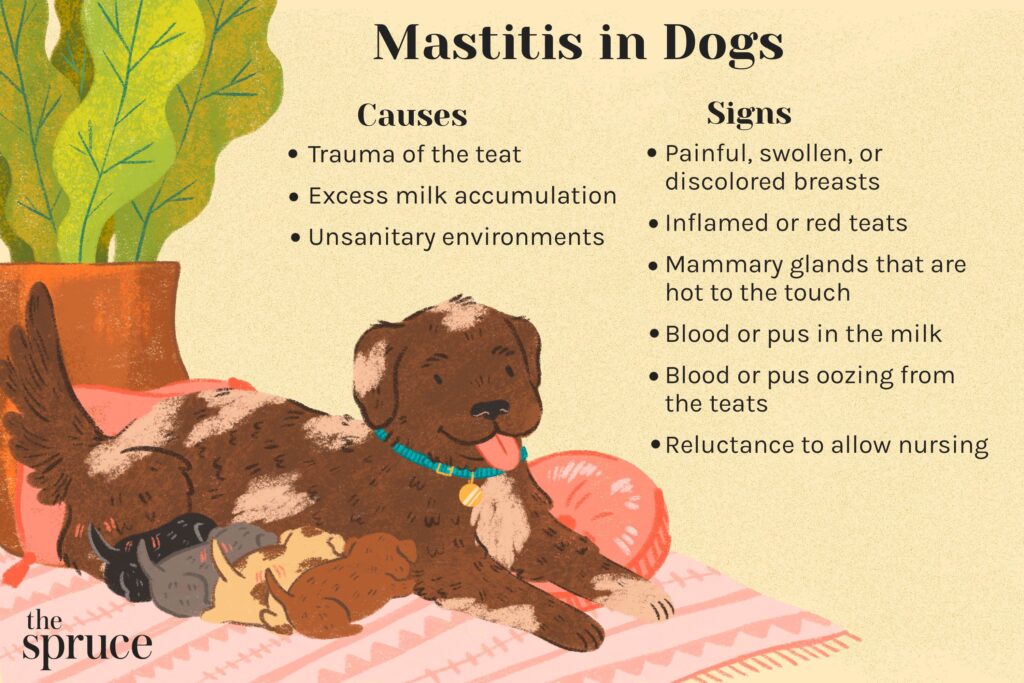
As a responsible pet owner, it’s essential to be aware of the potential risks of mastitis in dogs. This common condition can affect any dog that has recently given birth or is nursing, but it’s crucial to recognize the signs and seek veterinary attention promptly.
What is Mastitis?
Mastitis is an infection of a dog’s mammary glands, usually caused by a bacterial or parasitic invasion. The most common symptoms occur in lactating females, as the bacteria enter through the milk and infect the mammary tissue.
Causes of Mastitis
While mastitis can affect any dog, it’s more common in lactating females. However, there are other factors that increase the risk of developing this condition:
- Weakened immune system: When a dog’s immune system is compromised, it becomes easier for bacteria to infect the mammary glands.
- Trauma or injury: Physical trauma, such as scratches from puppies, can cause mastitis in some cases.
- Infections: Bacterial or parasitic infections can spread to the mammary glands, leading to mastitis.
Recognizing Symptoms
If you suspect your dog has mastitis, look out for these common symptoms:
- Lethargy and depression
- Loss of appetite
- Vomiting and diarrhea
- Increased heart rate and temperature
- Pain or swelling in the mammary glands
Prompt veterinary attention is crucial to prevent complications.
Consequences of Mastitis
Mastitis can lead to severe consequences for both the mother dog and her puppies:
- Malnutrition: If a mother dog’s milk becomes infected, it can be toxic to her puppies, leading to malnutrition and potentially even death.
- Mammilary cancer: Untreated mastitis can increase the risk of developing malignant tumors in the affected mammary glands.
Treatment Options
If your veterinarian diagnoses mastitis, they may prescribe antibiotics to combat the infection. In some cases, they might also recommend:
- Antibacterial creams or ointments for application on the affected areas
- Pain management medication to alleviate discomfort
In severe cases, surgery might be necessary to remove infected mammary tissue.
Prevention is Key
While mastitis can occur without warning, there are measures you can take to reduce the risk of infection:
- Regular breast examination: Monitor your dog’s mammary glands for signs of swelling or pain
- Proper hygiene practices: Clean your dog’s nipples and udder regularly with mild soap and water
- Vaccinations: Ensure your dog is up-to-date on all recommended vaccinations to boost their immune system
By being aware of the risks and taking preventative measures, you can help protect your furry friend from this potentially life-threatening condition.
Frequently Asked Questions
- Q: Can mastitis be prevented?
A: Yes, regular breast examination, proper hygiene practices, and vaccinations can help reduce the risk of infection. - Q: What are the symptoms of mastitis in puppies?
A: Puppies may exhibit lethargy, loss of appetite, vomiting, diarrhea, increased heart rate, and temperature, as well as pain or swelling in the mammary glands. - Q: Can mastitis be treated at home?
A: No, mastitis requires veterinary attention to prevent complications and ensure proper treatment.
Diagnosis
Mastitis can be diagnosed by a veterinarian through:
- Physical examination: A thorough check of your dog’s mammary glands for signs of swelling or pain
- Blood tests: To determine the presence of infection or disease
- Imaging studies: Such as X-rays, ultrasound, or MRI scans to visualize the affected tissue
Home Care
While mastitis requires veterinary attention, there are steps you can take to provide your dog with comfort and relief at home:
- Provide a comfortable environment: Ensure your dog has access to plenty of fresh water and a warm, quiet place to rest
- Monitor temperature: Keep an eye on your dog’s temperature and seek veterinary attention if it exceeds 102.5°F (39°C)
- Offer bland diets: Feed your dog a bland diet to help soothe their stomach
Veterinary Treatment
If your veterinarian diagnoses mastitis, they will provide guidance on the best course of treatment. This may include:
- Antibiotics: To combat bacterial infections
- Pain management medication: To alleviate discomfort and reduce swelling
- Drainage or surgical removal: In severe cases, surgery might be necessary to remove infected tissue
Preventing Future Infections
To prevent future infections and ensure your dog’s long-term health, follow these guidelines:
- Maintain good hygiene practices: Regularly clean your dog’s nipples and udder with mild soap and water
- Monitor for signs of infection: Keep an eye out for changes in your dog’s behavior or physical condition, such as lethargy, loss of appetite, or increased heart rate
- Schedule regular veterinary check-ups: Stay on top of your dog’s health by scheduling regular check-ups with your veterinarian
By understanding the causes, symptoms, and treatment options for mastitis, you can take proactive steps to protect your furry friend from this potentially life-threatening condition.


