
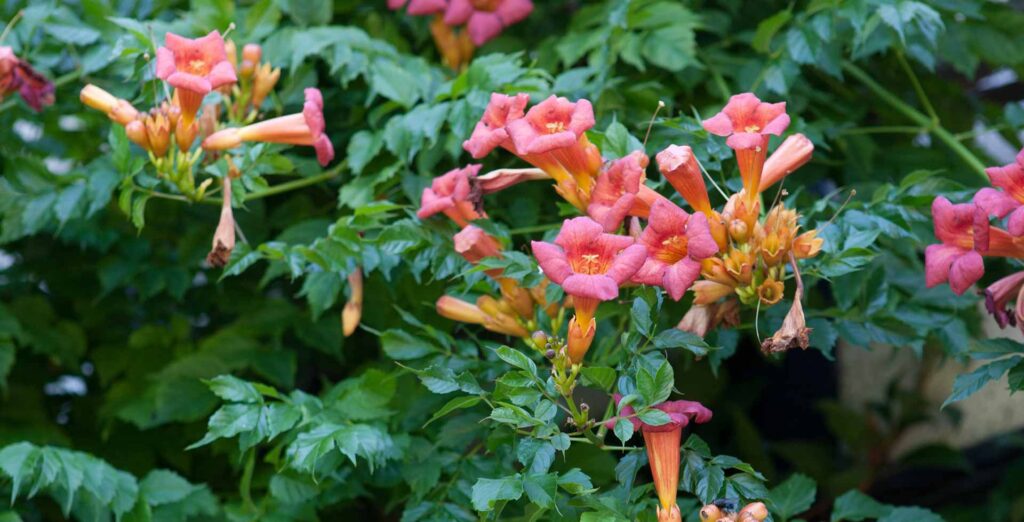
As a highly sought-after ornamental plant, the campsis (also known as bignonia) is an attractive, evergreen climbing shrub that thrives in warm climates with high humidity. In this comprehensive guide, we will delve into the characteristics of this versatile plant, explore its various species and varieties, and provide practical advice on how to cultivate it successfully.
Characteristics of Campsis
The campsis boasts distinctive, deciduous leaves with ovate, pennate shapes and serrated margins, measuring 2.5 to 10 cm in length and comprising a handful of small oval-shaped leaflets. This plant is known for its remarkable ability to climb vertically using adventitious roots, allowing it to thrive in various environments.
As the seasons change, campsis plants produce showy, tubular flowers in shades of red, ranging from pale pink to deep crimson, creating an attractive spectacle that attracts pollinators and other wildlife. These flowers are typically arranged in pendulous clusters and can reach impressive heights, making them a striking addition to any garden.
Species and Varieties
There are several species and varieties of campsis, each with its unique characteristics and growing conditions:
- Campsis grandiflora: This is the most widely cultivated variety of campsis, originating from China and Japan. It does not produce adventitious roots and requires a sturdy support to climb. The flowers are large and showy, ranging in color from red to pink.
- Campsis radicans: Native to North America, this species is also known as the Virginia creeper or Trumpet vine. It has an impressive growth habit, with stems reaching up to 15-20 meters in length. This plant produces clusters of bright red, trumpet-shaped flowers that are highly attractive to pollinators.
- Bignonia Capreolata: A variety of campsis found in Italy, particularly in the central and southern regions, this plant is known for its rapid growth rate and ability to thrive in dry conditions. It features oval leaves with serrated margins, producing clusters of red flowers that are highly prized by gardeners.
- Campsis radicans variegata: This variety of campsis boasts unique, variegated foliage featuring shades of green and yellow, making it a popular choice among gardeners seeking to add visual interest to their landscapes.
Cultivating Campsis
While campsis can be grown in containers, it typically thrives in outdoor environments with plenty of sunlight and high humidity. Here are some practical tips for cultivating this versatile plant:
- Optimal Exposure: Campsis plants prefer full sun to partial shade, making them ideal for south-west facing locations.
- Soil Requirements: The soil should be well-draining, rich in nutrients, and free from standing water to prevent root rot.
- Watering: Regular watering is essential, but make sure not to overwater the plant. A general rule of thumb is to provide at least 15 gallons of water per square foot of soil.
- Fertilization: Feed your campsis with a balanced fertilizer during the growing season (spring and summer) for optimal growth.
- Pruning: Prune your campsis regularly to maintain its shape, promote healthy growth, and encourage blooming.
Parasites and Diseases
Like any plant, campsis is susceptible to various parasites and diseases. Some common issues include:
- Aphids: These tiny insects can cause damage to the leaves and flowers of the plant.
- Powdery Mildew: A fungal disease that causes a white, powdery coating on the leaves and stems.
To prevent these issues, it’s essential to monitor your plants regularly and take prompt action when necessary. Use organic or chemical treatments as needed to protect your campsis from pests and diseases.
Interesting Facts
Here are some interesting facts about the campsis:
- The name “campsis” comes from the Greek word “kampé,” meaning bent or curved, referring to the shape of its flowers.
- In Mexico, Peru, and Argentina, the flower is still considered a symbol of prosperity and wealth.
- Receiving a campsis plant as a gift is believed to bring good luck.
By following these guidelines and tips for cultivating the beautiful campsis, you can enjoy its stunning blooms, vibrant colors, and unique characteristics in your own garden.


