
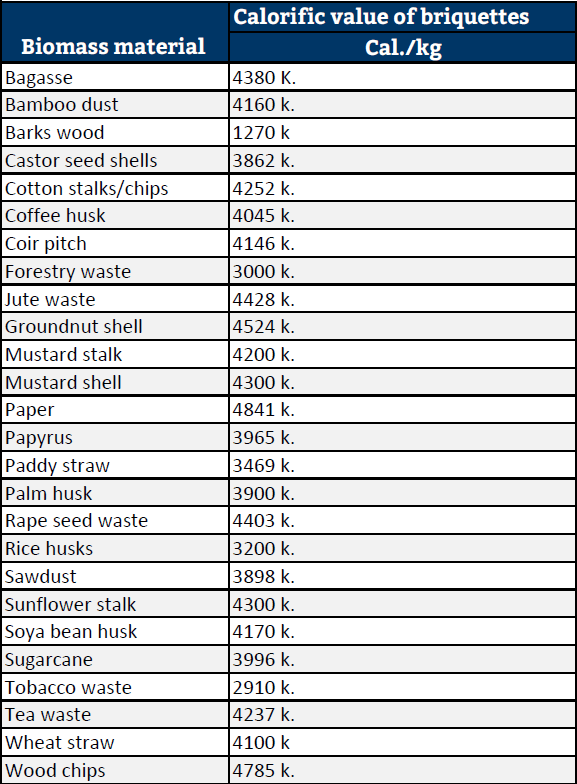
As the driving force behind a vector energy, thermal power reveals, with a figure, how valuable it is as such. Compared to how large, especially, since many vectors are characterized by their mass and volume. The concept, and the problem of mass, remains, and thermal power helps us orient ourselves. It’s imperceptible and hard to imagine, but knowing it, we’ll love it.
What Does Thermal Power Mean?
Thermal power, in definition, is the maximum amount of energy that can be obtained by completely converting a unit mass of a vector energy into standard conditions. As mentioned introducing it, thermal power makes a sort of valuation of return on energy at parity of mass, so we don’t find ourselves with an enormous quantity of a vector energy from which we can then get a meager amount of energy. If the conversion of the vector takes place through combustion, the thermal power coincides with the standard enthalpy mass or volumetric of combustion of the fuel.
Although ancient, this unit of measurement is still used, along with that of the International System, indicated by MJ/kg. Generally, thermal power distinguishes itself into superior (ΔcHso) and inferior (ΔcHio).
Thermal Power Superior
Thermal power superior is the amount of heat obtained from a complete combustion at constant pressure of the fuel, of its elementary unit of mass, when the products of combustion are returned to the initial temperature of the combustible and the combustor. To obtain an estimate, we can measure it with specialized instruments or calculate it based on the composition of the fuel.
This second approach involves a lot of work: we need to know the mass of various elements (carbon, hydrogen, sulfur…) contained in 1 kg of fuel to then evaluate the heat provided by each. We sum them up, and voilà! an approximate estimate of thermal power is obtained. To obtain an exact value, we should take into account the strength of the chemical bonds in the molecules of the fuel.
The direct method for obtaining thermal power superior involves the use of a calorimeter of Mahler, an apparatus where a complete stoichiometric reaction takes place between oxygen and a total amount of fuel. We take a known quantity of water and make it absorb the heat obtained from the reaction, then measure its temperature variation, and then it’s a matter of a formula. That of Dulong.
Thermal Power Inferior
Conventional, when talking about thermal power of a fuel and the efficiency of a thermodynamic machine, we mean by definition “thermal power superior minus the heat of condensation of the water vapor during combustion”.
This is because, generally, in combustion, the temperature of the products is higher than that of the starting fuel, and a part of the theoretically available heat is lost for warming up the fumes, especially, and above all, for vaporizing the water produced by combustion. This is what we want to take into account with thermal power inferior.
With the advancement of technologies in steam condensation boilers, such as those used in power plants, it’s not always possible to recover all the latent heat of the vaporized water, so a full nominal efficiency of 100% from a fuel can still be achieved even if there is an irretrievable loss in fumes. Never mind, though.
As for superior power, we proceed with an elementary analysis to obtain a numerical estimate. We start with thermal power superior and subtract 2.5 MJ for every kg of water vapor contained in the fumes.
Thermal Power: Oil
The thermal power of oil is 10,000 kcal/kg, giving us an idea of its value let’s compare it with that of other similar fuels or competitors. We have the G.P.L. with 11,000 kcal/kg above it, and also gasoline and diesel fuel respectively with 10,500 and 10,200 kcal/kg. Below the threshold of oil, or rather, its thermal power, we find the combustible oil, very close, with a value of 9,800 kcal/kg, and then the natural gas, with 9,200.
Thermal Power: Methane
The thermal power of methane is around 8,200-9,200 kcal/m³ at zero degrees Celsius. This means that if we burn a cubic meter of methane at 0°C and atmospheric pressure, we get between 8,200 and 9,200 kcal.
As we know, this value helps us understand the heat obtainable from methane as a fuel to interpret consumption in terms of energy produced rather than just meters cubed, which might not be particularly interesting from our “users” and “payers”.
Thermal power in the case of methane is an important valuation because it is the most commonly used fuel for domestic heating. Just understanding whether it’s worth paying for it and, before that, choosing it.
Methane is also used in power plants to produce electricity, as a combustible in cars and in some industrial processes: its thermal power is of public interest.
Thermal Power: Wood
Talking about the thermal power of wood is difficult because it’s an amount intrinsically linked to different types of wood and that depends much on their moisture content. Specifically from this variable we start to understand the power of boilers or stoves that can’t be evaluated without considering the type of wood and the conditions of the wood used.
To make a comparison with other fuels, even those of a different nature, we can indicate as thermal power medium of dry seasoned wood a quantity of 3,200 kcal/kg. The moisture content plays a very strong role: at 15% for example, we have 3,490 kcal/kg, and with a jump in humidity up to 40% it goes down to 2,300 kcal/kg.
Thermal Power: Coal
From wood, we pass to coal, always considering that we’re making an analysis elementary that doesn’t describe the complexity of the whole. But it’s very helpful. There are the links between elements, which certainly aren’t isolated in the fuel, but also other factors, such as the percentage of water, the substances volatile and cinders. And then there are parameters and measurements like the index of free swelling and the agglutinizing power.
Satisfying ourselves with an estimate of thermal power keeping in mind only the different types of carbonaceous fossils distinguishable for their age: the most ancient is anthracite, followed by lignite, and the youngest, peat. Of course, we can’t interview them to ask how much carbogen they have, so we use their chemical element composition: as the age progresses the coal becomes richer in carbon and poorer in oxygen, and its thermal power increases from peat to anthracite with the decrease precisely of the H/C ratio.
For peat with an H/C ratio of 1.30 the thermal power is between 3,000-4,500 kcal/kg, then we have lignite with an H/C ratio of 0.97 and a range of 4,000-6,200 kcal/kg, followed by anthracite (H/C = 0.29) and a thermal power between 8,300-9,000 kcal/kg.
Thermal Power: Biomass
Biomass is another type of fuel that offers an interesting thermal power. It varies depending on the source material and its moisture content, as in wood or other plant residues. For example, a mixture of wood waste with water (10% water content) has a thermal power of around 7,500 kcal/kg.
Thermal Power: Biogas
Biogas is produced through anaerobic digestion of organic matter, such as food waste, agricultural waste, or sewage sludge. Its thermal power depends on the composition of the organic matter used in its production. For example, biogas from food waste has a thermal power of around 10-12 kcal/kg.
Thermal Power: Natural Gas
Natural gas is primarily composed of methane (CH4), with smaller amounts of other gases such as nitrogen and carbon dioxide. Its thermal power is around 8.2-9.2 kcal/m³ at standard conditions, which is relatively high compared to other fossil fuels.
The Importance of Thermal Power in Energy Systems
Thermal power plays a crucial role in various energy systems, including:
- Power generation: Thermal power is used to generate electricity in power plants, where it drives turbines connected to generators.
- Industrial processes: Thermal power is used in various industrial processes, such as cement production, steelmaking, and chemical synthesis.
- Transportation: Thermal power is used in vehicles, such as cars and trucks, to propel them.
- Heating and cooling: Thermal power is used for heating and cooling buildings, as well as for hot water supply.
Conclusion
If you enjoyed this article, keep following me on Twitter, Facebook, Google+, Pinterest, and… elsewhere, you’ll have to find me!
Other articles that may interest you:
Biometano da biogas
Accordo sul clima di Parigi
Caldaie a biomassa: le migliori
Auto GPL o metano?
Frequently Asked Questions (FAQs)
Q: What is thermal power?
A: Thermal power, also known as energy content, refers to the amount of heat that can be obtained from the complete combustion of a unit mass of fuel.
Q: How is thermal power measured?
A: Thermal power is typically measured in kilocalories per kilogram (kcal/kg) or megajoules per kilogram (MJ/kg).
Q: What are the different types of thermal power?
A: There are two main types of thermal power: superior and inferior. Superior thermal power refers to the heat obtained from a complete combustion at constant pressure, while inferior thermal power takes into account the heat lost due to vaporization of water.
Q: How does thermal power compare between different fuels?
A: Thermal power varies significantly between different fuels, with oil having a higher thermal power than gasoline and diesel fuel. Natural gas also has a relatively high thermal power compared to other fuels.
Q: What is the significance of thermal power in everyday life?
A: Thermal power plays an important role in our daily lives, as it helps us understand the heat content of different fuels and makes informed decisions about energy consumption and production.
Q: How can we improve the efficiency of thermodynamic machines using thermal power?
A: By understanding the thermal power of a fuel and optimizing its combustion process, we can improve the efficiency of thermodynamic machines and reduce energy losses.
Q: What are some common applications of thermal power in industry and transportation?
A: Thermal power is widely used in various industries and transportation sectors, including power plants, boilers, industrial processes, and vehicles.


