
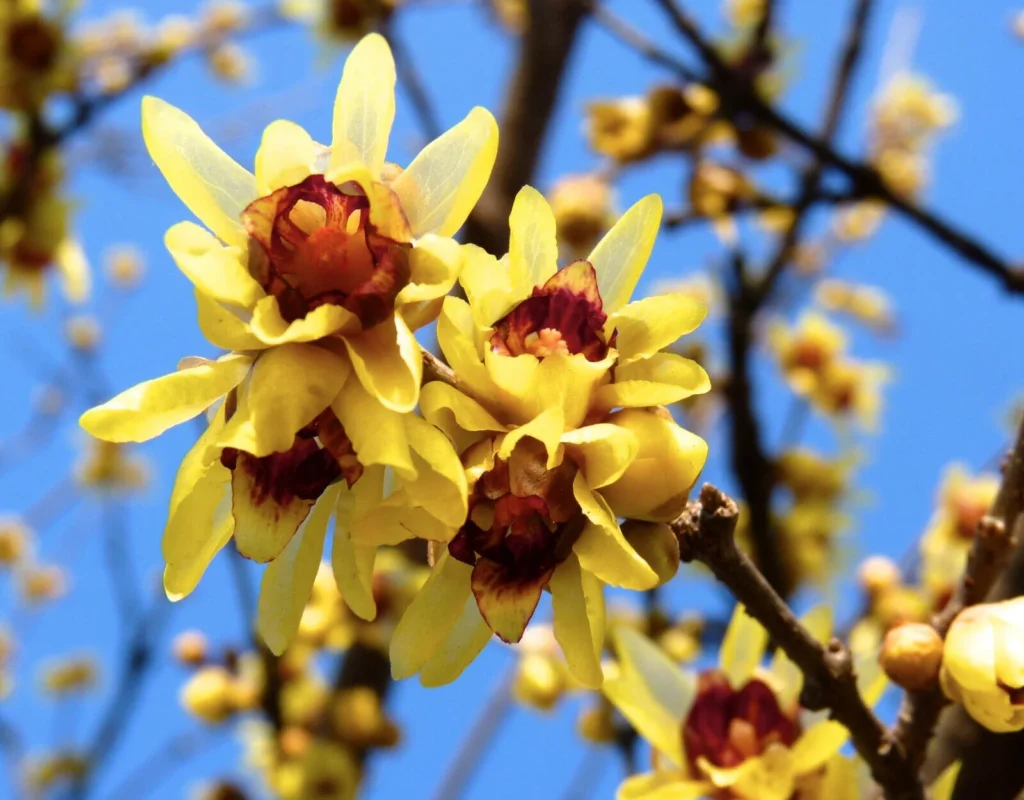
As the winter months approach, many of us are looking for ways to add some color and fragrance to our gardens. The calicanto, a flowering shrub native to China, is an excellent choice for those seeking a low-maintenance winter bloom.
Origins and Characteristics
The calicanto, also known as Chimonanthus praecox or Calycanthus fragrans, originates from the mountainous regions of Sichuan Province in southwestern China. This hardy plant can thrive in temperatures as low as -20°C (-4°F), making it an ideal choice for gardens in northern Italy.
The calicanto is a medium-sized shrub that typically grows between 1-3 meters (3-10 feet) tall and wide, with a spread of around 2-4 meters (6-13 feet). Its oval-shaped leaves are rough to the touch and have a deep green color. In autumn, they turn a beautiful shade of golden yellow.
The Meaning Behind its Name
The calicanto gets its name from the Greek words “chimon” and “anthos,” meaning winter and flower, respectively. This early blooming habit allows it to be considered a true winter bloom, unlike other flowering plants that typically bloom in late spring or summer.
Physical Description
Calicanto is a densely branched shrub with a woody base and a rounded crown. Its bark is smooth and grayish-brown, while its leaves are lance-shaped and have a coarse texture. The flowers are small, fragrant, and white or creamy yellow in color, measuring around 2-3 cm (0.8-1.2 inches) in length.
Fragrance and Bloom
The calicanto’s fragrance is its most notable feature. The flowers emit a strong, sweet scent that attracts pollinators and fills the air with a pleasant aroma. These flowers typically bloom in late winter to early spring, depending on the age of the plant.
In addition to its attractive flowers and fragrance, the calicanto is also known for its ability to attract birds and bees to the garden. The nectar-rich flowers make them an excellent choice for wildlife gardens or bird-friendly gardens.
Caring for Your Calicanto
To ensure your calicanto thrives, follow these care tips:
- Planting Location: Choose a spot that receives partial shade to full sun, with well-draining soil.
- Watering and Fertilization: Water your calicanto regularly during its first two to three years after planting. Feed it with organic fertilizer in the fall, using 3-4 kg per square meter.
- Pruning: Prune your calicanto only when necessary, removing dead or damaged branches. This helps maintain its shape and promotes healthy growth.
Gardening Tips
Plant your calicanto near a house or along a path to make the most of its attractive flowers and fragrance. Combine it with evergreen and deciduous shrubs for a beautiful winter display.
Place a calicanto in your entranceway to greet visitors on cold winter days. The fragrant flowers will create a warm and welcoming atmosphere, making your home feel cozy and inviting.
Varieties
There are several varieties of calicanto available, each with its unique characteristics and growth habits. Some popular varieties include:
- Chimonanthus praecox: This is the most common variety of calicanto, known for its fragrant flowers and evergreen leaves.
- Calycanthus fragrans: This variety has larger flowers and a more vigorous growth habit than Chimonanthus praecox.
- Chimonanthus salicifolius: This variety has leafy branches that resemble willows, making it an excellent choice for gardens with wet soil.
Propagation
Calicanto can be propagated through cuttings, layering, or division. Take 20-30 cm (8-12 inches) stem cuttings from the current season’s growth in spring, and plant them in a pot filled with well-draining soil. Keep the soil moist and provide partial shade until roots develop.
Alternatively, you can use layering to propagate calicanto. Dig a trench next to the base of the plant, and place a long branch into it. Cover the branch with soil and mulch, allowing roots to grow on the buried section before cutting it off from the parent plant.
Calicanto can also be divided in spring or fall, making sure each division has at least one growing point (where new growth emerges).
Conclusion
The calicanto is an attractive and fragrant flowering shrub that can add beauty to your garden even during the cold winter months. With proper care and attention, it will thrive and provide a delightful display of flowers and fragrance for years to come.
Incorporating the calicanto into your garden plan will not only enhance its aesthetic appeal but also attract wildlife and create a welcoming atmosphere in your home. Whether you’re looking for a low-maintenance winter bloom or simply want to add some color and fragrance to your garden, the calicanto is an excellent choice.
By following these care tips and gardening advice, you can enjoy the beauty and fragrance of the calicanto in your own garden, creating a warm and welcoming space that will bring joy to you and your family throughout the year.


