
Introduction
When it comes to natural remedies, few plants have garnered as much attention as the humble calendula. Also known as marigold, this annual or perennial herb has been used for centuries to treat a range of ailments, from skin issues to digestive problems. But what makes calendula so special? In this article, we’ll delve into the world of calendula, exploring its properties, benefits, and uses.
What is Calendula?
Calendula (Calendula officinalis) is a plant that belongs to the daisy family. It’s an herbaceous annual or perennial plant with ramified behavior and a clinging root, reaching an altitude of 30-60 cm. Despite its botanical simplicity, calendula has been prized for its unique properties and benefits.
Collecting Calendula Flowers
To enjoy the natural properties and benefits of calendula, you need to collect its flowers. The best time to do this is in the morning, before full bloom, when the sun hasn’t yet risen. This ensures that the flowers are at their most potent and free from damage.
Calendula Flowers: The Ultimate Multi-Tasker
What makes calendula flowers so special? Not only are they used to make a range of products for external or internal use, but they also have unique properties that set them apart from other plants. For example:
- Capitulum: Calendula flowers are actually called capitulum, which means “flower” in Latin. The best time to collect capitulum is around 8 am before full opening and when the sun has not yet risen.
- Color: Calendula flowers come in a range of colors, including yellow, yellow-orange, and red-violet.
- Size: Each calendula officinalis plant can produce between 30 to 50 capitulum.
Using Calendula Flowers
Calendula flowers are incredibly versatile. They can be used fresh or after drying that should be done in a cool, well-ventilated place away from direct sunlight. Some of the products you can make using calendula flowers include:
- Infusions and teas
- Alcohol extracts
- Acetolites
- Creams and lotions
- Macerated oil
- Essential oil
- Disinfecting liquids
- Dermocosmetic waters
- Soaps
- Products for laundry
Cooking with Calendula
But calendula isn’t just used for topical applications. You can also use its leaves, sprouts, and flowers to enrich salads, soups, or any dish.
Attention!
To get high-quality calendula oil, collect capitulum that have not yet opened and before seed production.
Calendula: The Ultimate Natural Remedy
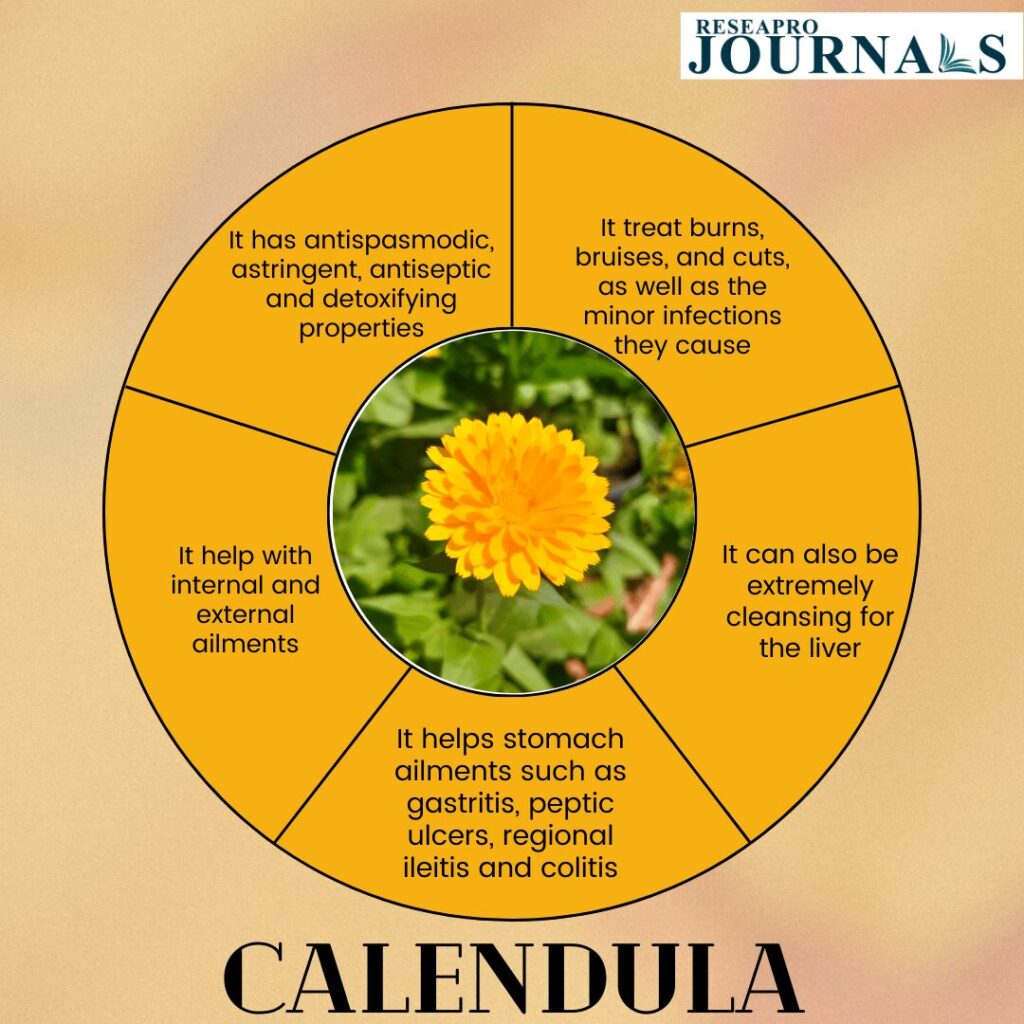
Calendula has been used for centuries as a natural remedy for a range of ailments. Its unique properties make it an effective treatment for:
- Skin issues: sunburns, eczema, acne
- Digestive problems: diarrhea, constipation
- Anxiety and palpitations
- Menstrual regulation
Calendula: The Flower of the Sun
The name “calendula” comes from the Latin word “solsequier,” which means “follower of the sun.” This refers to the flowers’ unique habit of opening and closing according to the solar cycle.
Properties of Calendula
Some of the key properties of calendula include:
- Anti-inflammatory: used to reduce inflammation and pain
- Vulnerary: promotes wound healing and cleaning of the skin
- Wound healing, cleaning, and disinfecting skin
- Cicatrizing: stimulates new tissue growth and improves skin regeneration
- Antibleeding: prevents bleeding and promotes clotting
- Emollient: hydrates and soothes the skin
Calendula Cultivation
If you’re interested in growing your own calendula, it’s easy to do so. Calendula is an herbaceous annual or perennial plant that can be grown from seeds. You can sow it directly in the garden (or in a pot) and repeat sowing every few weeks.
Wild Calendula vs. Cultivated Calendula
There are two types of calendula: wild (Calendula arvensis) and cultivated (Calendula officinalis). The main difference between them is that wild calendula grows spontaneously in fields, while cultivated calendula is grown specifically for its medicinal properties.
Precautions and Contraindications
While calendula is generally considered safe to use, there are some precautions and contraindications to be aware of. These include:
- Allergic reactions: Some people may be allergic to calendula, so it’s essential to patch test before using it extensively.
- Pregnancy and breastfeeding: Calendula can stimulate uterine contractions, so it’s recommended to avoid using it during pregnancy and breastfeeding.
- Surgery: Calendula should not be used in conjunction with surgery or other medical treatments without consulting a healthcare professional.
Conclusion
In conclusion, calendula is a remarkable plant with a range of unique properties and benefits. From skin issues to digestive problems, calendula has been used as a natural remedy for centuries. Whether you’re interested in growing your own or using calendula products, this incredible herb is definitely worth exploring.
Frequently Asked Questions
- What are the benefits of calendula?
Calendula has anti-inflammatory, vulnerary, cicatrizing, antibleeding, emollient, and disinfectant properties, making it an effective treatment for a range of ailments. - Can I use calendula flowers fresh or dried?
Both! Calendula flowers can be used fresh or after drying that should be done in a cool, well-ventilated place away from direct sunlight. - How do I collect calendula flowers?
Collect calendula flowers in the morning before full bloom, when the sun hasn’t yet risen. - What are some of the products you can make using calendula flowers?
Some of the products you can make include infusions and teas, alcohol extracts, creams and lotions, macerated oil, essential oil, disinfecting liquids, dermatocosmetic waters, soaps, and products for laundry. - Can I use calendula leaves, sprouts, and flowers in cooking?
Yes! Calendula can be used fresh or dried to enrich salads, soups, or any dish. - How do I get high-quality calendula oil?
To get high-quality calendula oil, collect capitulum that have not yet opened and before seed production. - What are some of the medicinal properties of calendula?
Calendula has anti-inflammatory, vulnerary, cicatrizing, antibleeding, emollient, and disinfectant properties, making it an effective treatment for a range of ailments. - Can I grow my own calendula?
Yes! Calendula is an herbaceous annual or perennial plant that can be grown from seeds.
Calendula in Traditional Medicine
Calendula has been used in traditional medicine for centuries to treat a range of conditions, including:
- Wound care: Calendula’s anti-inflammatory and vulnerary properties make it an excellent treatment for wound care.
- Skin conditions: Calendula’s emollient and cicatrizing properties can help soothe and heal skin conditions such as eczema and acne.
- Digestive issues: Calendula’s antibleeding and emollient properties can help alleviate digestive issues such as diarrhea and constipation.
Calendula in Modern Medicine
While calendula has been used for centuries, modern medicine recognizes its potential benefits in treating a range of conditions. Some examples include:
- Sunburn relief: Calendula’s anti-inflammatory and vulnerary properties make it an effective treatment for sunburn.
- Wound healing: Calendula’s cicatrizing and antibleeding properties can help promote wound healing.
- Skin regeneration: Calendula’s emollient and cicatrizing properties can help regenerate skin cells and improve skin texture.
Conclusion
Calendula is a remarkable plant with a range of unique properties and benefits. From traditional medicine to modern applications, calendula has proven itself to be an effective treatment for a range of conditions. Whether you’re interested in using calendula products or growing your own calendula, this incredible herb is definitely worth exploring.


