
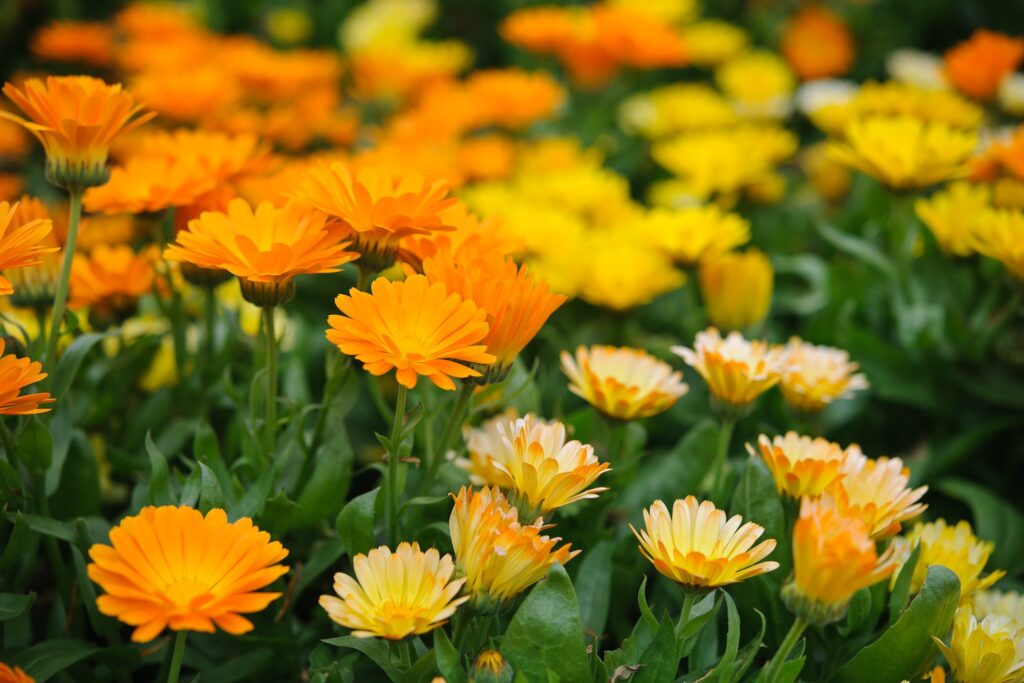
What is Calendula?
Calendula officinalis is an annual or perennial herb that has been used for centuries for its medicinal, cosmetic, and culinary properties. Its vibrant flowers are not only beautiful but also rich in active principles that make it a valuable plant for various applications.
Characteristics of Calendula Officinalis
- Height: 30-60 cm
- Root system: 20 cm deep (important to consider when growing in pots)
- Flowers: 3-5 cm diameter, with a caper-like shape. Each plant can produce between 20 and 50 flowers.
- Active principles: Rich in flavonoids and carotenoids.
Calendula Cultivation
Calendula officinalis is a rustic plant that thrives in well-lit areas with moderate temperatures. It’s resistant to low temperatures but reaches its full potential between 22°C and 30°C.
When growing calendula, it’s essential to provide rich soil that is well-aerated and draining. Calendula cannot be planted in fixed beds; instead, it should be sown directly into the ground.
Calendula Seeds
Starting the cultivation of calendula from seed is a convenient option for small domestic gardens. Seed packets are generally cheaper than buying individual flowering plants.
The biological cycle of calendula is moderately short, lasting around 80-120 days. After blooming, it takes another two months to mature the seeds.
When to Sow Calendula
The ideal time for sowing calendula depends on your location:
- Southern Italy: December to February
- Northern Italy: April
- Other regions: Late March to early April
To sow calendula, cover the seeds superficially and cultivate a soft soil. For optimal growth, plant 5-7 plants per square meter.
Where to Buy Calendula Seeds
Calendula seeds are available in garden centers and online stores like Amazon.
For more information on purchasing calendula seeds, visit the product page: Calendula officinalis – 1000 Seeds
To ensure healthy growth, it’s recommended to repeat and delay seedings. This will provide a good number of flowering plants throughout the year.
Frequently Asked Questions
Q: What are the benefits of calendula?
A: Calendula has been used for centuries for its medicinal, cosmetic, and culinary properties. Its active principles have anti-inflammatory and antimicrobial effects.
Q: Can I grow calendula indoors?
A: While calendula can be grown in pots, it requires a lot of light to thrive. If you don’t have direct sunlight, consider using grow lights to provide the necessary illumination.
Q: How do I harvest calendula flowers?
A: Calendula flowers are ready for harvesting when they reach their full color and dryness. Use scissors or pinch off the individual flowers to avoid damaging the plant.
Q: Can calendula be used in traditional medicine?
A: Yes, calendula has been used for centuries in traditional medicine due to its anti-inflammatory and antimicrobial properties.
Q: Is calendula safe for consumption?
A: While calendula is edible, it’s recommended to cook or dry the flowers before consuming them. Raw calendula can cause allergic reactions in some individuals.
Q: How often should I water my calendula plants?
A: Calendula requires well-draining soil and moderate watering. Avoid overwatering, which can lead to root rot and other issues.
Q: Can calendula be grown in shaded areas?
A: While calendula prefers light, it can tolerate partial shade. However, its growth will be limited due to the lack of direct sunlight.
Q: Is calendula toxic to humans or pets?
A: Calendula is generally considered safe for human consumption and use. However, it’s recommended to handle the plant with care to avoid skin irritation or allergic reactions in some individuals.
Calendula Uses
The uses of calendula are diverse and widespread:
- Medicinal Use: Calendula flowers have anti-inflammatory and antimicrobial properties that can be used for wound healing, soothing skin irritations, and relieving digestive issues.
- Cosmetic Use: The petals of calendula flowers can be used as a natural dye for fabrics, cosmetics, and skincare products due to their vibrant colors.
- Culinary Use: Calendula flowers can be consumed in salads or cooked with herbs like basil or rosemary. They have a mild flavor and are rich in vitamins and minerals.
Agriculture Techniques
Calendula is generally an easy plant to grow, but it requires some specific techniques:
- Soil Preparation: Before planting calendula seeds directly into the ground, prepare the soil by adding organic matter like compost or manure.
- Watering: Water the plants regularly until they start growing leaves and flowers. Use a drip irrigation system to avoid overwatering.
- Pest Control: Regularly inspect the plants for pests and diseases, and treat them promptly if necessary.
- Pruning: Prune the plant by pinching off individual flowers or cutting it back to encourage new growth.
Propagation Techniques
Calendula is a popular choice for propagation due to its ease of seed germination:
- Seed Germination: Plant calendula seeds in a pot filled with well-draining soil and keep it warm until they start germinating.
- Division: Divide the plant into smaller sections after harvesting, making sure each section has at least one growing stem.
- Stem Cuttings: Take 10-15 cm long stem cuttings from mature plants and allow them to dry for a few days before planting.
Calendula Varieties
There are many varieties of calendula, each with unique characteristics:
- Pot Marigold: This variety is known for its bright orange-yellow flowers.
- Cherry Ball: These small marigolds have red-pink flowers and are a popular choice for adding color to arrangements.
- Snow Queen: These pale yellow flowers are an excellent choice for adding a touch of elegance to bouquets.
Care and Maintenance
Calendula is relatively low-maintenance, but it still needs proper care to thrive:
- Lighting: Provide direct sunlight to ensure optimal growth.
- Watering: Keep the soil consistently moist during the first few weeks after planting.
- Temperature: Plant calendula in areas with moderate temperatures between 22°C and 30°C.
- Fertilization: Feed the plant with a balanced fertilizer once a month.
Harvesting Calendula
Harvesting calendula flowers is an essential part of its cultivation:
- Timing: Harvest the flowers when they are fully colored and dry to avoid moisture issues.
- Method: Use scissors or pinch off individual flowers to avoid damaging the plant.
- Storage: Store dried calendula flowers in airtight containers to preserve their medicinal properties.
Pest Control for Calendula
To protect calendula from pests, use these techniques:
- Insecticidal Soap: Spray insecticidal soap on the plants regularly to control pests.
- Predatory Insects: Encourage predatory insects like ladybugs or lacewings to feed on pests.
- Barriers: Use fine mesh barriers to prevent aphids and whiteflies from reaching the plant.
Common Problems with Calendula
Identify these common issues when growing calendula:
- Yellow Leaves: Remove yellow leaves by pinching or cutting them off to maintain plant health.
- Powdery Mildew: Treat powdery mildew using fungicides or neem oil.
Calendula in Traditional Medicine
Calendula has been used for centuries in traditional medicine due to its anti-inflammatory and antimicrobial properties:
- Topical Use: Apply calendula cream or ointment directly onto the skin for wound healing.
- Internal Use: Consume calendula tea or take supplements orally to relieve digestive issues.
Calendula in Cosmetics
Calendula is used in various cosmetic products due to its moisturizing and antibacterial properties:
- Face Masks: Use calendula face masks for their anti-aging benefits.
- Skincare Products: Add calendula extracts to skincare products like creams, lotions, or serums.
Calendula in Culinary Delights
Calendula can be used as a garnish in various culinary dishes:
- Salads: Add dried calendula flowers to salads for their vibrant colors.
- Herbal Teas: Infuse calendula flowers into herbal teas like lemon balm or peppermint.
Conclusion
Calendula officinalis is an incredible herb that offers numerous benefits due to its versatility and medicinal properties. Its cultivation, uses, and agriculture techniques are discussed in this guide, helping you grow a healthy and thriving calendula plant. Whether you use it for medicinal purposes, cosmetics, or culinary delights, calendula is sure to add value to your life.


