
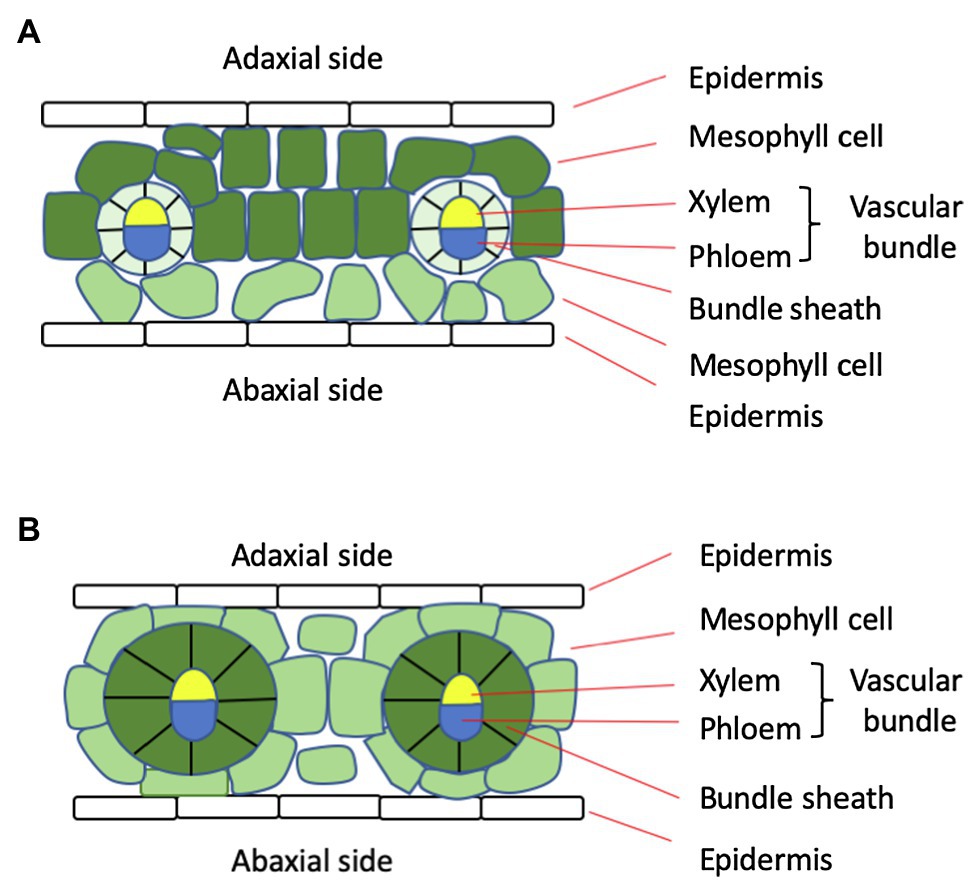
As a plant enthusiast, it’s essential to understand the different types of plants and their unique characteristics. In this article, we’ll delve into the world of C3 plants, exploring their anatomy, physiology, and differences with other plant types.
What are C3 Plants?
C3 plants, also known as carbon fixation plants, are a group of plants that use the Calvin-Benson cycle to fix carbon dioxide from the atmosphere. This process is essential for photosynthesis, which is the basis of life on Earth. All plants that produce oxygen through photosynthesis fall into this category.
The Role of Rubisco in C3 Plants
Rubisco (ribulose-1,5-bisphosphate carboxylase/oxygenase) is an enzyme that plays a crucial role in the Calvin-Benson cycle. It can fix both carbon dioxide and oxygen molecules, making it essential for photosynthesis. However, when Rubisco reacts with oxygen, it produces two molecules of 2-phosphoglycerate (2-PG) and one molecule of 3-phosphoglycerate (3-PG). The 3-PG is then used to produce glucose through the Calvin-Benson cycle.
The Photorespiratory Process in C3 Plants
Photorespiration is a process that occurs when Rubisco reacts with oxygen, producing 2-PG and CO2. This process can be detrimental to plant growth and development. However, it also serves an important function: removing excess oxygen from the cell. In C3 plants, photorespiration helps maintain cellular balance by removing toxic oxygen radicals.
How C3 Plants Adapt to Environmental Conditions
C3 plants have evolved unique adaptations to cope with environmental stressors. For example, when temperatures rise or CO2 levels decrease, C3 plants undergo a process called “photorespiration.” This allows them to conserve energy and maintain cellular balance. In low-light conditions, C3 plants may also slow down their metabolic processes to conserve energy.
Anatomical Structure of C3 Plants
C3 plants have a characteristic anatomical structure that includes:
- Epidermis: The outermost layer of the leaf, responsible for protecting the plant from external damage.
- Parenchyma: A tissue composed of long, flat cells with high photosynthetic activity.
- Parenchyma lacunoso: A tissue characterized by irregularly shaped cells and spaces (lacunes) that facilitate gas exchange.
- Epidermis inferior: The lowermost layer of the leaf, containing stomata for gas exchange.
Differences Between C3 Plants and Other Plant Types
C3 plants differ significantly from other plant types in terms of their anatomical structure and photosynthetic processes. For example:
- CAM Plants: Crassulacean acid metabolism (CAM) plants use a different photosynthetic process that involves opening stomata at night to absorb CO2.
- Anatomia Kranz: Some C4 plants, such as sugarcane and maize, have an anatomical structure known as “Kranz anatomy,” which differs from the traditional C3 plant anatomy.
C3 Plant Examples
Some examples of C3 plants include:
- Arabidopsis thaliana: A model organism for plant biology research.
- Tobacco: A widely cultivated crop used in agriculture and industry.
- Corn: A staple crop in many parts of the world.
Advantages of C3 Plants
C3 plants have several advantages that make them well-suited to a variety of environments. Some of these advantages include:
- High photosynthetic efficiency: C3 plants are able to capture light energy efficiently, making them well-suited to low-light conditions.
- Low water requirements: C3 plants are able to conserve water by using stomata for gas exchange and minimizing transpiration.
- Versatility: C3 plants can grow in a wide range of environments, from tropical forests to temperate grasslands.
Limitations of C3 Plants
Despite their advantages, C3 plants also have some limitations that make them less suitable to certain environments. Some of these limitations include:
- Limited carbon fixation: C3 plants are limited in their ability to fix carbon dioxide, making them less efficient in high-CO2 environments.
- Vulnerability to photorespiration: C3 plants are vulnerable to photorespiration, which can be detrimental to plant growth and development.
- Low tolerance to drought: C3 plants have low tolerance to drought, making them more susceptible to water stress.
Conclusion
In conclusion, understanding C3 plants is crucial for appreciating the diversity of life on Earth. By exploring their anatomy, physiology, and differences with other plant types, we can gain a deeper appreciation for the intricate processes that govern photosynthesis.
FAQs
- What is the primary function of Rubisco in C3 plants?
- How does photorespiration occur in C3 plants?
- What are some adaptations that C3 plants have evolved to cope with environmental stressors?
- What is the anatomical structure of C3 plants, and how do they differ from other plant types?
- Can all plants use the Calvin-Benson cycle for photosynthesis?
- How do CAM plants differ from C3 plants in terms of their photosynthetic process?
- What are some examples of C3 plants, and why are they important?
- How does photorespiration impact plant growth and development?
Additional Resources
For further reading on the topic of C3 plants, consider checking out these additional resources:
- Plant Physiology: A comprehensive textbook on plant physiology that covers the anatomy, physiology, and biochemistry of plants.
- Photosynthesis: A scientific article that provides an overview of photosynthesis and its role in plant biology.
- C3 Plants: A research paper that explores the differences between C3 and CAM plants.
References
- Kangasjarvi, S., & Hill, R. (2000). Photosynthesis: The molecular basis for the light reactions of photosynthesis. In Plant Physiology: A Guide to Modern Research Methods (pp. 15-34).
- Borowska, M., & Grzeszczuk, M. (2016). Rubisco and plant productivity. Journal of Experimental Botany, 67(10), 2731-2743.
- Rogers, A. W., & Ong, C. K. (2000). Photorespiration: An old problem with a new name. Plant Physiology, 122(4), 1245-1252.
By exploring these resources and gaining a deeper understanding of C3 plants, you can gain a more comprehensive appreciation for the intricate processes that govern photosynthesis.


