
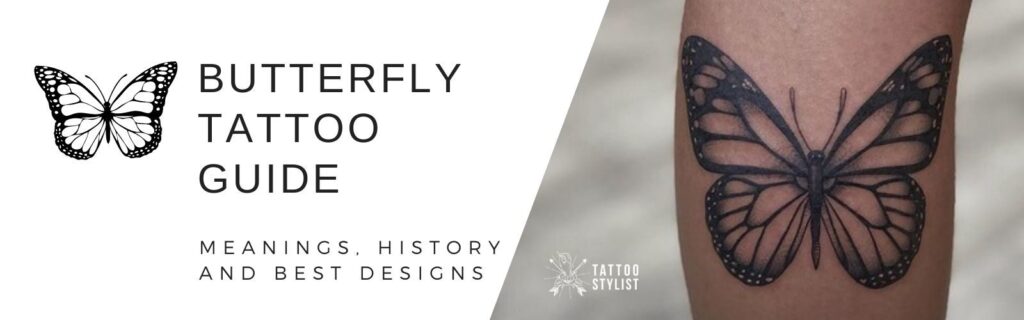
In the collective imagination, the butterfly is a symbol of natural beauty and freedom. A butterfly tattoo can mean much more than this.
Traditionally, the butterfly has been associated with femininity and, in nature, it represents metamorphosis, change, transformation, and renewal.
But there’s more to the butterfly tattoo than meets the eye. Different species of butterflies carry specific meanings that can be used to convey personal messages or tell a story through art.
Types of Butterfly Tattoos: What Do They Mean?
The type of butterfly used in a tattoo can have a significant impact on its meaning. For example, the monarch butterfly is often associated with transformation and change, while the blue morpho butterfly represents self-awareness and introspection.
On the other hand, a green butterfly is considered a symbol of good luck and prosperity, while a yellow butterfly represents happiness and joy. In Scotland and Ireland, the yellow butterfly is also associated with serenity and peaceful rest.
A Butterfly on a Rose: A Symbol of Love
If you’re thinking about getting a tattoo, a butterfly on a rose might be the perfect choice for celebrating a romantic occasion. This design combines the beauty of nature with the symbolism of love.
The rose represents eternal love and devotion, while the butterfly adds a sense of freedom and joy to the arrangement. A butterfly on a rose is often seen as a symbol of the passion and romance that two people share in their relationship.
The Monarch Butterfly Tattoo: Significance
Monarch butterflies are famous for their incredible migrations. The butterfly used in this type of tattoo represents not only transformation but also dynamism, movement, and a desire to explore and discover new things.
Moreover, the monarch butterfly is a symbol of regality, respect, and nobility. It’s often associated with the idea of rebirth and renewal, making it a popular choice for tattoos that represent personal growth and transformation.
A Skull with a Butterfly: New Life
A skull and a butterfly might seem like an unlikely combination, but it’s actually a powerful symbol. The skull represents mortality, while the butterfly represents new life. Together, they form a circle that embodies the cycle of life and death.
This design is often seen as a way to acknowledge and accept the inevitability of death, while also celebrating the beauty and wonder of life. It’s a reminder that death is a natural part of life, and that it can be a catalyst for growth and transformation.
The Japanese Butterfly Tattoo: Love and Union
In Japan, the butterfly is considered a symbol of love and unity. It can be used to commemorate special occasions such as anniversaries, weddings, or unions. This tattoo design is often seen as a way to honor a loved one or express deep feelings of affection.
Japanese butterfly tattoos are typically designed with delicate lines and intricate patterns, which add to their beauty and symbolism. They’re often combined with other symbols, such as cherry blossoms or waves, to create a unique and meaningful design.
The Science Behind Butterfly Tattoos: The Effect
So why are butterflies so fascinating? In simple terms, it’s because even small changes in initial conditions can lead to significant differences in behavior over time – this is known as the butterfly effect.
In 1972, mathematician Edward Norton Lorenz discovered the butterfly effect by studying weather patterns. He asked if a butterfly flapping its wings in Brazil could cause a tornado in Texas. The answer? Yes!
The butterfly effect has become a metaphor for the unpredictability of life. When you get a tattoo of a butterfly, you’re not just getting a pretty design – you’re also acknowledging that your life is full of surprises and uncertainties.
Understanding the Psychology of Butterfly Tattoos
Butterfly tattoos can be more than just a beautiful piece of art. They can carry significant symbolism and meaning depending on the type of butterfly used. When you get a tattoo, it’s not just about aesthetics – it’s also about personal significance and emotional connection.
Research has shown that tattoos can have a profound impact on a person’s mental health and well-being. A butterfly tattoo, in particular, can represent transformation, growth, and self-discovery. It’s often used to mark significant life events or milestones, such as moving away from home or finding a new partner.
Cultural Significance of Butterfly Tattoos
Butterfly tattoos have been around for centuries, with various cultures associating them with different meanings and symbolism. In ancient Greece, butterflies were seen as symbols of beauty and mortality. In Hinduism, the butterfly is associated with the god Krishna, representing spiritual growth and transformation.
In many indigenous cultures, butterflies are considered sacred animals, carrying spiritual significance and meaning. They’re often used in rituals and ceremonies to represent connection to nature and the divine.
Conclusion
A butterfly tattoo can be more than just a beautiful piece of art. It can carry significant symbolism and meaning depending on the type of butterfly used. Whether you choose to represent transformation, love, mortality, or even the unpredictability of life, a butterfly tattoo will always remind you of the beauty and complexity of life.
When considering getting a butterfly tattoo, it’s essential to think about your personal values and goals. What do you want to represent with your tattoo? Is it transformation, growth, or self-discovery? By choosing a design that resonates with you, you can create a meaningful and lasting connection between your art and your identity.
Frequently Asked Questions
Q: What does it mean to get a butterfly tattoo?
A: A butterfly tattoo can symbolize many things depending on the type of butterfly used. It could represent transformation, love, mortality, or even the unpredictability of life.
Q: Can I customize my own butterfly tattoo design?
A: Yes! You can choose from various species of butterflies and incorporate personal symbols or themes to make your tattoo unique.
Q: Are butterfly tattoos suitable for everyone?
A: Butterfly tattoos are a popular choice among many people. However, if you have certain allergies or sensitivities, it’s best to consult with a professional tattoo artist before getting a butterfly tattoo.
Q: Can I cover up a butterfly tattoo?
A: Yes! You can use makeup, clothing, or other means to conceal your tattoo. However, we recommend choosing a design that you’ll be happy to show off for years to come!
Q: Is it safe to get a butterfly tattoo from a non-professional artist?
A: No! We strongly advise against getting a tattoo from an unlicensed artist. Make sure to choose a reputable and licensed artist who can ensure your safety.
Q: Can I use a butterfly tattoo as a temporary design?
A: Yes! You can apply temporary tattoos with butterfly designs on your skin using specialized products.
Q: What kind of aftercare should I follow for my new butterfly tattoo?
A: To keep your new tattoo healthy and looking its best, make sure to follow proper aftercare instructions provided by your tattoo artist. This may include keeping the area clean, moisturizing regularly, and avoiding direct sunlight.


