
As we gaze at the beautiful butterflies flitting about, it’s easy to overlook the incredible journey they undertake from egg to winged adult. The life cycle of a butterfly is a true marvel, with each stage more fascinating than the last.
Butterflies belong to the order Lepidoptera, along with moths. While some may distinguish between the two, from a scientific perspective, there are no significant differences between butterflies and moths. In fact, the terms “butterfly” and “moth” are often used interchangeably, although butterflies tend to be more colorful and have slender bodies.
The Butterfly Life Cycle: A Four-Stage Journey
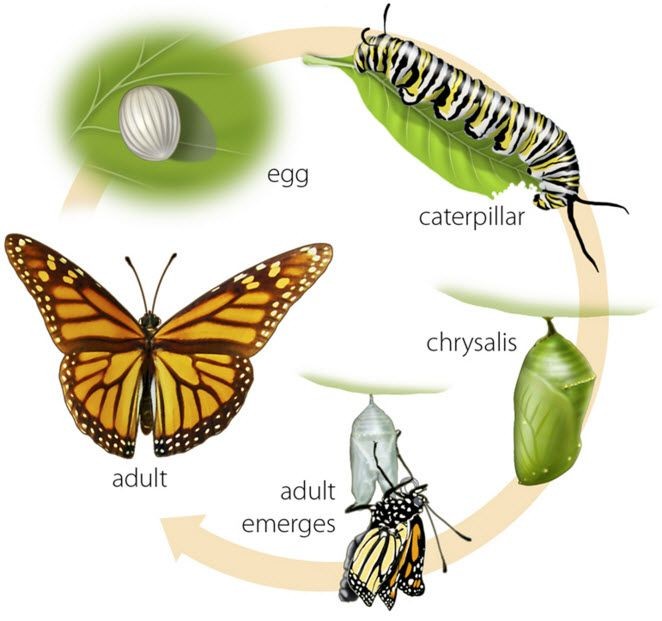
The life cycle of a butterfly can be divided into four stages:
- Eggs
The journey begins with the egg stage. Female butterflies carefully select a plant to lay their eggs on, often after mating. The eggs are small and delicate, containing a tiny creature that will soon hatch. As the eggs develop, they undergo a transformation, eventually breaking out of their shell in a dramatic display of life.
Butterfly eggs can be found on a wide range of plants, including flowers, leaves, and stems. Some species even lay eggs on the bodies of other insects or on tree bark. The shape and size of butterfly eggs vary greatly among species, with some being spherical and others elongated.
The process of egg-laying is an important part of a butterfly’s life cycle, as it determines the type of host plant that will be available to the caterpillars when they hatch. For example, the monarch butterfly lays its eggs exclusively on milkweed plants, which provide the necessary nutrients for the caterpillars to grow.
- Larva (Caterpillar)
The larval stage is perhaps the most fascinating part of a butterfly’s life cycle. The caterpillar, or larva, emerges from the egg and begins to eat. It will consume large amounts of food to fuel its growth, eventually developing into a pupa.
Butterfly caterpillars can be found on leaves, stems, and flowers, where they feed on plant sap or cellulose. Some species are specialized to feed on specific plants, while others are generalist feeders that can eat a wide range of materials.
Caterpillars undergo several molts as they grow, shedding their skin to accommodate their increasing size. This process is crucial for the caterpillar’s survival, as it allows them to grow and develop before emerging from their skin.
The larval stage typically lasts several weeks or even months, depending on the species and environmental factors. During this time, the caterpillar will stop eating when it reaches a certain size and begin searching for a safe place to pupate.
- Pupa (Chrysalis)
As the caterpillar reaches its full size, it attaches itself to a leaf or branch and forms a chrysalis. Inside this protective casing, the caterpillar undergoes a dramatic transformation, as its body breaks down and is reorganized into the adult form.
Butterflies do not have an “instinctual” pupation process like some other insects. Instead, they will typically search for a safe location to pupate, often choosing a spot with minimal disturbance or predation risk.
The chrysalis stage can last anywhere from a few days to several weeks, depending on the species and environmental factors. During this time, the butterfly’s body is undergoing a radical transformation, as its organs, tissues, and even organs are broken down and reorganized into the adult form.
When the transformation is complete, the adult butterfly will emerge from the chrysalis in a dramatic display of life. This process is known as “emergence,” and it can take anywhere from 30 minutes to several hours to complete.
- Adult Butterfly
Finally, the adult butterfly emerges from the chrysalis, its wings still soft and folded. As it pumps blood into its wings, they expand and dry, ready for flight. The new adult butterfly is now ready to take on the world, feeding on nectar and mating to begin the cycle anew.
Adult butterflies play a crucial role in pollination and seed dispersal, as they feed on nectar from flowers and transfer pollen between plants. They also serve as an important food source for other animals, such as birds, bats, and spiders.
Butterflies are known for their incredible lifespan, with some species living up to eight months in captivity. In the wild, however, this can vary greatly, with some butterflies living as little as two days, while others have been known to migrate thousands of miles.
The Life of a Butterfly
Butterflies are fascinating creatures that have evolved over millions of years to become the magnificent insects we see today. Their life cycle is a true marvel, with each stage more fascinating than the last.
In addition to their incredible lifespan, butterflies are also capable of remarkable feats, such as migrating thousands of miles each year or flying at speeds of up to 30 kilometers per hour.
Butterflies also have unique alimentary habits, consuming large amounts of food during their larval stage. As adults, they feed on nectar from flowers, using specialized proboscises to reach deep into the floral structure.
Butterfly feeding behavior is an important part of their life cycle, as it determines their reproductive success and overall survival. Some species are specialized to feed exclusively on certain plants, while others are generalist feeders that can eat a wide range of materials.
When Do Butterflies Reproduce?
To understand when a butterfly is ready to reproduce, it’s essential to grasp the concept of courtship and mating. Male butterflies perform acrobatic displays in mid-air, releasing pheromones to attract females. Once a male has found a female, they engage in a complex dance, with the male releasing small scales containing pheromones that aid in fertilization.
Butterflies have unique reproductive strategies, such as mate guarding and territorial behavior. Some species are known to form long-term pair bonds, while others are solitary and only mate once in their lifetime.
The Alimentary Journey
Butterflies have unique alimentary habits, consuming large amounts of food during their larval stage. As adults, they feed on nectar from flowers, using specialized proboscises to reach deep into the floral structure.
Some species of butterflies are specialized to feed exclusively on certain plants, such as milkweed or sunflowers. Others are generalist feeders that can eat a wide range of materials, including pollen, fruit, and even small insects.
The alimentary journey is an important part of a butterfly’s life cycle, as it determines their reproductive success and overall survival. Butterflies must consume large amounts of food to fuel their growth and development, especially during their larval stage.
Conclusion
In conclusion, the life cycle of a butterfly is a true marvel, with each stage more fascinating than the last. From the delicate egg to the magnificent adult butterfly, this incredible journey is one that inspires wonder and awe.
Butterflies are fascinating creatures that have evolved over millions of years to become the magnificent insects we see today. Their unique alimentary habits, reproductive strategies, and incredible lifespan make them one of the most interesting groups of organisms on the planet.
Whether you’re a seasoned entomologist or just starting to explore the world of butterflies, their life cycle is sure to captivate and inspire. So next time you see a butterfly flitting about, take a moment to appreciate its incredible journey from egg to winged adult – it’s truly a magical thing to behold!


